


Let’s be honest. New York has a reputation. Big city. Big lights. Big prices. You land, glance at the cost of a coffee, and suddenly you’re questioning every life decision that brought you there. It’s easy to think you just have to deal with it. Accept that your bank balance will take a hit and try not to look at your statements until you’re back home.

But here’s the thing no one tells you enough: You don’t have to spend like you’re starring in a glossy travel ad to enjoy the city. A great trip doesn’t depend on five-star hotels or expensive rooftop cocktails. It depends on knowing a few tricks, spotting the nonsense, and moving like someone who’s done this before. If you’re serious about exploring the world on a budget, New York can absolutely fit into that plan.
Stop Paying for ‘Views’ You Can Get for Free
There’s always that moment. You’re standing under the Empire State Building, looking up, and thinking, “Well, I can’t come all this way and not go up there.” And sure, it’s iconic. But the ticket price? Not so iconic.
Here’s the inside tip. You don’t need to pay premium prices for a skyline view. Head to places like the Brooklyn Bridge Park, the Staten Island Ferry, or even certain rooftop bars where you can buy one drink instead of a full observation ticket. The views are still dramatic. The photos still look great. Your wallet breathes a little easier.
It’s about perspective. Literally and financially. The city gives you those postcard moments if you know where to stand. You just don’t need to queue for an hour and empty your account to get them.
Be Smart About Your Food Choices
Food can drain your budget faster than you expect. One overpriced brunch here, a trendy dinner there, and suddenly your “just one treat” rule has turned into daily damage. It happens quickly.
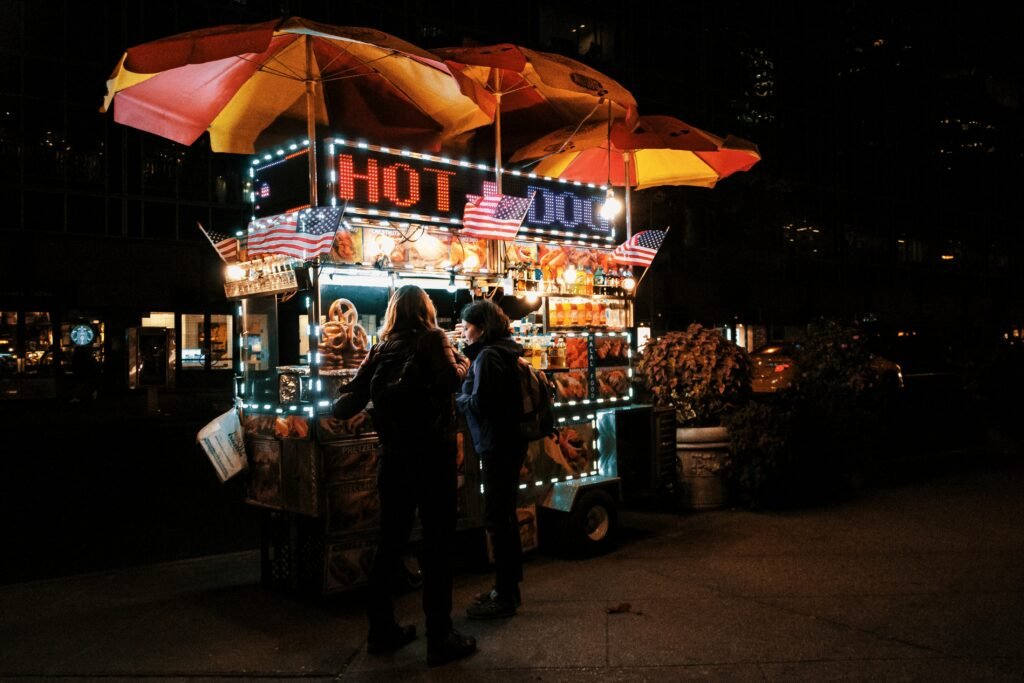
But there are loads of cheap eats in New York that are both satisfying and genuinely good. Think dollar-slice pizza, food trucks, Chinatown dumplings, deli sandwiches bigger than your forearm. You don’t have to live on lettuce and regret.
The trick is mixing it up. Maybe you pick one special meal, then keep the rest simple. Locals don’t eat in Times Square restaurants every night. They grab something solid and get on with their day. If you eat like that, you’ll spend less and probably enjoy it more.
Sort Your Luggage So You Can Explore Freely
Dragging suitcases through Manhattan is a quick way to ruin your mood. You land early. Check-in isn’t until later. So you tell yourself you’ll manage. You’ll cope. Then you’re sweating through subway platforms with wheels rattling behind you. Instead, use options like Penn Station luggage storage and free yourself. Drop the bags. Walk light. That one decision changes your whole first day.
When you’re not physically weighed down, you explore more. You wander further. You say yes to detours. It’s a small cost that can save you from wasting hours feeling irritated. That freedom makes the city feel manageable instead of chaotic.
Use Public Transport Like You Mean It
Taxis and rideshares add up fast. It’s tempting after a long day. You’re tired. Your feet hurt. You just want to collapse into a seat and be delivered to your door. But the subway is your friend. It’s not glamorous, but it’s efficient and cheap. Once you get over the initial confusion, it becomes second nature.
Buy a travel pass if it makes sense for your stay. Plan routes loosely in advance. And accept that occasionally you’ll get on the wrong train. It’s part of the story. Every ride you skip in a car saves you money you can spend on something you’ll remember.
Rethink Where You Stay
Hotels in central Manhattan can be eye-watering. And sometime you’re paying mostly for the post code. That doesn’t mean you need to bunk in a cupboard either.
Look at alternatives to things like hotels. Short-term rentals in outer boroughs. Smaller boutique places outside the busiest areas. Even well-reviewed hostels if you’re open to that. Neighborhoods like Queens or Brooklyn often offer better value and still get you into Manhattan quickly.
Commuting 20 minutes on the subway isn’t the end of the world. In fact, it can make you feel more like a local. And when you’re saving hundreds, on accommodation, that extra train ride feels like a fair trade.
Know the Tourist Traps Before You Step Into Them
New York has some brilliant attractions. it also has places designed purely to separate tourists from their money. And when you’re tired, hungry, or trying to impress someone, it’s easy to fall for it.
Watch our for themed restaurants with flashy signage and inflated prices. Be cautious with street performers demanding tips in aggressive ways. Don’t assume every “official looking” tour guide on the pavement is legitimate.
A cheaper New York trip often comes down to awareness. Walk one street over. Compare prices. Check reviews before committing. If something feels like it’s trying too hard to get your cash, it probably is. The city rewards a little skepticism when it comes to tourist traps.
Fill Your Days with Free Experiences
New York isn’t just paid attractions. It’s parks, neighborhood walks, street art, live music drifting from open doors. Some of the best memories cost nothing. Walk the High Line. Spend hours in Central Park. Explore different boroughs. Visit free museum days if your timing lines up. Sit on a bench and watch the city do its thing.
When you stop chasing expensive “must-do” lists, you start noticing how much the city offers without a ticket. That shift changes the whole tone of your trip. You’re not constantly calculating costs. You’re just experiencing.
Think Like Someone Who’s Done this Before
The difference between an expensive trip and a smart one often comes down to mindset. If you walk into every situation assuming it’s going to cost you heavily, you’ll probably overspend. If you pause, look around, and think, “There’s probably a cheaper way to do this,” you’ll usually find one.
Talk to locals. Ask for recommendations. Compare prices. Move a little slower. You don’t need to squeeze every landmark into three days. Once you realize that New York doesn’t have to be a financial stress test, everything relaxes. You stop treating it like a rare, once-in-a-lifetime splurge and start treating it like part of a bigger journey.
Photos courtesy of Unsplash
