

This article mentions suicidal ideation; stay safe. Suicide Hotline Number: 988
When I was a fifth grader, I Survived the Sinking Of The Titanic, 1912 was hot shit. Well … not as hot as Origami Yoda, or Diary of a Wimpy Kid: Cabin Fever, but for tween sophisticates with a taste for historical littérateur, I Survived books were the crème of the crop.
I Survived was a series of history-heavy middle-grade books designed to help kiddos cope with the aleatory dangers of natural disasters. After Sinking of the Titanic came, I Survived the Shark Attack of 1916, later The Nazi Invasion(!), The Attacks of September 11th(!!). The premise is the same: a boy (basically always a boy) lives through a life-threatening event and shares his tips.
One shortcoming, as any adult knows, is that I Survived always implies the danger will be external. I Survived teaches kids that what they must fear in life are earthquakes, molasses floods(?), or freshwater river sharks(?!?), but rarely does it mention the pitfalls of our own fragile psyches.
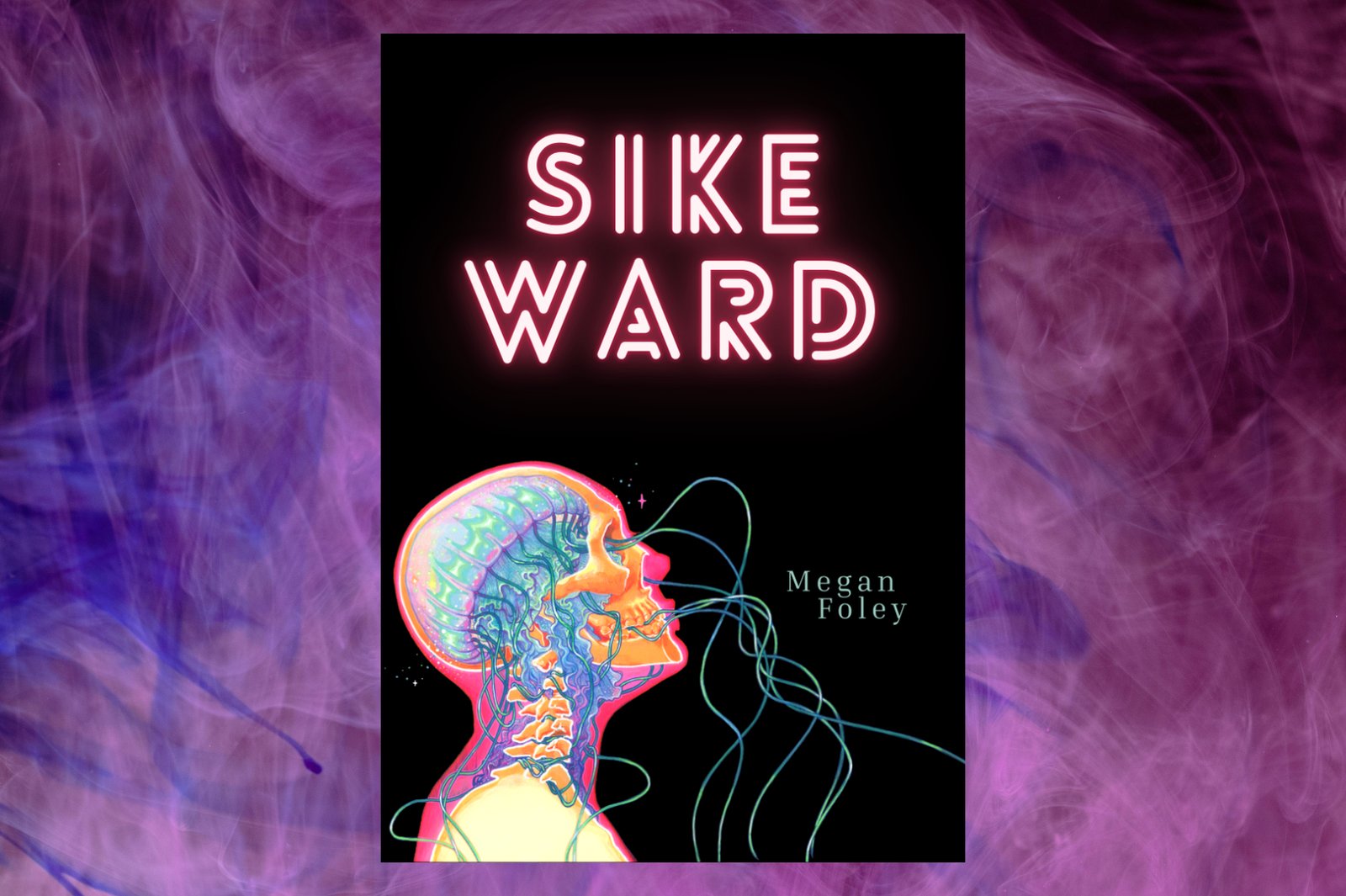
Megan Foley’s Sike Ward,then, is the I Survived of the mind. It is a book that wants to keep YOU alive, dear reader, that wants to document the tug-of-war between joy and despair that often plagues queer life.
Sike Ward is a collection of internal battles against suicidal ideation, surreal sets of violence by external perpetrators, and life-affirming, heart-rending poems that erupt from this dailiness of “Survival Exhibits.” Put more simply, this is a museum of survival, where poetic narrators testify to simply (though not easily) not having died.
The negative happening of continuing to live is, it turns out, a difficult event to document. In “Survival Exhibit 911 Career Suicide,” the narrator’s job is “to not press the button.” “It’s not the most exciting thing to talk about at parties,” the narrator explains, and for Foley, the goal is to create a celebration of this negative happening. To put it in a way I heard (or said) in a support group, or maybe at a poetry workshop (sometimes the line between the two is thin), “you never get to celebrate the day you didn’t kill yourself,” a fact Foley sets out to change.
All of this is a lot more fun than it sounds. Megan Foley is interested in the weird and (non-derogatory) quirky spaces that leave their audience slightly dislocated. By the fourth page, the reader will have a pretty good idea of the collection: “I lie in bed wanting to die/and smelling of coconut” Foley writes in “Survival Exhibit 07 I Talked to My Doctor About My New and Worsening Thoughts of Suicide and All I Got Was This Stupid Bill.” The book is about not dying, basically, but the poet must not die repeatedly. They must get “teeth around the Joy Wizard’s bloody ankle and pull,” and the primary vehicle of this pulling becomes the metaphor.
The metaphors in this book are spectacular, both in that Foley’s imagination is hilarious and strange (a “lobotomy horse,” a prom date with god, a Taken thriller with the “Joy Wizard”), and that they are spectacle. To not die in new and innovative ways, flourish becomes survival, a distraction from despair long enough that a solution might present itself. In the final scenes of the book, interactions between characterized metaphors like “I-Wanna-Live” and “Please-Put-Me-Out-Of-My-Misery” build to devastating proportions. They give the impression of being self-directed, introducing themselves to one another of their own free will. This is the flourish, the thing that moves the collection from poems about suicidal ideation to poems conveying an inner world of survival.
It’s hard not to draw connections between Sike Ward and the writing of Sexton and Plath. For one, the settings of both are similar: psychiatrist waiting rooms, ineffectual doctors, and, of course, psych wards populate both this book and the confessional canon. However, the poems confess nothing. In “Survival Exhibit 270 Compression Artifact,” a slew of depressing headlines, such as “A mom owed nearly $100,000 for her son’s stay in a state mental hospital,” draw connections between mental health and a toxic society.
The poet, like Sexton or Plath, might be writing to reapproach survival, but they make connections early to state and cultural violence that has funneled into the queer body. The driving force of shame, the marking of “wrong” by patriarchy, is also the life-affirming force of the poetry. Sike Ward sets out to make “(Trans) Joy an immortal, unkillable, endless, all-enduring, ever abiding force” that does “hand-to-hand combat” with (paraphrasing) conservative assholes. The poet concludes their “Awful Rowing”, but god is a lesbian bildungsroman, a Pride parade “lemon seed/so sour and cold/that it made me want to live again.”
Not that it’s a contest, but Colorado has consistently ranked in the top 10 for suicide rates in the last decade, rates which are higher among queer and trans folks. The dark side of Colorado culture is that isolation is high; mental health resources are underfunded, and the West’s “rugged individualism” is deadly. In the epigraph at the beginning of the book, Foley writes, “For those who kept me alive; may we all be taken in the Poet Rapture,” and describes the “box beneath (their) bed. Full of poems written in shaky cursive.”
The final notes of Sike Ward find refuge in a literal, living “We,” a world that queer people and poets (and queer poets) build themselves despite the inherited shame of a toxic society. If you are queer or a Coloradan, and you are likely both to make it this far, you should read this collection, then go to an open mic. Colorado needs better mental health resources, more social cohesion, and fewer guns, but, on the cultural front, it needs books like Sike Ward, books that celebrate living again and again.
