

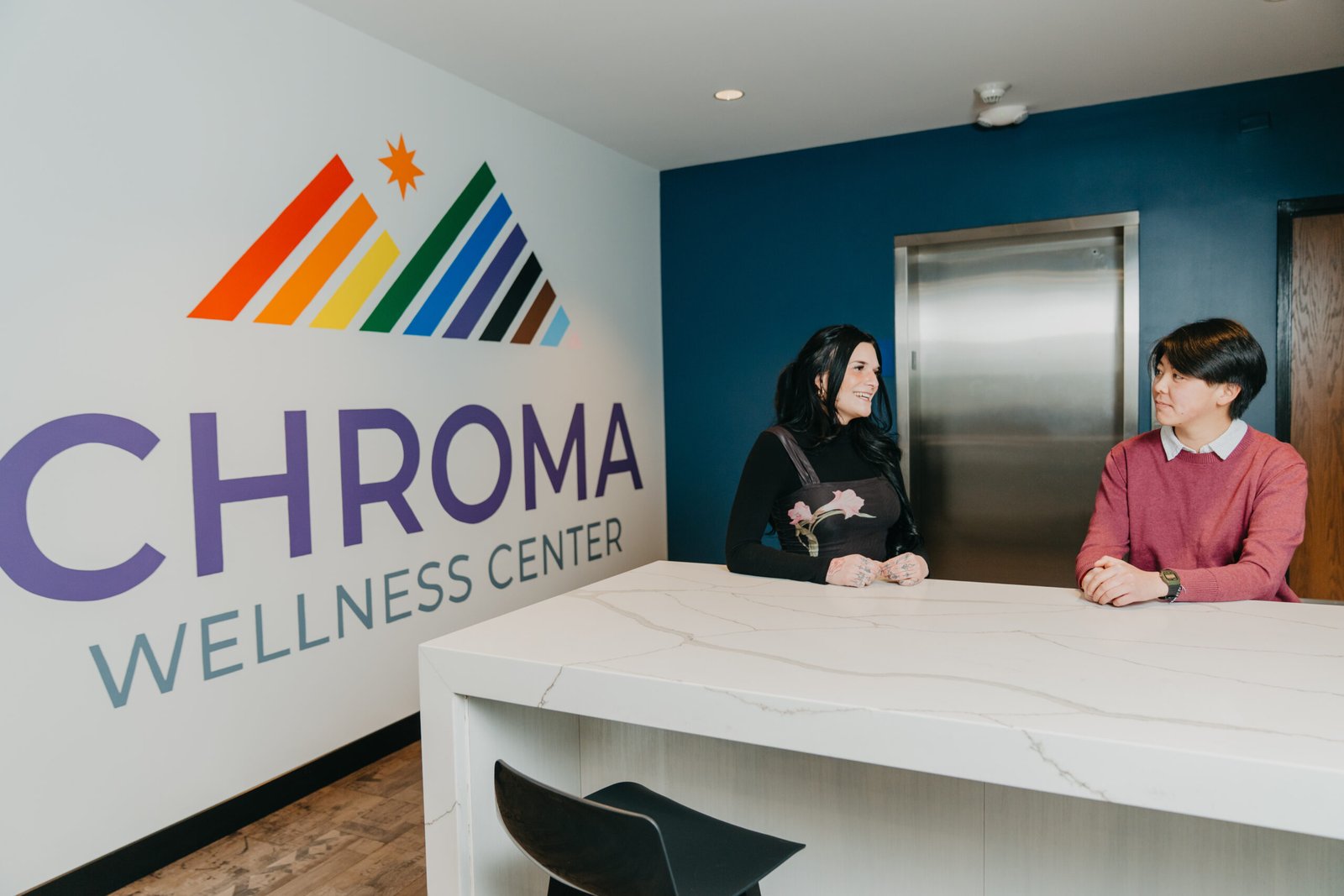
In the behavioral health landscape, the standard model of care has long been built on a heteronormative foundation. For many in the LGBTQIA+ community, seeking help for substance use or mental health can feel like entering a space where they must “edit” their identities just to belong. Ryan Sturdevant, a former therapist and the founder and CEO of Chroma Wellness Center in Denver, is working to dismantle that barrier.
Since opening its doors eight months ago, Chroma Wellness Center has emerged as a pioneer in Colorado, becoming the first program of its kind to offer intensive, specialized treatment built entirely around the queer experience. For Sturdevant, the motivation was not just professional. It was deeply personal.
“I got into this field because, like many people in their early 20s, I felt aimless and unsure what to do with my life,” Sturdevant recalls. “Then I had a profound experience with a therapist while coming to terms with my sexuality. It made me realize this is what I wanted to do with my life.”

New Beginnings
The seeds for Chroma were planted in 2019 during two pivotal moments. The first was an executive leadership program at Stanford for LGBTQ leaders. Sturdevant describes feeling like a “small fish in a huge pond,” surrounded by executives doing transformative work for the community. He returned to Colorado with a revitalized sense of purpose.
At the time, he was working for another treatment center and noticed a glaring gap in care. He advocated for a dedicated LGBTQ+ group, and the response was immediate and heartbreaking.
“From the very first group I facilitated, I realized the system was missing something fundamental,” Sturdevant says. “For many participants, it was the first time they had ever felt truly safe in treatment. They began talking openly about their sexuality, gender identity, and trauma. But once that 75-minute session ended, they stepped back into environments where that safety disappeared, and they learned to put those parts of themselves away again.”
This “closeting” of trauma during the recovery process became the catalyst for Chroma. Sturdevant realized that for true healing to occur, the safety couldn’t be limited to a single hour a week. It had to be the foundation of the entire building.

Flipping the Script on Clinical Care
“What sets Chroma apart from traditional rehabilitation programs is its refusal to treat queer identity as an afterthought. Instead, identity shapes the entire approach to care, influencing how every aspect of treatment, support, and connection is experienced,” Sturdevant says.
“Most programs take a very heteronormative approach and maybe add an LGBTQ+ group. We’ve flipped that on its head,” Sturdevant explains. “We do Internal Family Systems, trauma work, somatic work, and intimacy counseling, but all of it is grounded in lived experience. We ask, ‘How is my experience different because of who I am?’”
This holistic approach moves beyond traditional “talk therapy.” Chroma incorporates:
- Somatic Work: Addressing how trauma is stored in the body.
- Trauma-Informed Yoga & Acupuncture: Bridging the mind-body connection.
- Gender-Affirming Housing: Through its sister company, Chroma Living, which offers 12 beds in an all-gender environment where residents live in co-ed, non-gender-divided lodging.
“The result is a space that emphasizes healing over mere rehabilitation. Traditionally, rehabilitation is framed as a clinical model. But when people walk in here, there is a sense of hope and possibility,” Sturdevant says. “It becomes a joyful experience of transformation, where people begin reconnecting not only with themselves but also with the idea that they deserve a full and meaningful life,” Sturdevant says.
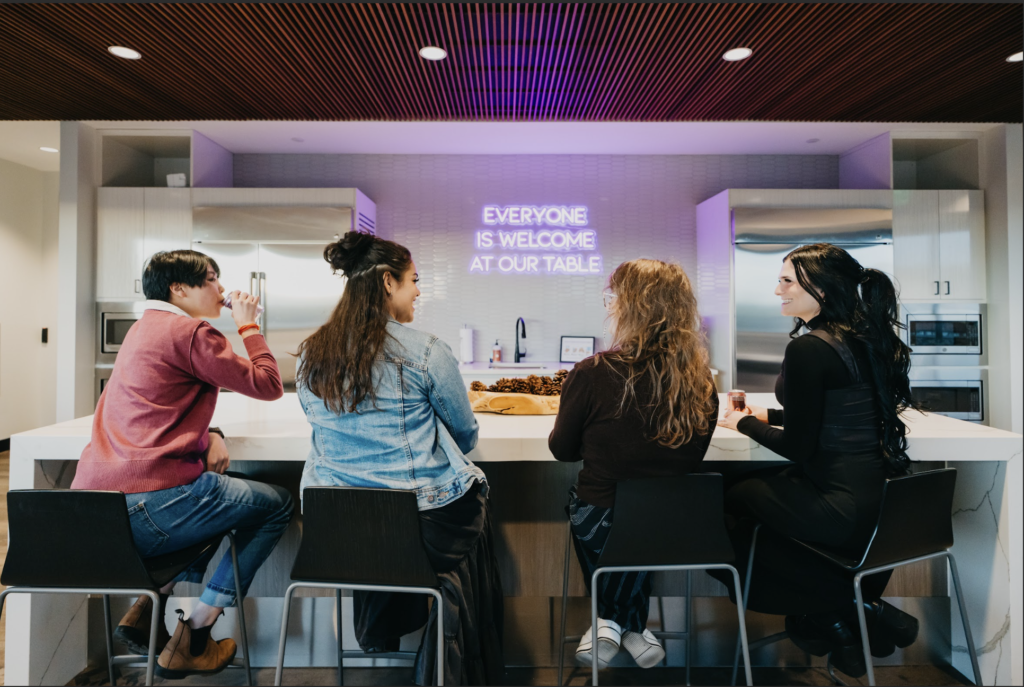
Dignity Over Equity: Reclaiming the Business of Care
In an era where many treatment centers are backed by private equity and focused on profit margins, Sturdevant has taken a firm stand on organizational integrity. He intentionally partnered with individuals who prioritize clinical outcomes over the “grind” of productivity.
“I have been in rooms where the conversation was, ‘Do we cut programming to increase profits?’” Sturdevant admits. “Avoiding that dynamic was incredibly important to me when starting Chroma. I wanted to build an organization where decisions are guided by what is best for the patient and where we can continually reinvest in programming that improves outcomes. That independence allows us to prioritize long-term care quality over short-term financial pressures.”
This philosophy extends to the staff as well. Chroma boasts a staff retention rate of more than 90%—an anomaly in an industry plagued by burnout and turnover. By paying 99% of healthcare benefits and requiring fewer direct-care hours than industry standards, Sturdevant ensures his therapists are “grounded and regulated” so they can show up fully for their clients.

Facing the National Climate
The timing of Chroma’s growth coincides with a turbulent political era. With legislation targeting trans rights and a rise in anti-LGBTQ+ rhetoric across the country, the mental health stakes have never been higher. Recent data suggests that up to 50% of the community has considered suicide in a given year.
Sturdevant doesn’t shy away from the external “noise” that clients bring into the room. He acknowledges that for many, substance misuse is a way to numb the “intolerable” fear of simply existing in a hostile climate.
“I would love to say this fear and uncertainty are new, but for many people in the LGBTQ+ community, they have been part of daily life for a long time,” Sturdevant says. “What breaks my heart is knowing how many people struggle to see a future for themselves. We get to watch people walk through our doors at their lowest and leave with a renewed sense of hope, dignity, and possibility.”

CEO Ryan Sturdevant
What Healing Makes Possible
Currently, Chroma Wellness Center offers Partial Hospitalization (PHP) and Intensive Outpatient (IOP) levels of care, primarily working with private insurance while also providing scholarships to help ensure financial barriers do not prevent access to treatment. The long-term vision includes establishing a 501(c)(3) to expand scholarship opportunities and better serve Medicaid populations, who are often underserved by high-quality specialized care.
For Sturdevant, every graduate represents far more than a successful case outcome. Each person represents the possibility of a different future.
“In no other job do you get to be a small part of somebody’s story when they feel hopeless, and then watch them begin to see a future again,” he says. “How much more beautiful can that be? My cup is full. I am so grateful this is what I get to do every day.”
As Colorado continues to serve as a refuge for people leaving restrictive states, Chroma Wellness Center stands as a testament to the power of affirming, lived-experience care. It is a place where chosen family is not just a phrase but a clinical standard and where being yourself is not an obstacle to recovery but the foundation of it.
Photos courtesy of Becky Duffy-Hill
