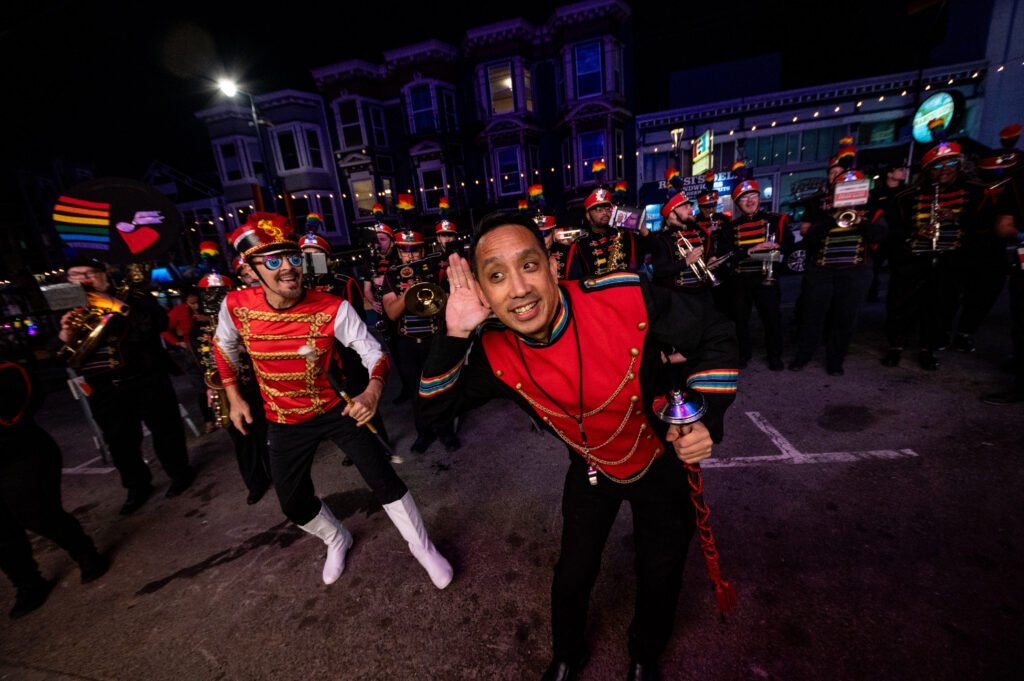

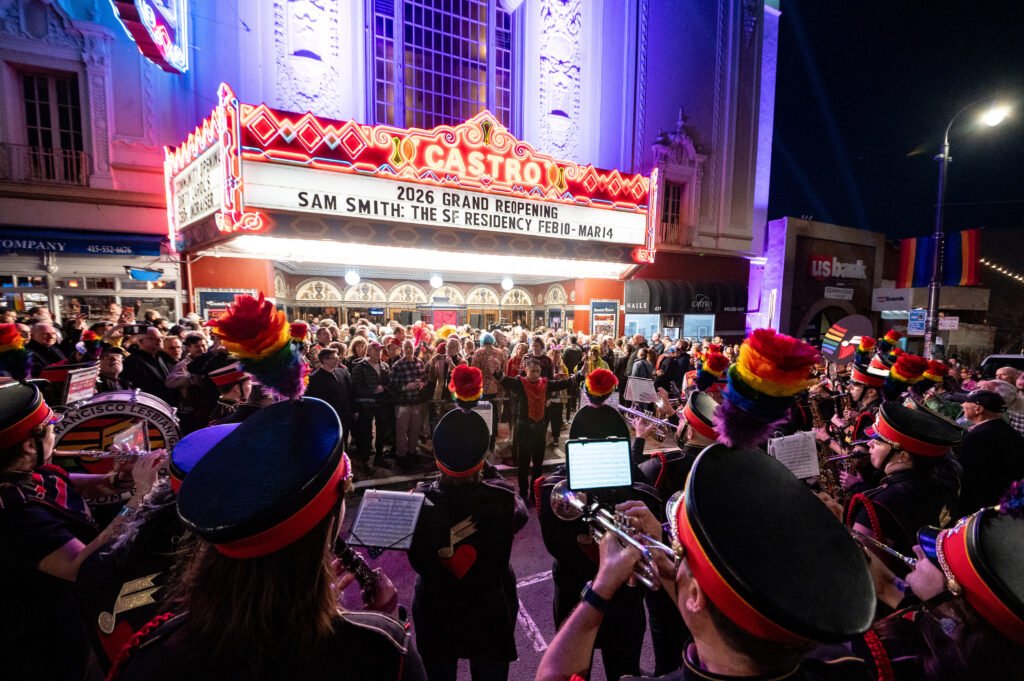
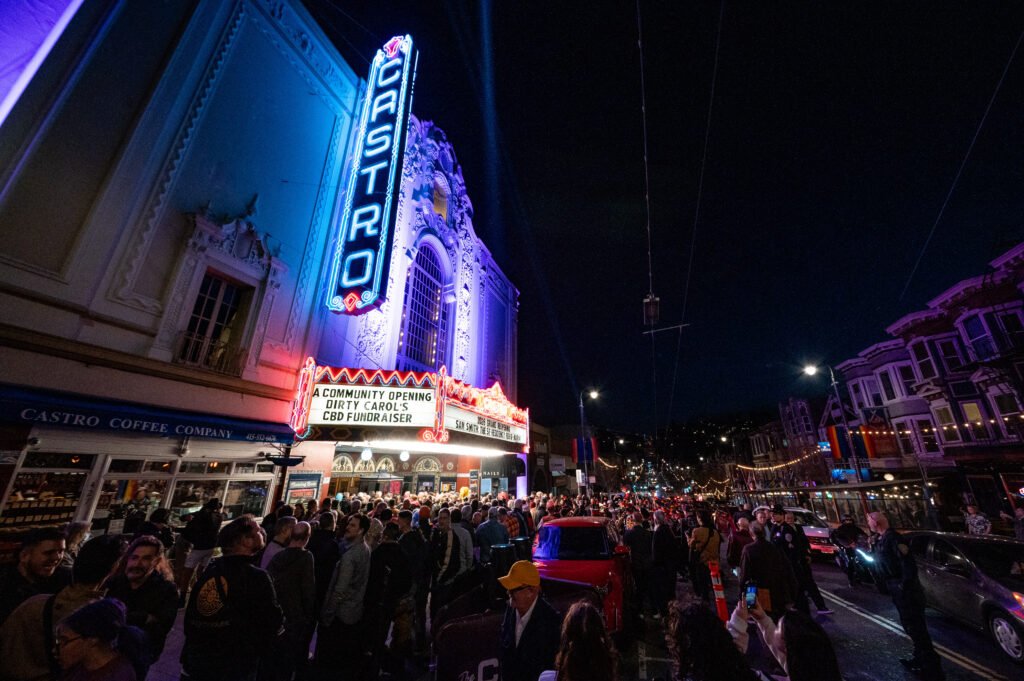
I arrived on Castro Street just before dusk, that brief window when the sky still holds color and the neighborhood feels suspended between past and present. The marquee at the Castro Theatre was already lit, neon letters cutting cleanly through the evening like a promise finally kept. People were gathering in clusters, old friends reuniting mid sidewalk, drag performers adjusting wigs against the wind, longtime locals standing a little straighter than usual. You could feel it in your chest. This return felt more like a homecoming than a reopening in the traditional sense.
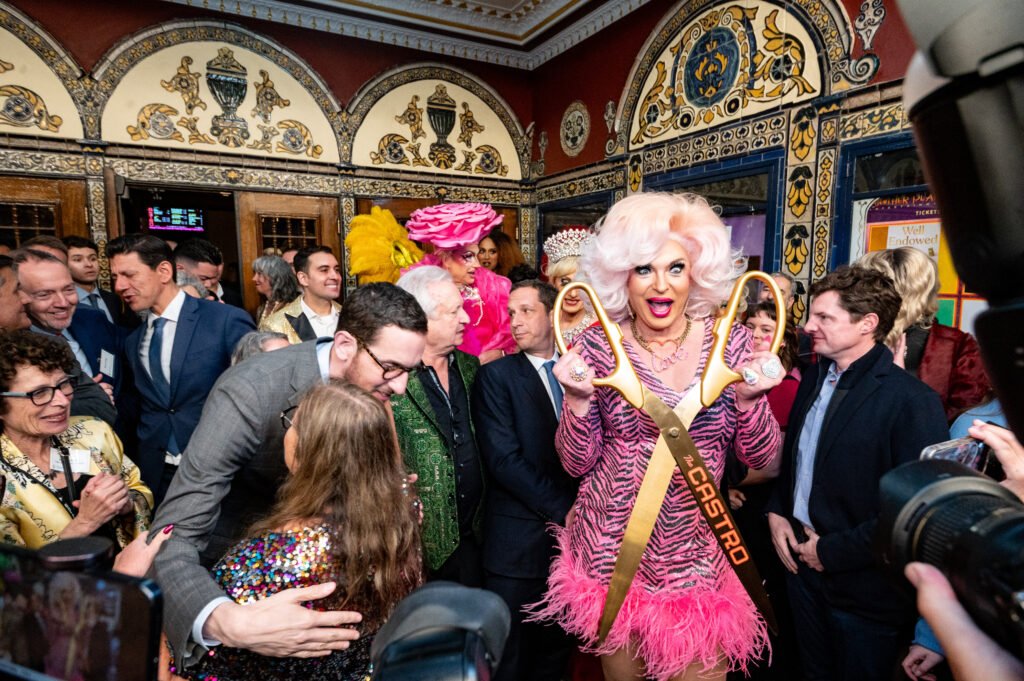
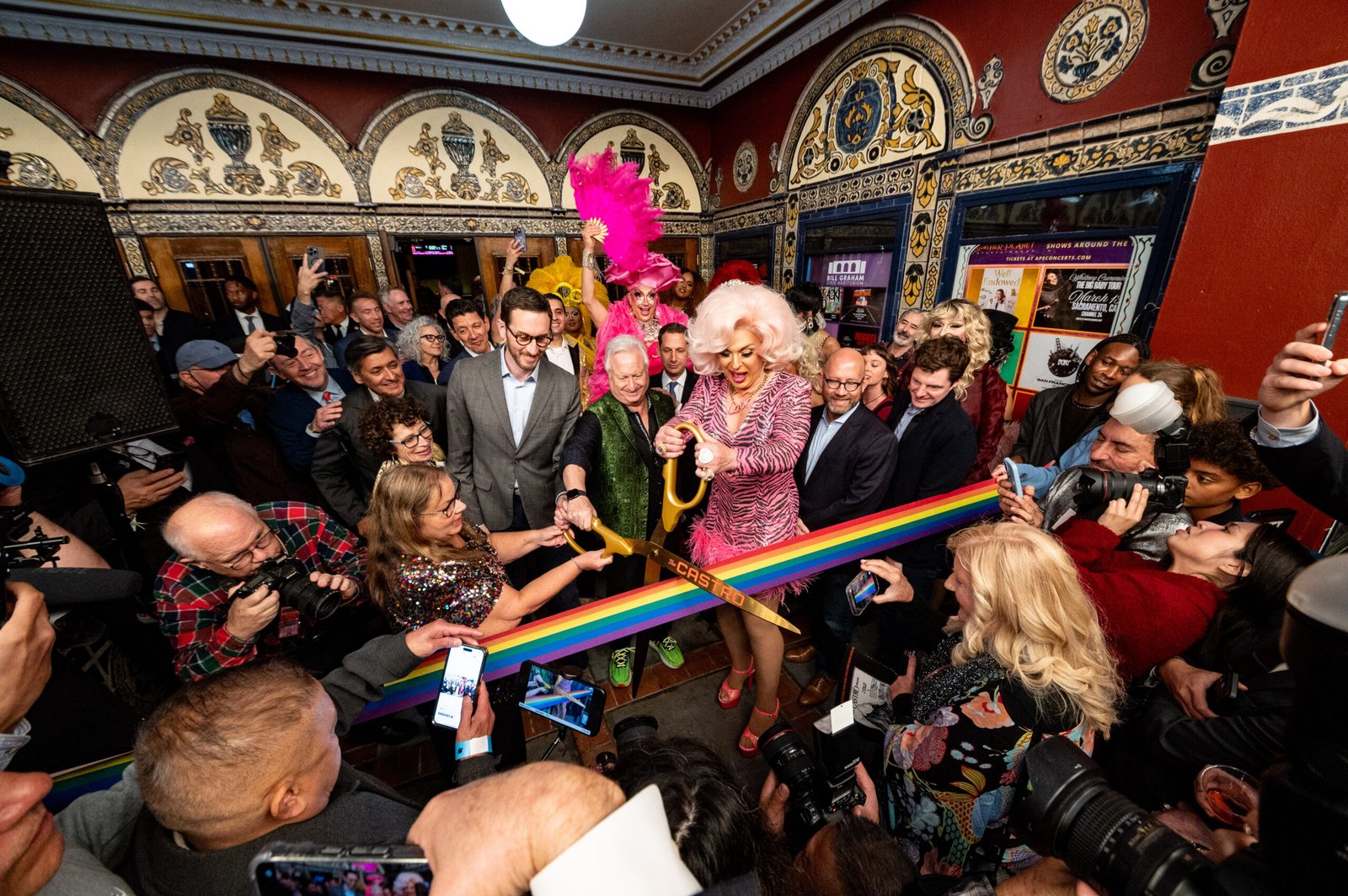
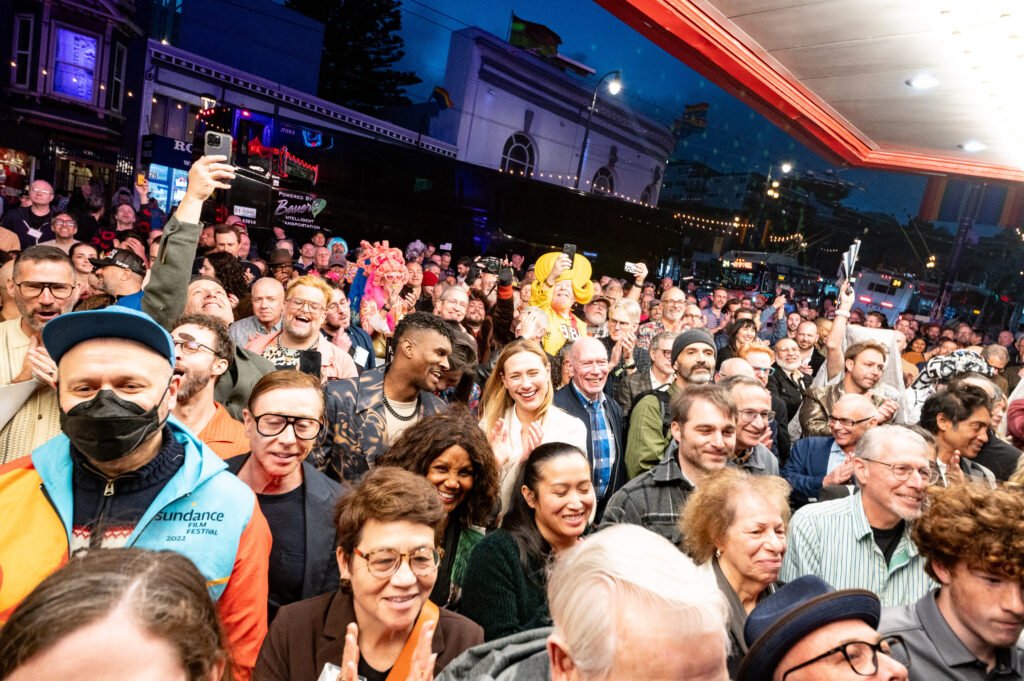
The reopening was formally ushered in with a series of outdoor speeches staged at the front entry doors that treated the moment like a ribbon-cutting mixed with a civic reckoning of the most glittering kind. Elected officials, preservation advocates, and representatives tied to the theater’s next chapter took turns at the microphone, speaking not only about renovation timelines and investment but about stewardship, responsibility, and the weight of inheriting a space that has long functioned as a cultural anchor for queer San Francisco.
The remarks were met with applause that felt more earned than obligatory, punctuated by cheers when speakers acknowledged community concerns and the theater’s activist history. Framed by a crowd that spilled well past the barricades, the speeches landed as a public promise: that whatever changes had taken place inside, the Castro Theater’s role as a gathering place, a rallying point, and a living symbol of the neighborhood would not be treated lightly.
The crowd spilled outward, filling the block with a low hum that kept rising. Cameras flashed. Someone popped a bottle of something sparkling. Another person leaned over to tell a story about the first time they ever kissed someone in the balcony decades ago. The city officials did their remarks from the front of the building, but they were almost background noise to the collective emotion rolling through the street. When the ribbon finally came down, the cheer was physical: It moved; it echoed; it was applause that felt earned.
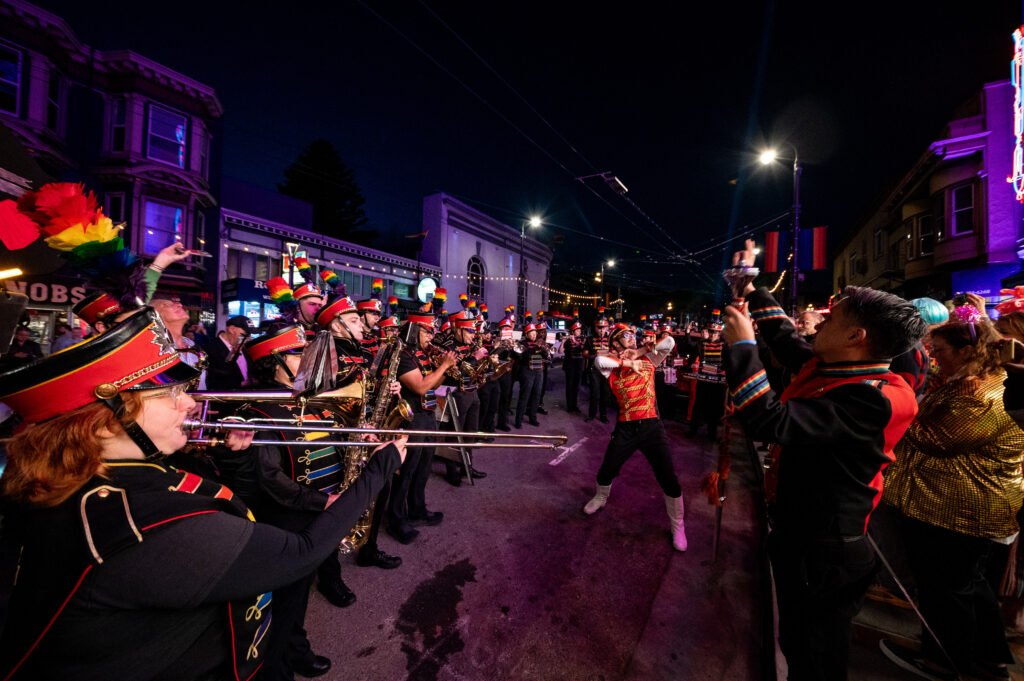
Out front, the San Francisco Pride Band cut through the street noise with brass and percussion that bounced off the storefronts, turning Castro Street into something between a parade route and a block-long welcome mat. That energy carried inside with me. Walking inside was the moment that landed hardest.
The doors opened and suddenly there it was. The ceiling restored to full glory, every detail sharp and luminous. The chandelier glowed like it had been waiting patiently for us to come back. The room felt bigger somehow, cleaner, but still unmistakably itself. I stopped short for a second, just to take it in, because some spaces deserve to be witnessed before they are occupied.
People drifted to their seats slowly, deliberately, like no one wanted to rush this part. Conversations were hushed but animated. There was a lot of pointing upward. A lot of smiles that lingered. When the lights dimmed, the applause came early, before anything had even happened, just for the room itself.
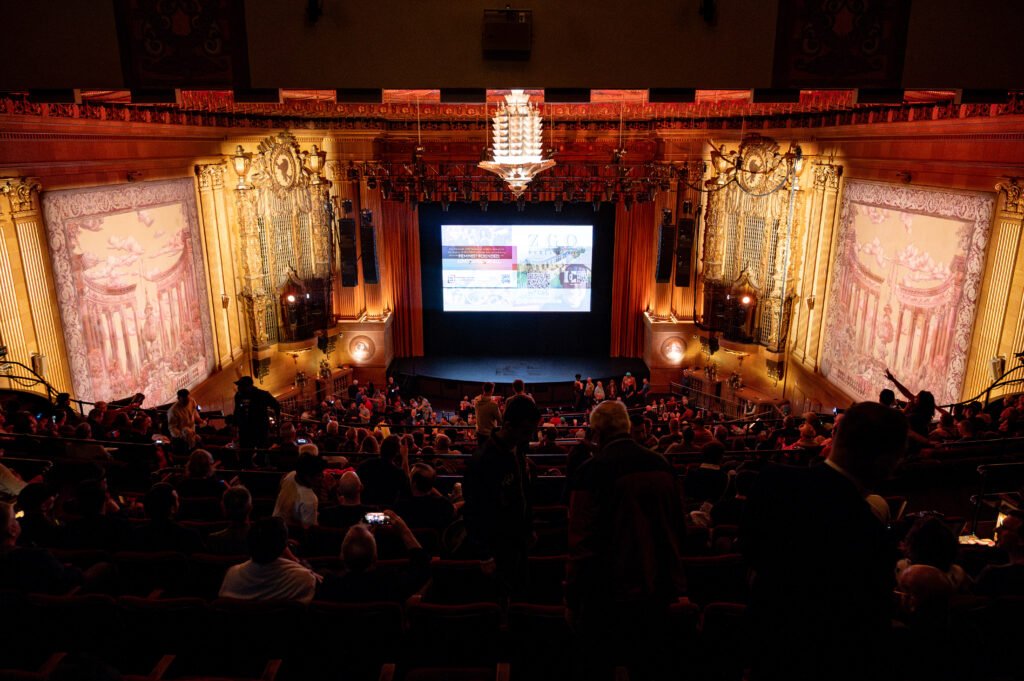
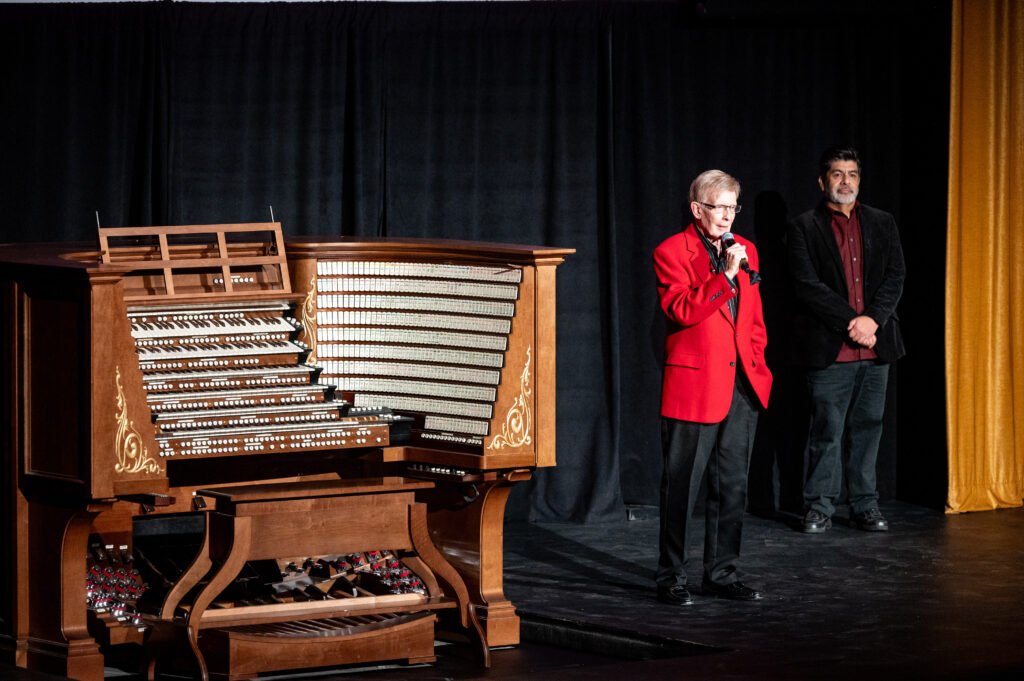
The renovation details became impossible to ignore once I settled in. The new seating build out on the main floor immediately shifted the energy of the room, more flexible, more adaptable, clearly designed to support a wider range of programming without flattening the soul of the space. Above it all, the balcony remained untouched, preserved exactly as generations remember it, a deliberate choice that felt more symbolic than nostalgic. The result was a compromise of coexistence. The Castro did not erase its past to move forward, but simply made room for more people to gather inside it.
The choice of opening night film, The Adventures of Priscilla, Queen of the Desert, felt like instinctual programming causing the audience to quietly lean in together. Lines were whispered, then spoken aloud, then fully shouted with joy. Laughter rippled across the house in waves. The Castro Theatre’s audience participation was back in full glory, gleefully trampling the idea of passive viewing and reminding everyone exactly why this place has always mattered.
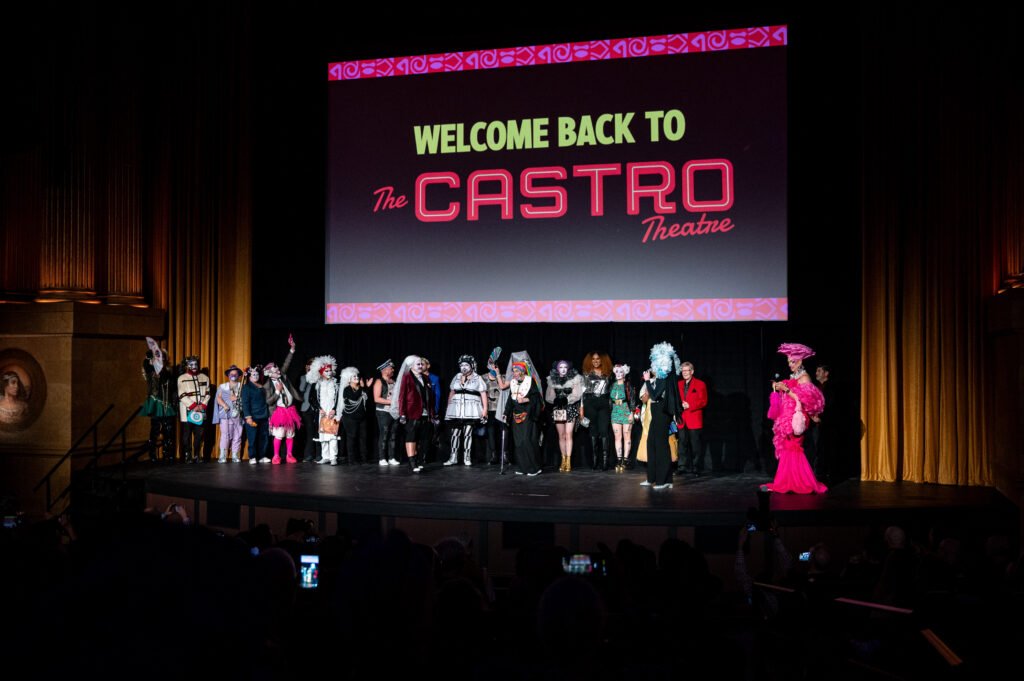
I thought about the debates, the arguments, the months of tension around what this space should be. Sitting there, surrounded by people who clearly loved it, none of that felt abstract anymore. The theater was working. It was alive and doing what it has always done best: holding us.
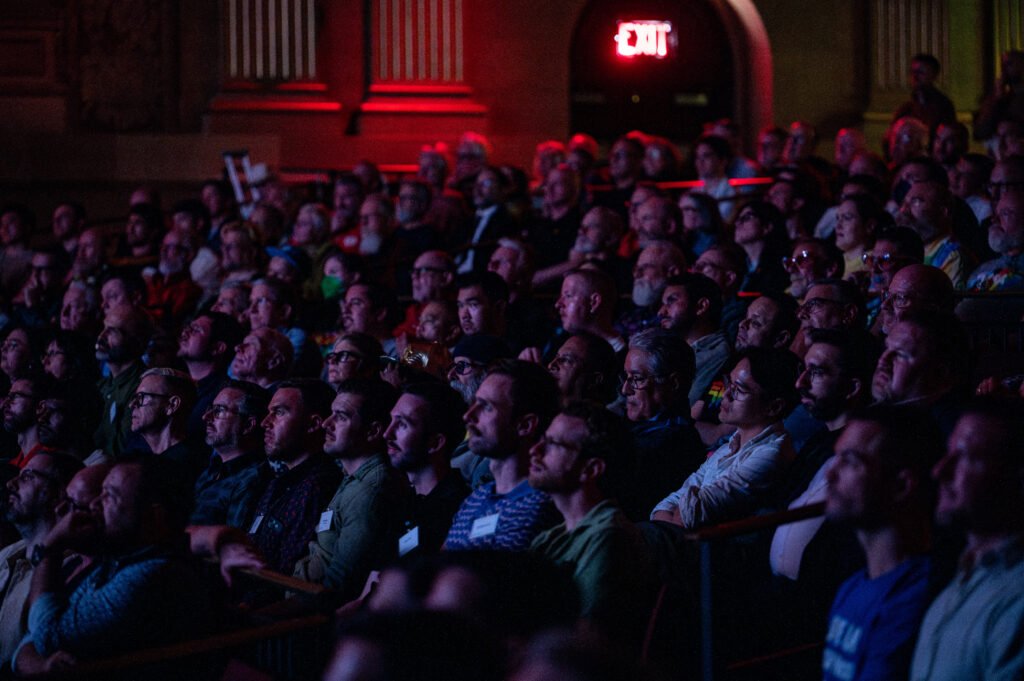
When the film ended, people lingered again. No one bolted for the exits. Strangers talked like old friends. Phones stayed mostly in pockets. Outside, Castro Street was buzzing, neon reflecting off faces that looked genuinely happy, not performatively so.
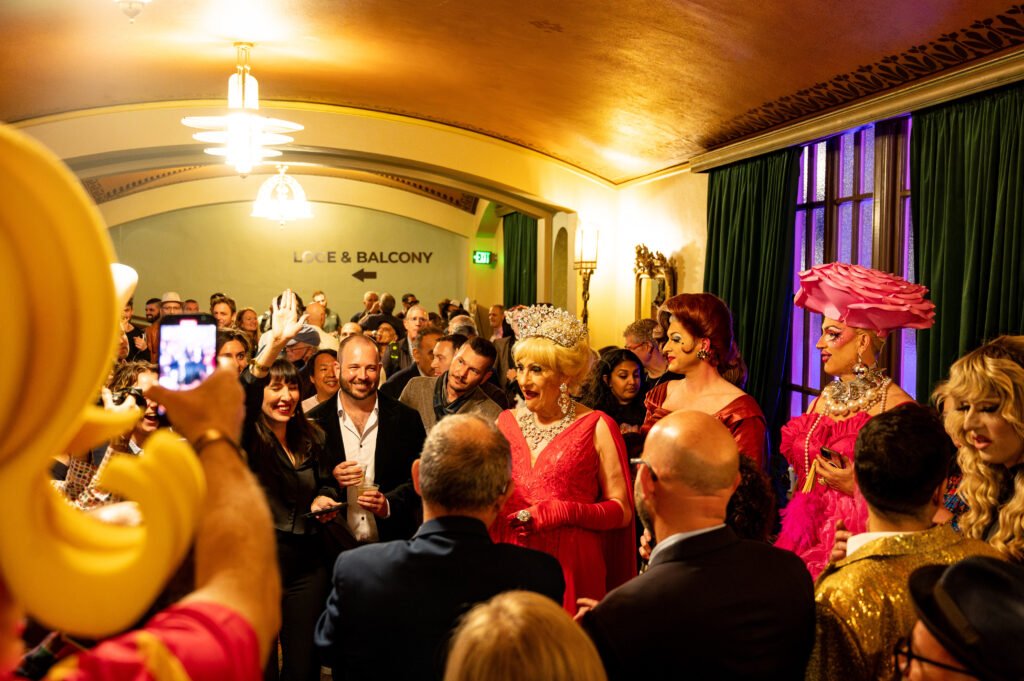
As I walked away, I glanced back one more time at the sign glowing against the night. The Castro Theatre reopened by reasserting itself. A living landmark, still capable of gathering a city around a shared experience, still capable of reminding us who we are when the lights go down and the story begins.
For the Castro Theater’s full reopening schedule and upcoming programming, including information around Sam Smith’s now sold-out residency and any potential additional dates or releases, visit the theater’s official website and mailing list for updates.