

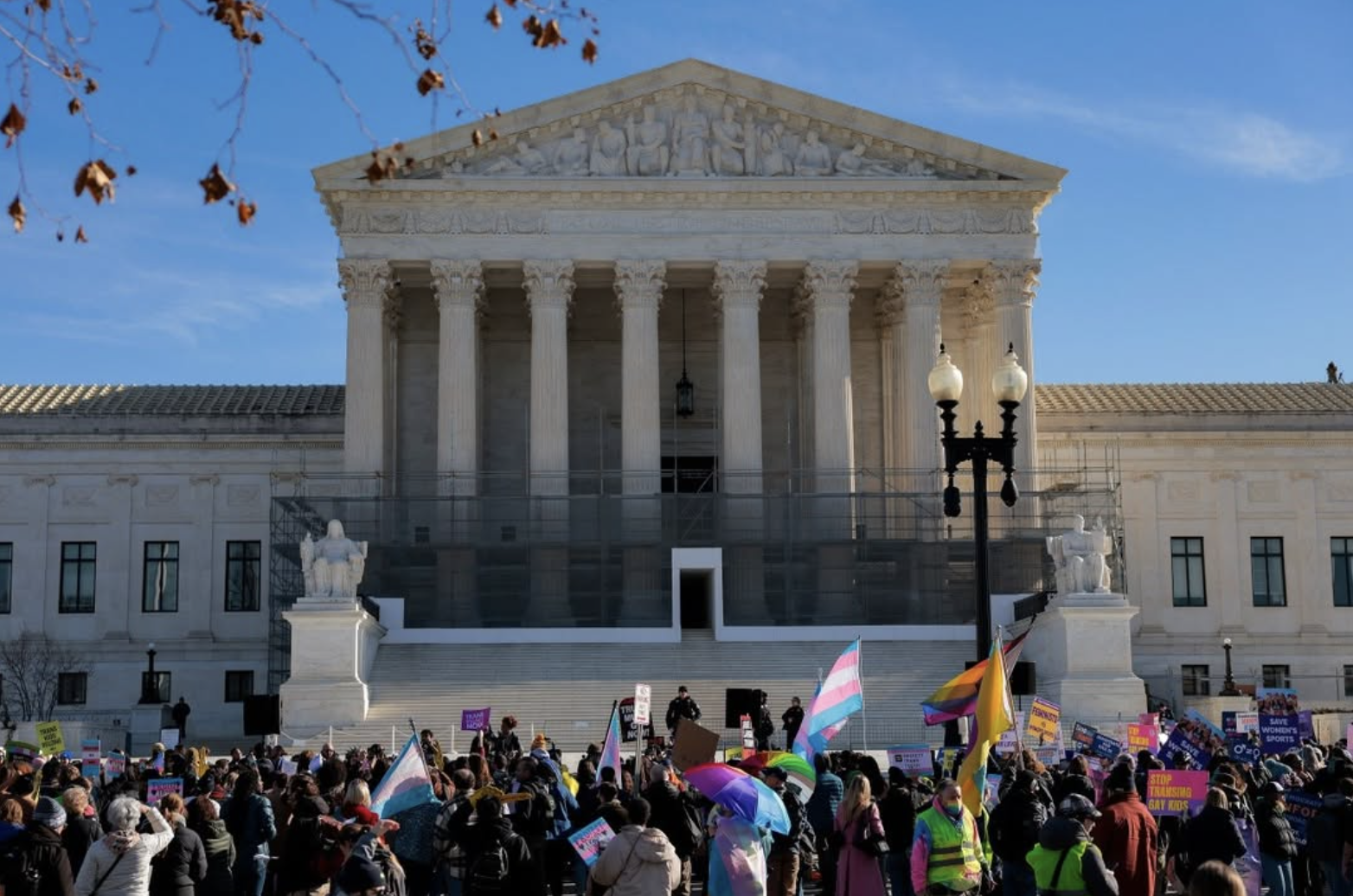
On Wednesday, the Supreme Court rejected the Trump administration’s emergency appeal to deny gender-affirming care for transgender inmates in federal prisons.
The 7-2 decision marks an optimistic change in the court’s attitude towards trans rights after previously siding with the Trump administration to the detriment of trans youth and military service members. However, the court’s decision will only pause the ruling, and serves as one piece in an ongoing legal battle to defend the rights of trans inmates.
The Trump administration’s recent appeal is not the president’s first attempt to accelerate anti-trans policy by means of executive power. Upon his re-inauguration, President Trump issued an executive order stating that the federal government will only recognize the two sexes assigned at birth.
Among several anti-trans measures, the order led the Bureau of Prisons to enact a policy that prevents transgender inmates from receiving gender-affirming care. This includes bans on surgical and hormone treatments, and the denial of social accommodations, including correct pronoun usage and clothing that aligns with one’s gender identity.
Following the policy’s enactment, three federal inmates filed a class action lawsuit, Kingdom v. Trump, based on violations of the constitutional prohibition of cruel and unusual punishment and the requirement of equal protection. Notably, all three inmates were diagnosed with gender dysphoria and prescribed hormone therapy during their incarceration.
Discrepancy over the correct approach to treatment for gender dysphoria in federal prisons is at the core of the Trump administration’s recent attempt at an emergency appeal, and the topic is still under heavy debate within the federal government.
The Trump administration argues that recipients of specialized care may be targeted by other inmates for perceptions of unfairness. However, gender-affirming care has been utilized in federal prisons for decades and is considered medically necessary to treat gender dysphoria.
The Trump administration seeks to dispute the necessity of gender-affirming care, despite the risk of heightened mental distress and suicidality among trans inmates.
Kingdom v. Trump was filed in March of 2025 and remains open.
Photo Courtesy of Instagram
