

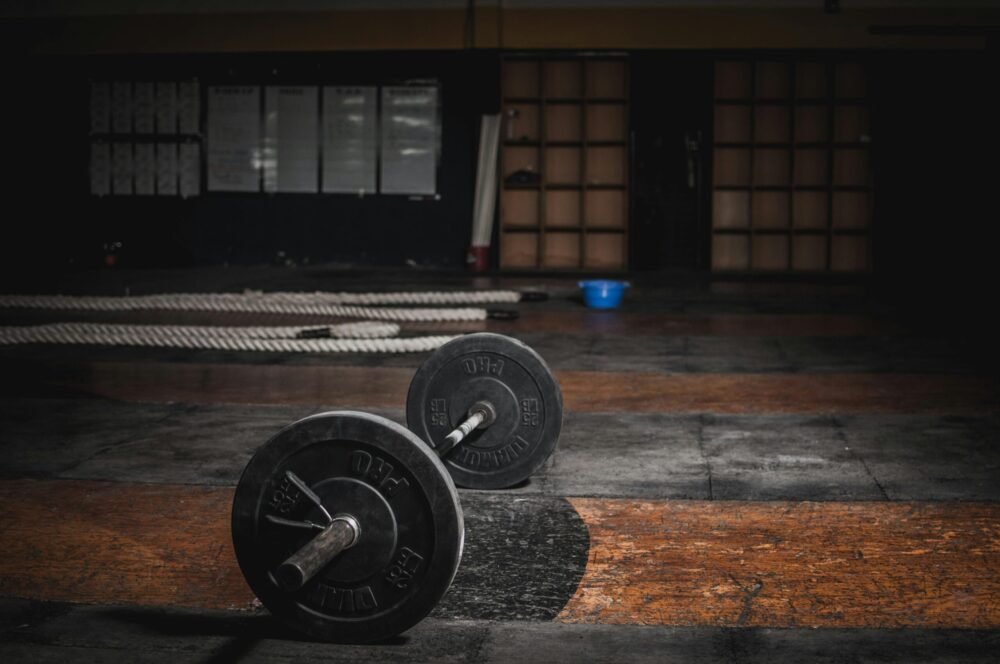
When I first joined Chin-Up Training, one of Denver’s few queer gyms, I didn’t just sign up for a gym; I found a place where I could finally exhale. It was the kind of space where trainers greeted you by name, celebrated your small wins, and reminded you that showing up was enough. For so many of us, it wasn’t just about fitness. It was about belonging.
In a world where queer and trans people are still asked to shrink ourselves to fit, Chin-Up felt like the opposite. It was expansive. Encouraging. Safe. For once, being visible didn’t mean being on guard.
Then one morning, everything stopped. An email arrived out of nowhere: The gym was closing, effective immediately. No warning. No meeting. No goodbye. Just an ending.
Days later, a new website appeared under the gym’s name: black background, countdown clock, the words “No Vacancy” in the URL. It hinted at something new: smaller, private, invite-only. The same branding, but not the same community.
Then came a video with the owner saying, “I’m OK” I wanted to hear: We’re OK. Or at least: I know this hurts. But it wasn’t about the community’s loss. It was about one person’s healing while the rest of us were left to grieve in silence.
Soon after, secret emails went out to a select few. Inside was a private video where the owner repeated one line over and over: “Please be nice to me.” It was meant for a small circle, but it spread quietly between members who were hurt and confused. Within days, the “No Vacancy” site vanished, the gym’s social media accounts were deleted, and its website was scrubbed clean as if erasing its existence could erase what happened. The silence that followed was louder than any explanation.
For weeks, the only narrative available was that the community had been cruel—that we, the people who lost our space overnight, were the ones who’d done harm. But that’s not what happened. We showed up with care, not perfection, and trusted that care would be met in return.
The pain wasn’t just the closure. It was the rewriting of the story. The suggestion that our grief was hostility, that our confusion was cruelty, that our longing for care was what broke the peace.
For many of us, this gym had been more than a business. It was a sanctuary—one of Denver’s few spaces where queer and trans people could exist in our bodies without apology. It was where we could drop our guard, lift something heavy, and finally feel light.
You don’t realize how much trust you’ve placed in a space until it disappears. When someone builds safety like that and then takes it away overnight, it isn’t just loss. It’s betrayal. It tells every queer person who learned to trust again that safety is conditional, that even our havens can vanish when they stop being convenient for the people in charge.
In the aftermath, the trainers of the gym did what leadership couldn’t: they stayed. They planned circles for members to grieve, cry, and process what had happened. No countdowns. No exclusivity. Just presence. That’s what accountability actually looks like.
Because accountability isn’t cruelty, it’s care. It’s staying in the room when things fall apart. It’s saying, I hurt you, and I’m listening.
What happened here wasn’t a failure of community. It was a failure of responsibility.
When you call something a safe space, you inherit the duty to close it with care. You don’t get to build trust and then hide behind self-preservation when it breaks. You don’t get to name something “community” and then rebuild it in secret once the hard parts begin.
Queer Denver has been reminded lately how fragile our safety can be. The Center and other LGBTQ+ spaces have faced vandalism meant to make us small again. But we don’t vanish that easily. We rebuild, again and again—not because we want to, but because we refuse to disappear.
The gym is gone, but the people remain. We’re still here—checking in on each other and refusing to let silence become the final word. Because what happened wasn’t kindness. It was abandonment disguised as vulnerability.
And queer people deserve better than to be blamed for the harm done to them. We deserve the full story, told out loud. When you build a safe space and then walk away overnight, you don’t just shut the doors—you make every queer person who trusted you question whether safety was ever real. That isn’t self-care; it’s harm, disguised as healing.
Yet even after the silence, we remain—still choosing care, still choosing each other, still choosing to believe that safety can exist again.
Photo courtesy of Unsplash
Author’s note: OFM was notified that upon publication, this article originally linked to a Reddit thread in which the gym owner was deadnamed. We were unaware of this until a reader brought it to our attention. Thank you for holding us accountable, and we apologize for the hurt caused by that microaggression. -Ixora Cook
