

Diamonds is your favorite ballet dancer’s favorite ballet. The curtain rises on a stage already filled with ballerinas in radiant white tutus, bodices glittering with jewels, rhinestone headpieces catching the light, and the audience audibly gasps at the sheer beauty of the image. Diamonds offers no gentle entry, only immediate immersion in its scale and radiance.
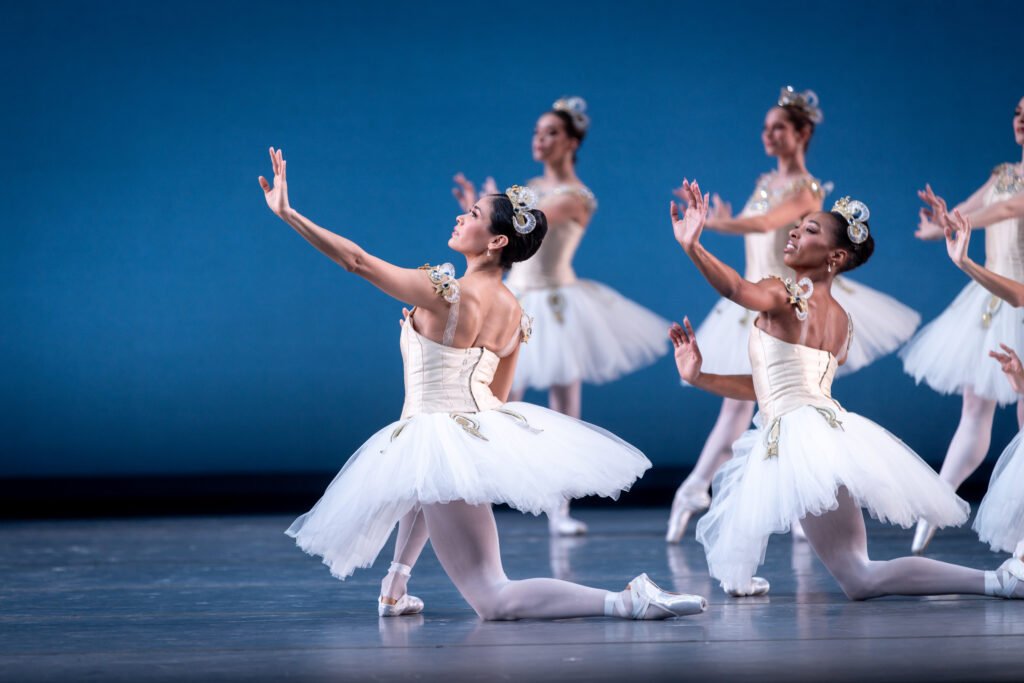
A watercolor, sky-blue backdrop stretches wide behind them, clear and open like a perfect afternoon. There is no ornate palace, no painted garden, no decorative distraction. The space is spare, which only sharpens the impact. The choreography becomes the scenery.
San Francisco Ballet often draws audiences with narrative works. You go for Swan Lake, Romeo and Juliet, Giselle, or the annual Nutcracker. In recent seasons, they have staged dramatic productions like Eugene Onegin and Frankenstein. But unlike the other works on this program, Diamonds is plotless. There is no heroine, no betrayal, no reconciliation. Instead, it is Balanchine’s homage to the Imperial Russian tradition in which he trained at the Mariinsky Theatre in St. Petersburg. Set to Tchaikovsky’s Symphony No. 3, it reflects the grandeur and ceremony of that world.
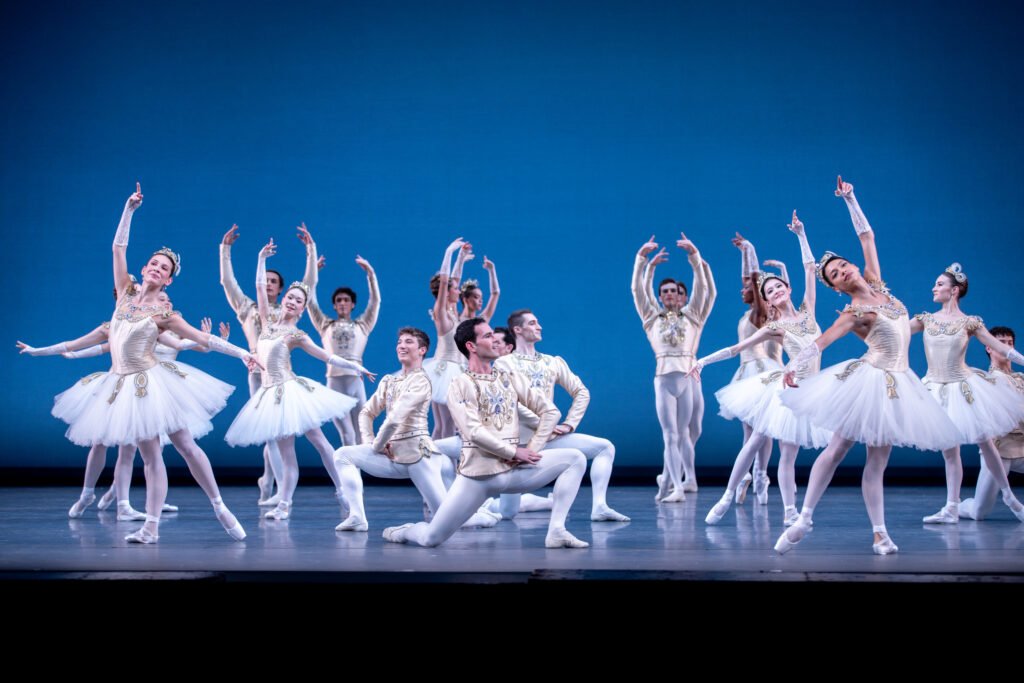
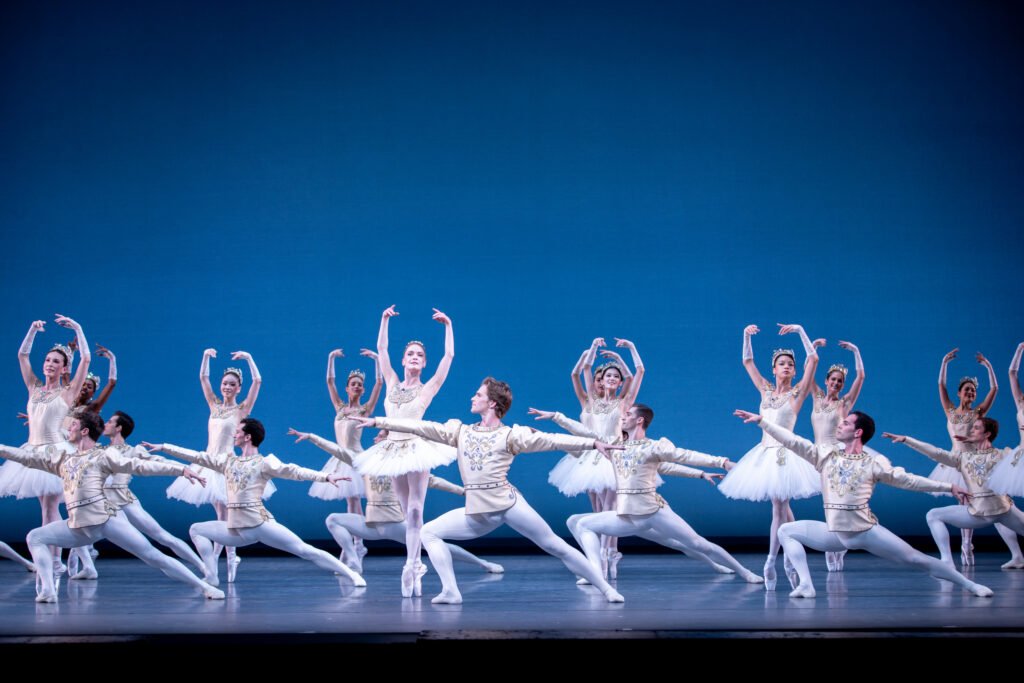
Balanchine understands the seduction of a crowded stage. The corps begins to multiply, white tutus extending in precise, glimmering lines until the space feels charged with symmetry. Couples peel away and reassemble. Cavaliers enter with quiet assurance. The partnering unfolds in long, sweeping passages, each pair moving within a larger design. The effect carries the order and ceremony of a formal court, the pleasure of a grand ballroom where everyone is dancing at once and no one is out of place.
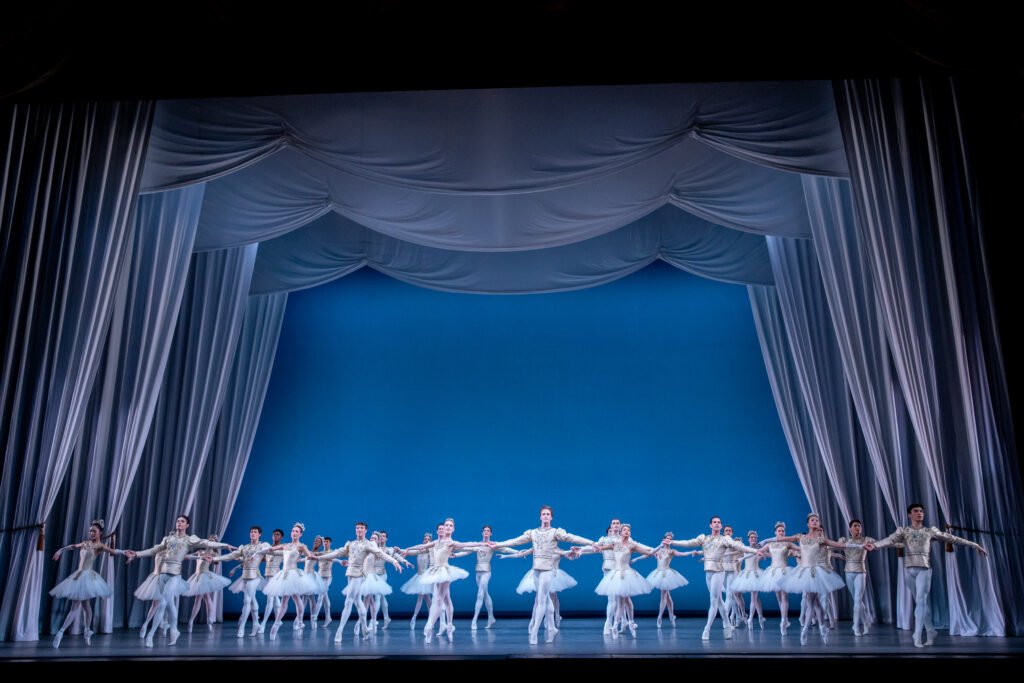
At moments, it recalls the Snowflake Waltz in The Nutcracker, that crystalline swirl when the stage fills and time seems suspended. There are echoes of Swan Lake in the disciplined unity of the corps, in the way individual dancers dissolve into one luminous body. Different ballets, same unmistakable signature.
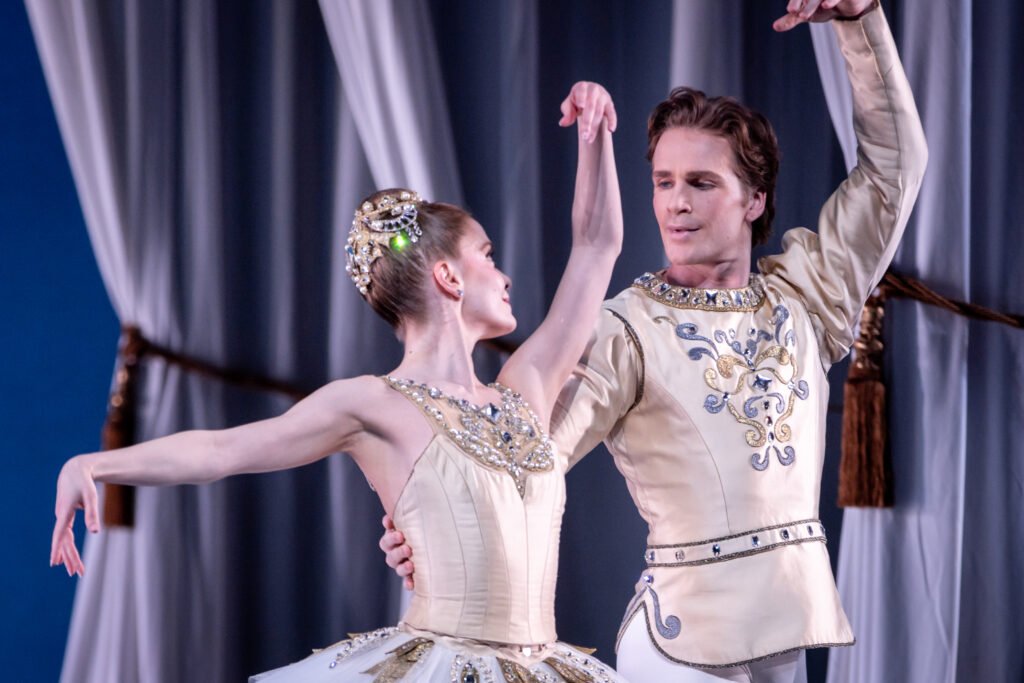
Isabella DeVivo, Jihyun Choi, Kamryn Baldwin, and Seojeong Yun lead the opening ensemble with poised cohesion. They breathe together instead of competing for attention. When the full corps joins them, the scale becomes almost overwhelming in its beauty.
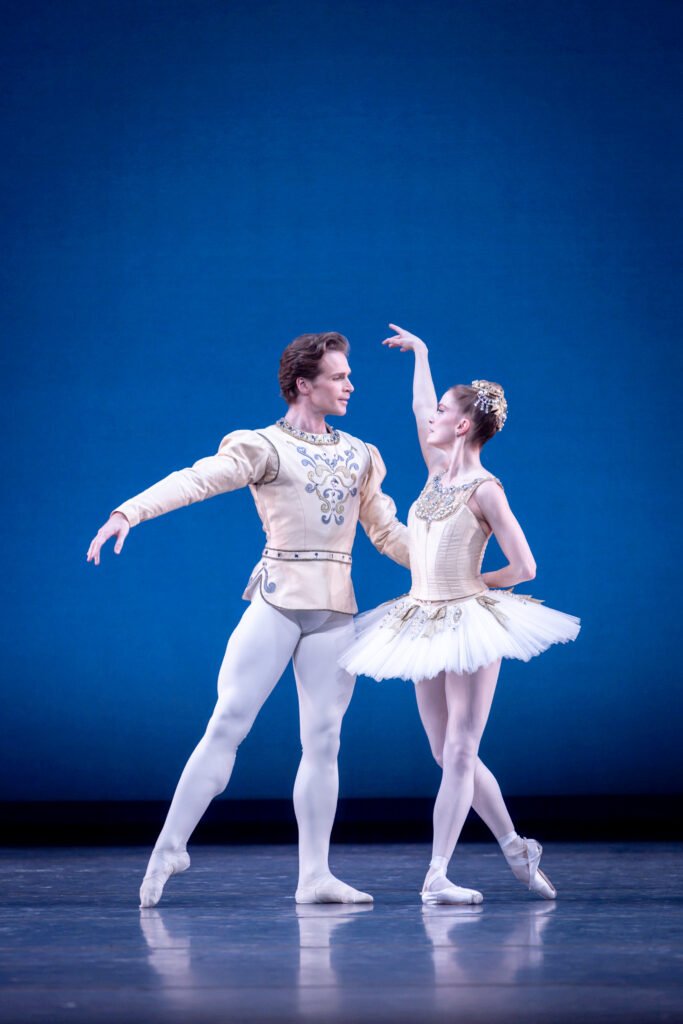
Then Sasha De Sola enters with Harrison James, and the focus narrows without diminishing the grandeur. Watching her is like watching the ballerina inside a music box brought to life, only warmer and more human. Her pirouettes are centered and unhurried, each turn placed precisely within the music. Their partnering feels expansive yet controlled, regal without hubris or stiffness.
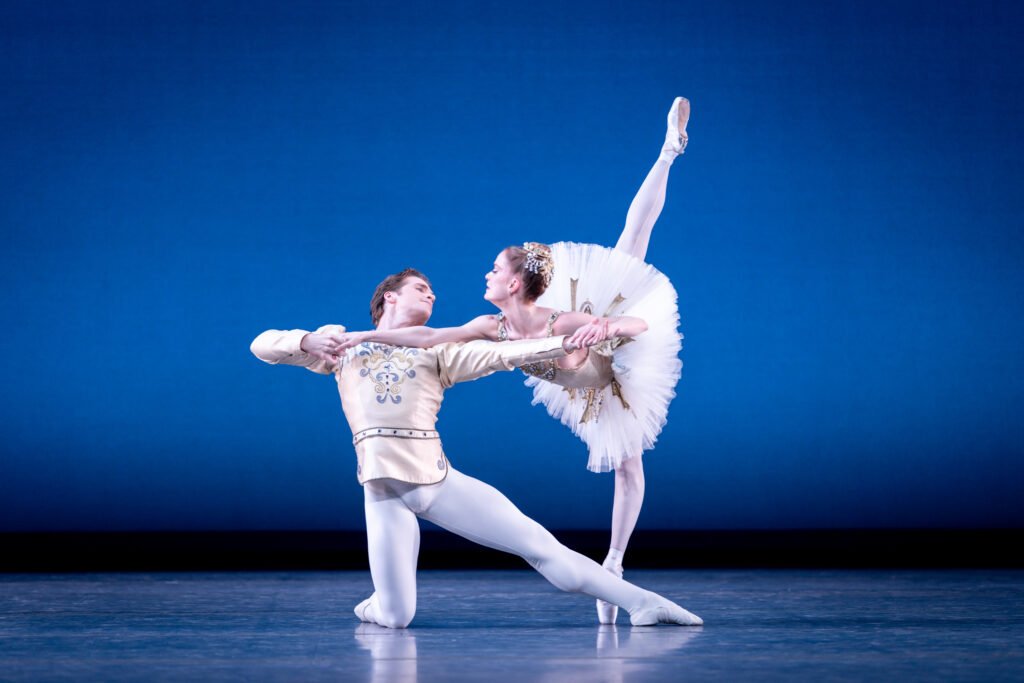
Balanchine’s classical vocabulary is everywhere. Arms sweep upward and descend with intention. Weight shifts are deliberate. Jetés suspend just long enough to feel miraculous before returning to earth. It is formal, yes, but never cold.
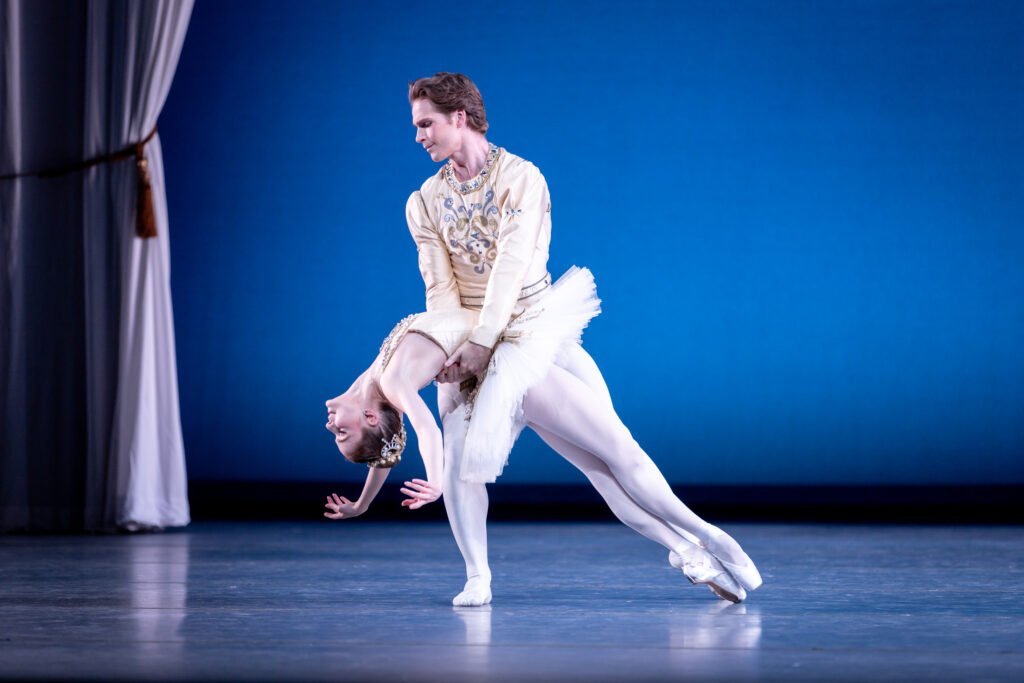
In its first 30 minutes, Diamonds delivers a concentrated vision of classical beauty. No storyline is required. A stage filled with light, symmetry, and disciplined radiance says everything that needs to be said.
After the crystalline grandeur of Diamonds, Serenade alters the atmosphere entirely.
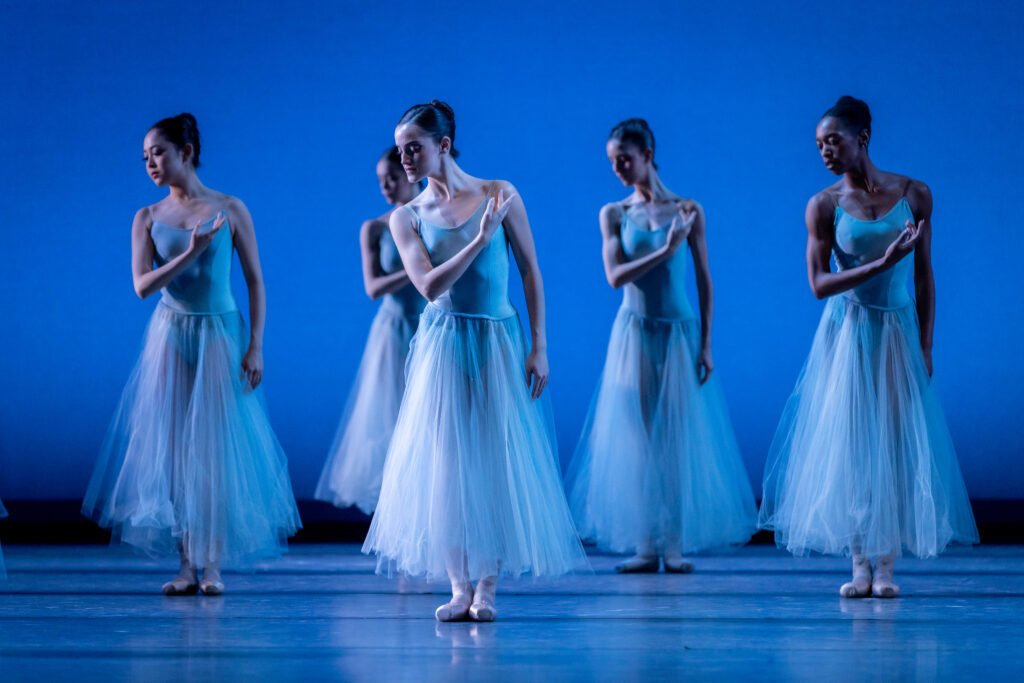
Premiering in 1934, it was Balanchine’s first ballet created in America, presented to audiences who were not yet accustomed to classical ballet, which at the time was still regarded as a distinctly European art form. The work emerged in response to the generous sponsorship and support that made his immigration possible, and it stands as a reminder that some of our most enduring works of high art are born from exchange, from artists crossing borders and building something new out of unfamiliar soil.
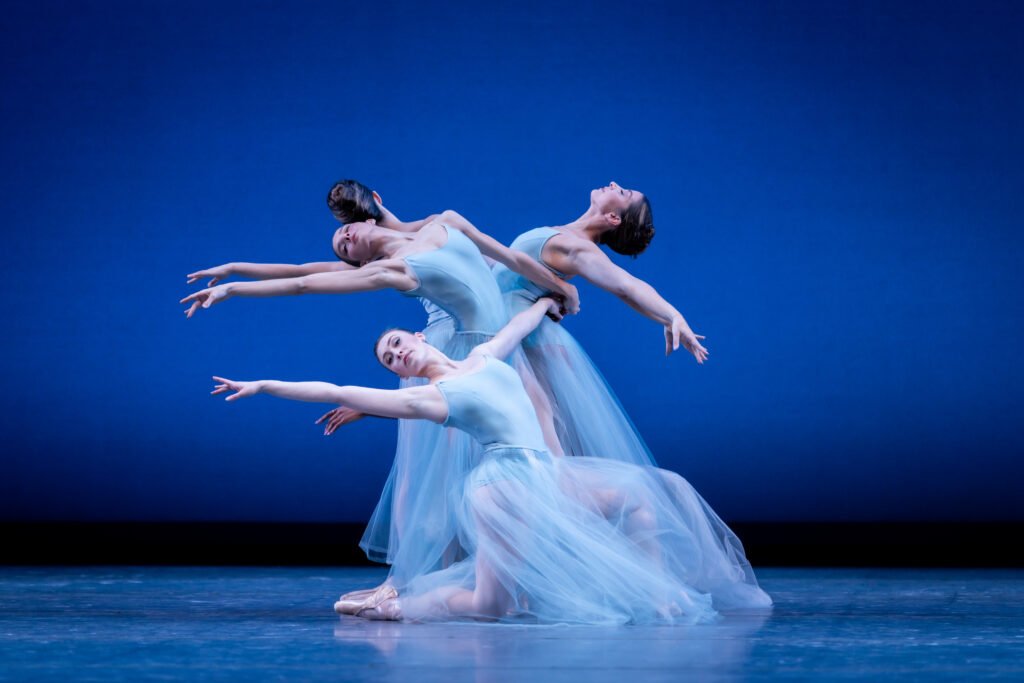
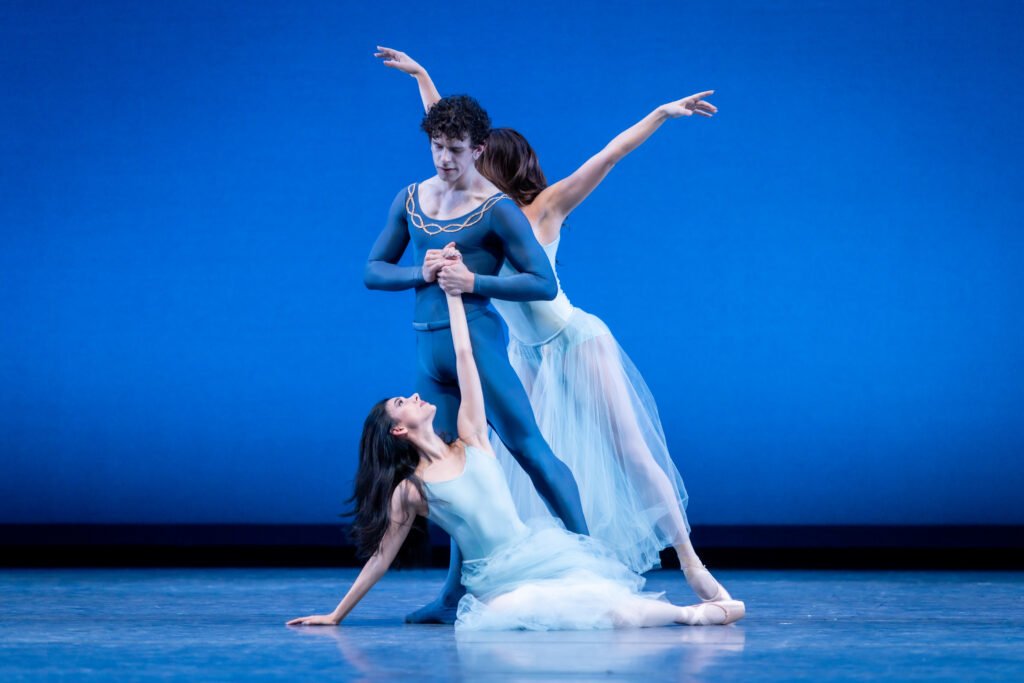
Though often described as plotless, Serenade feels anything but empty. Set to Tchaikovsky’s Serenade for Strings, it unfolds with a solemnity that borders on sacred, less concerned with narrative than with atmosphere and longing.
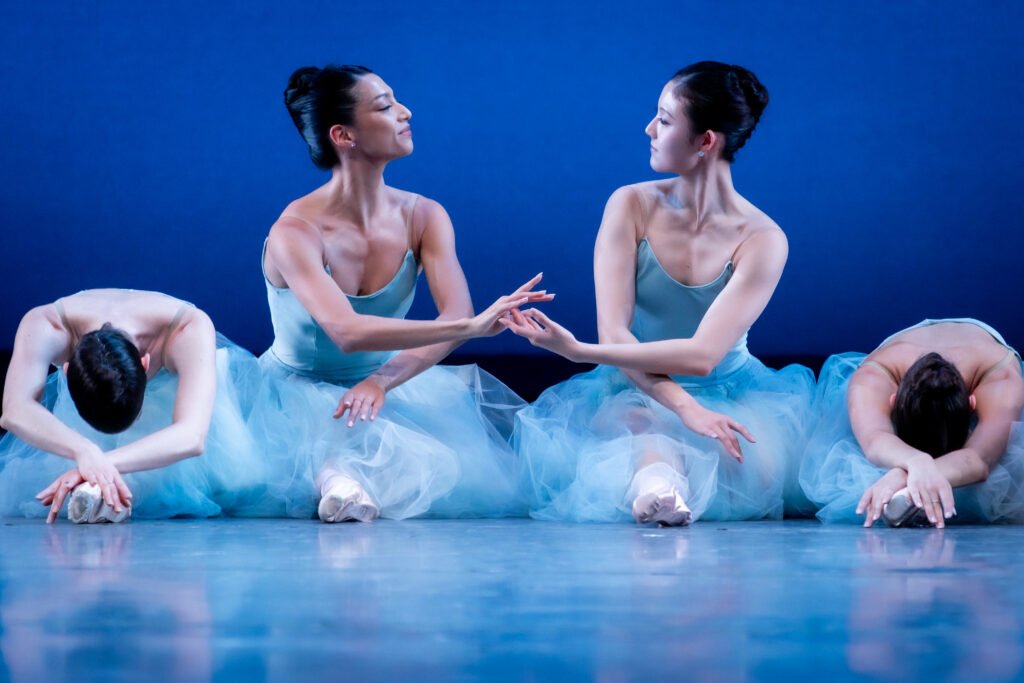
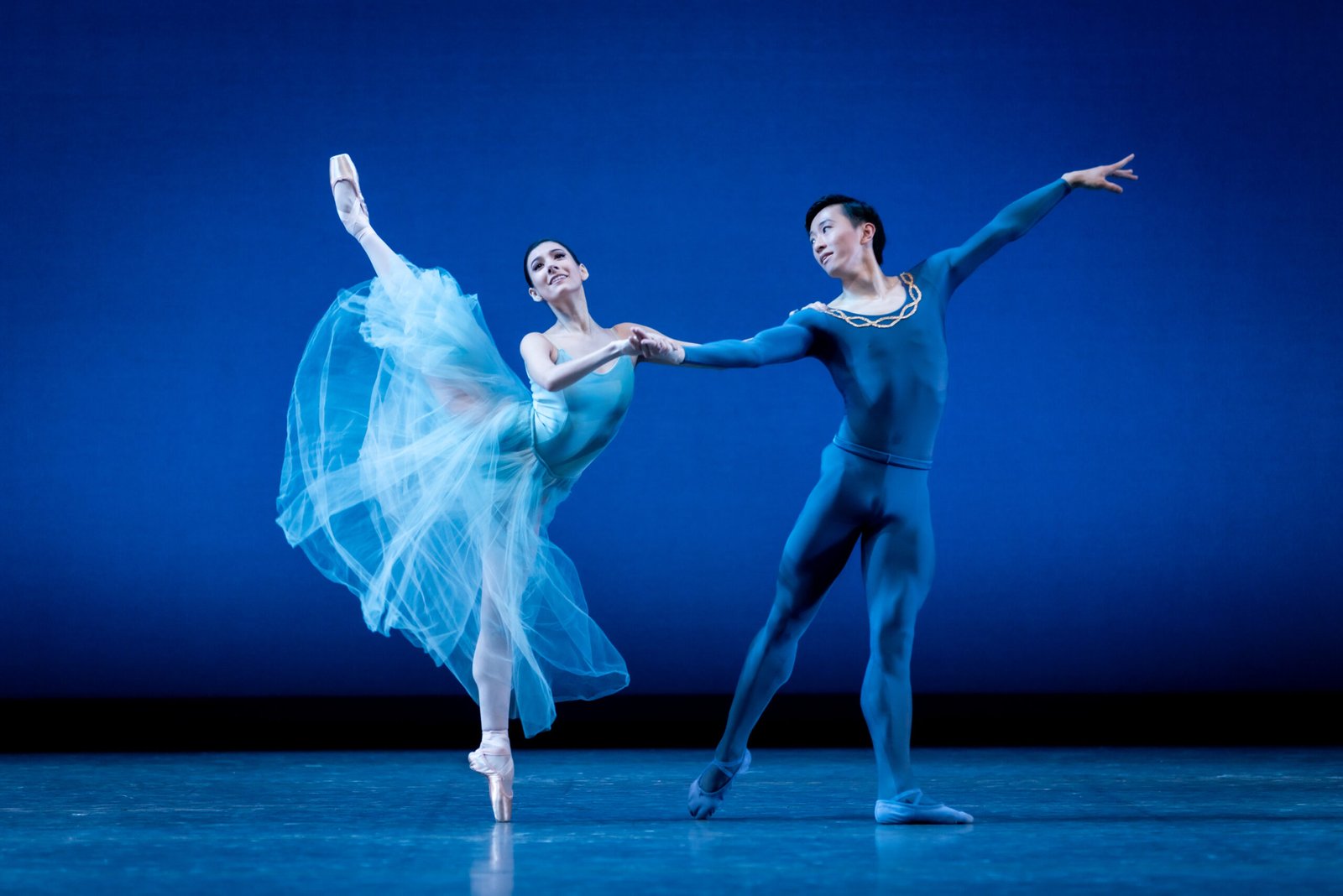
Like Diamonds, it begins with a stage filled with ballerinas, this time in ballet-length blue tulle skirts arranged in sculptural formations that call to mind Raymonda, which San Francisco Ballet staged just last season. The symmetry is classical, but the tone is softer and more introspective, with a faintly surreal quality that lingers.
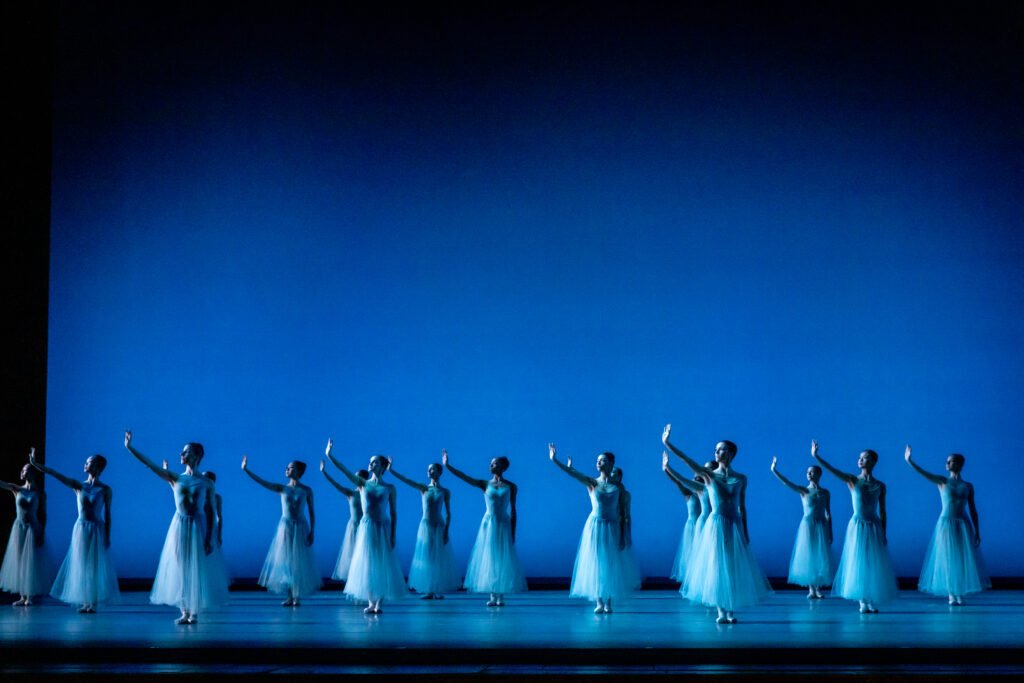
Balanchine famously allowed real rehearsal moments to live inside the choreography, most notably the late arrival of a dancer whose entrance became part of the structure itself, and because Serenade has long been a ballet dancers grow up with, returning to it at different stages of their training and careers, that lineage is visible on stage, where apprentices move beside seasoned soloists and principals through the same long blue phrases, their subtle differences in weight and timing adding texture rather than disruption, so that the stage feels layered and almost generational, as though the ballet is holding past and present in the same sweep of movement.
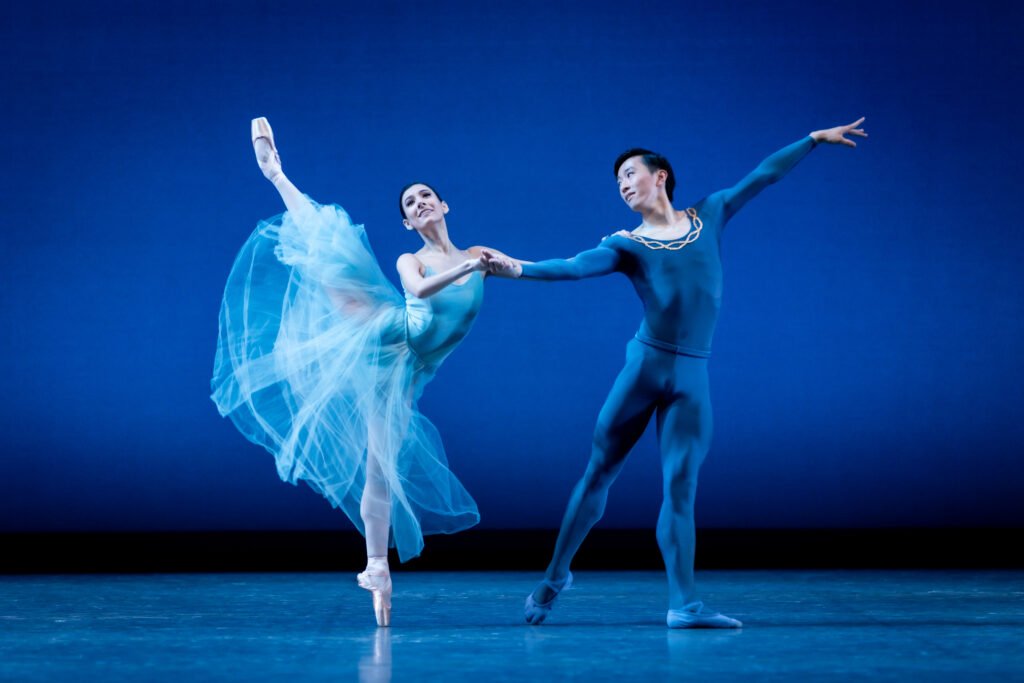
Jasmine Jimison enters partway through, echoing that original late arrival, and from the moment she appears, the emotional temperature deepens. I first saw her as Juliet in Romeo and Juliet, shortly before her onstage promotion to principal following the retirement of Yuan Yuan Tan, and since then, she has become a dancer of remarkable emotional clarity, her movement lyrical and expansive yet powered by a striking athleticism that seems to originate from the very center of her spine.
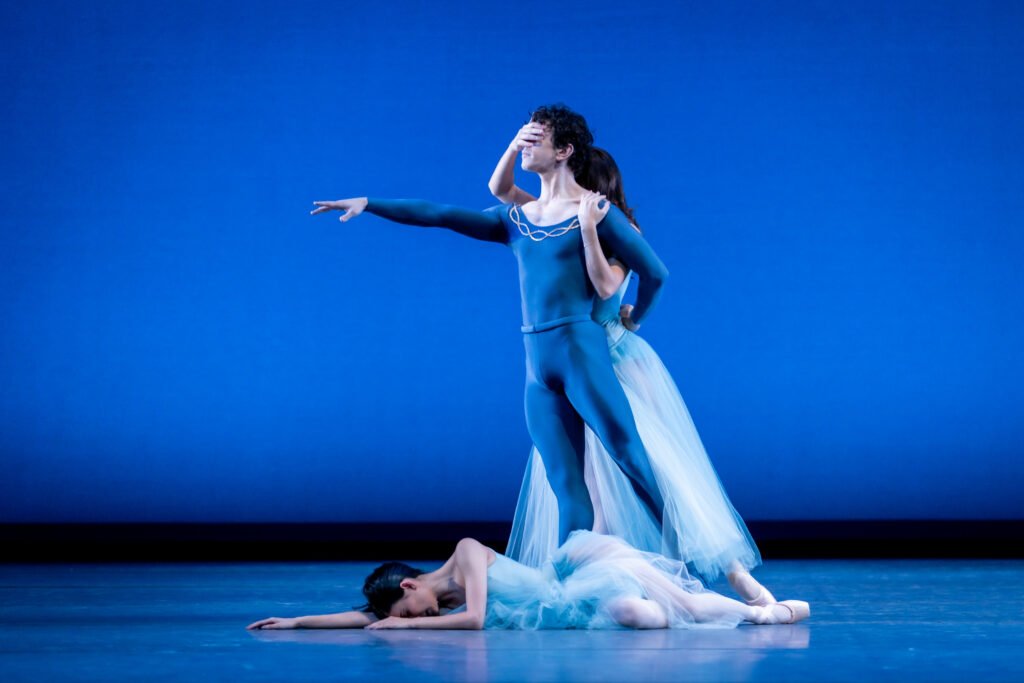
When Wei Wang joins, and the atmosphere shifts again; he carries a princely sincerity that feels effortless rather than imposed, and paired with Joshua Jack Price the two male leads brought a passion and urgency that grounded the ballet’s spiritual undercurrent without disturbing its restraint.
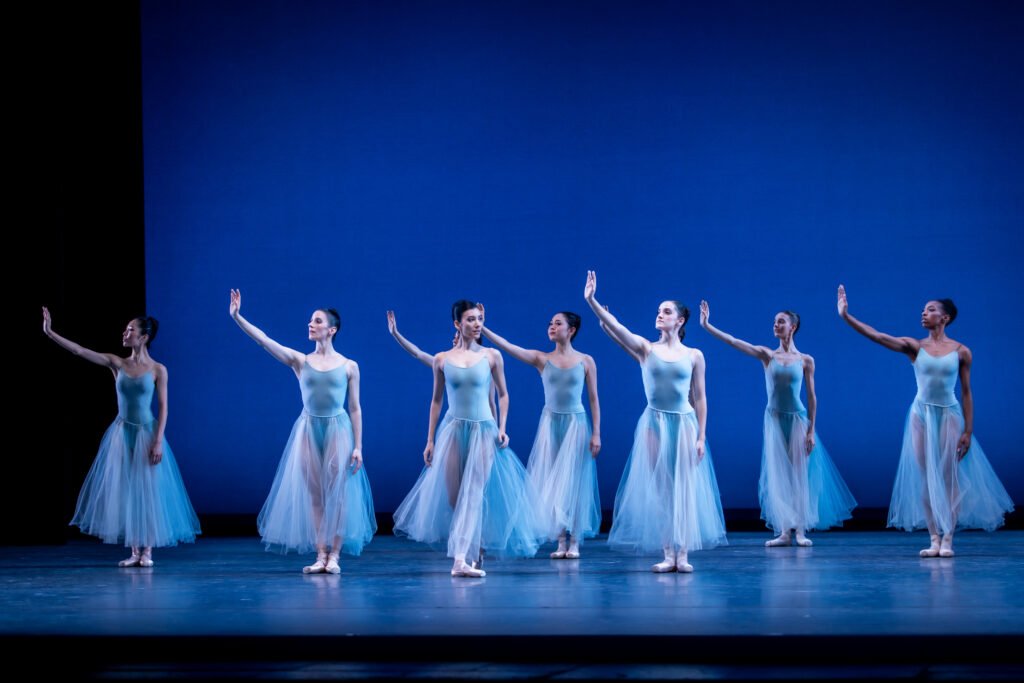
Sasha Mukhamedov, statuesque and commanding, revealed impressive emotional depth in this work, shaping its slightly eerie, almost dreamlike tone with confidence and intelligence. Nearly a century after its debut, Serenade feels neither distant nor preserved behind glass, but fully alive, as if the years have only deepened its pulse instead of gradually dimming it.
I had seen Stars and Stripes just last month at the Opening Night Gala and written about it then, but some works reveal themselves differently the second time around. The gentleman to my right told me he first saw it in the late 1950s, brought by his parents as a child, and here he was decades later watching it again. Perspective, like choreography, changes with repetition.
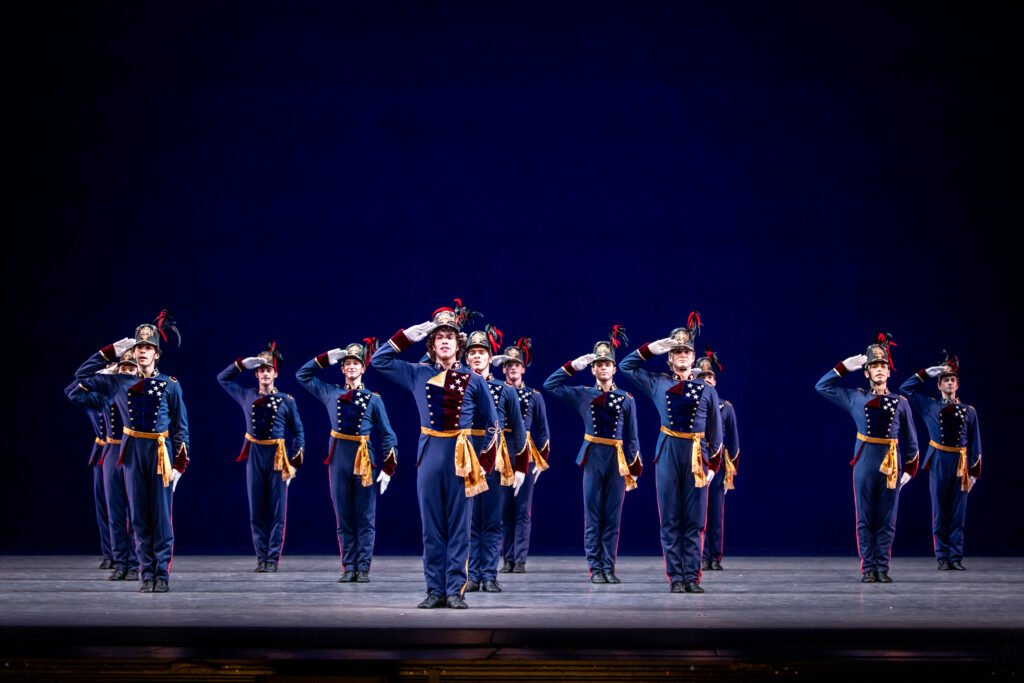
Created in 1958 during the Cold War, it was Balanchine’s exuberant tribute to his adopted country, set to the marches of John Philip Sousa and structured as five “campaigns.” It was designed to be bold.
Katherine Barkman led the first campaign with crisp precision, commanding the stage as a drum major, baton flashing in clean arcs that matched the punch of the music.
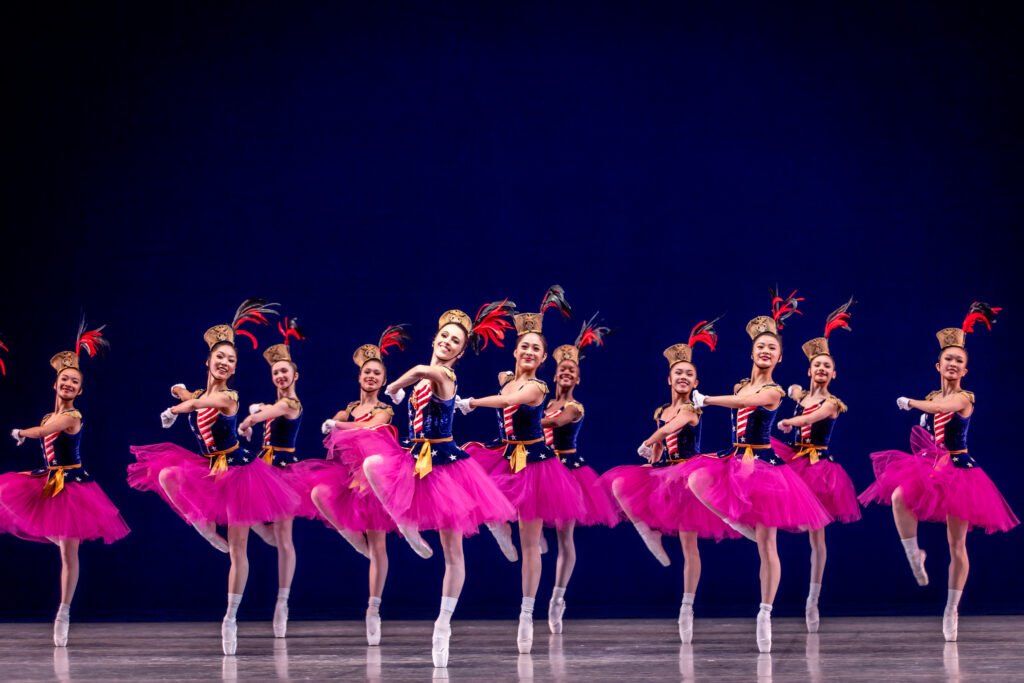
Sasha Mukhamedov stood out again in the second campaign, which favors expansive lines. Her stature and amplitude suited it beautifully. She filled the stage with confidence, her technique generous yet exacting. It feels as though she is entering a new era this season.
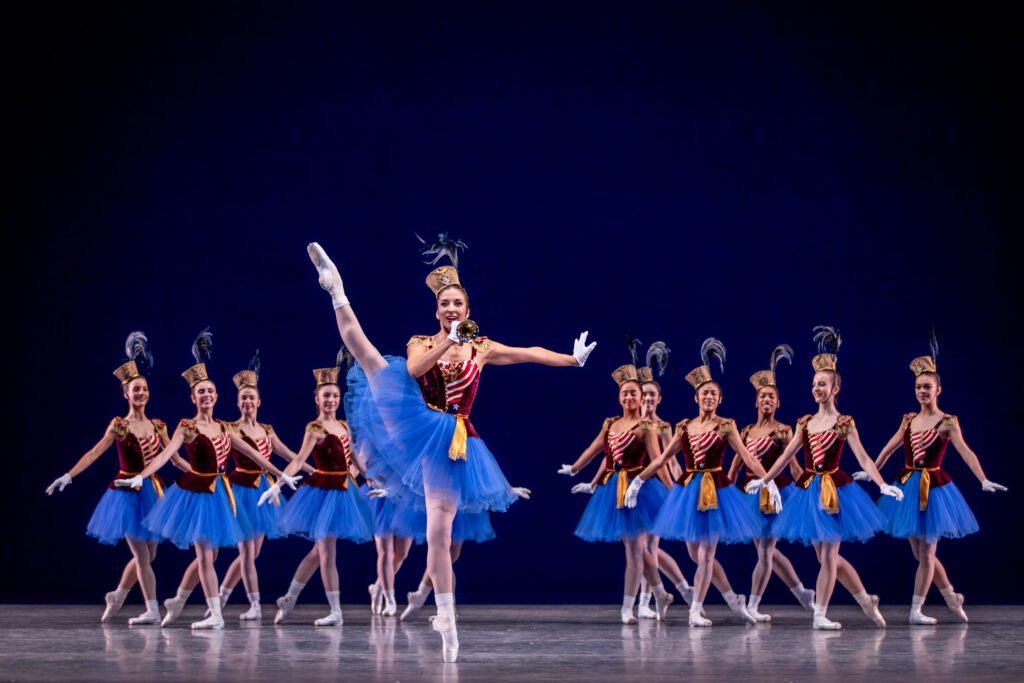
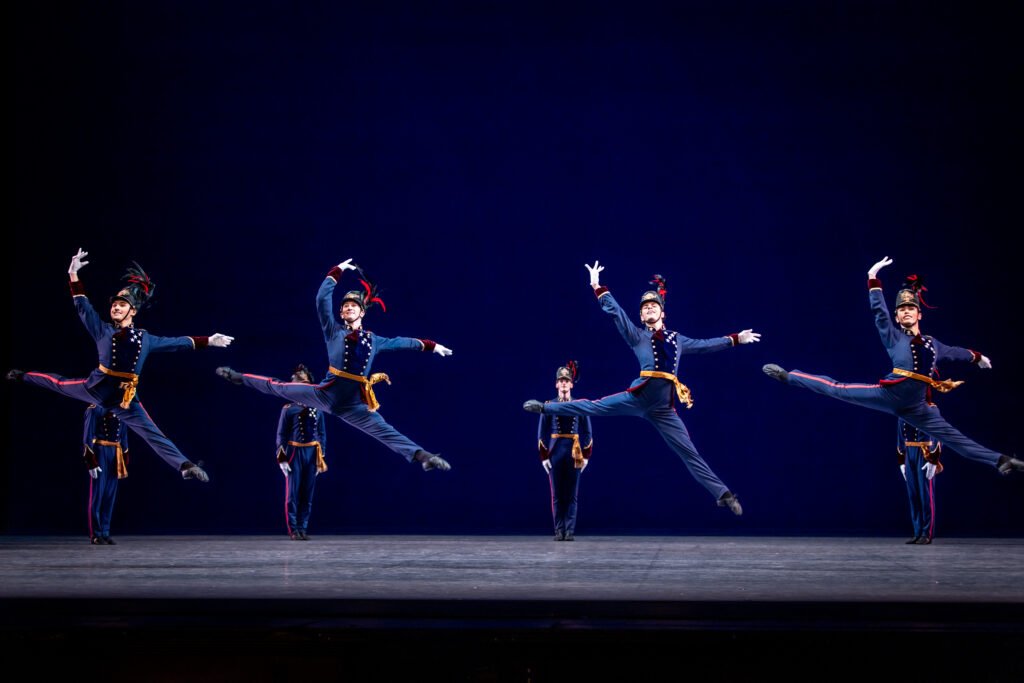
Esteban Hernández led the all-male campaign, and the section itself became pure bravura. Lines of cavaliers sliced across the floor before launching into explosive jumps and tightly wound turns. There was a competitive electricity to it, as though each dancer was daring the next to go higher.
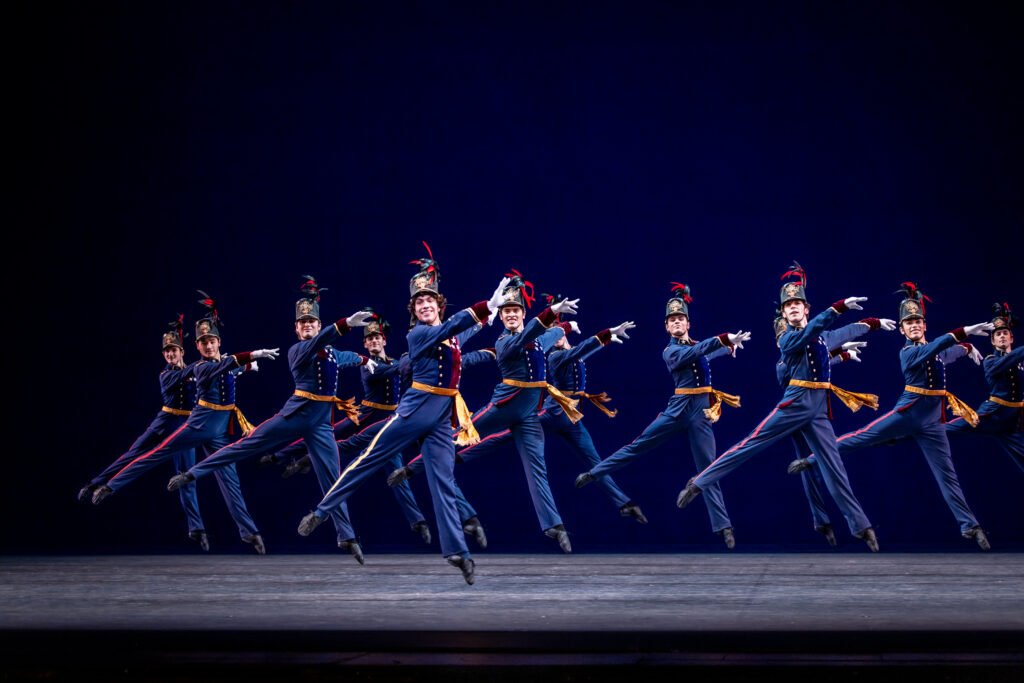
And then Madeline Woo closed the ballet with unmistakable presence. Recently arrived from the Royal Swedish Ballet, she brings a brightness that feels entirely her own. It is a genuine privilege to watch her dance. The moment she steps onstage, the entire opera house seems to lift. Paired with Cavan Conely, the two captured the flirtation at the heart of the final campaign with charm and ease.
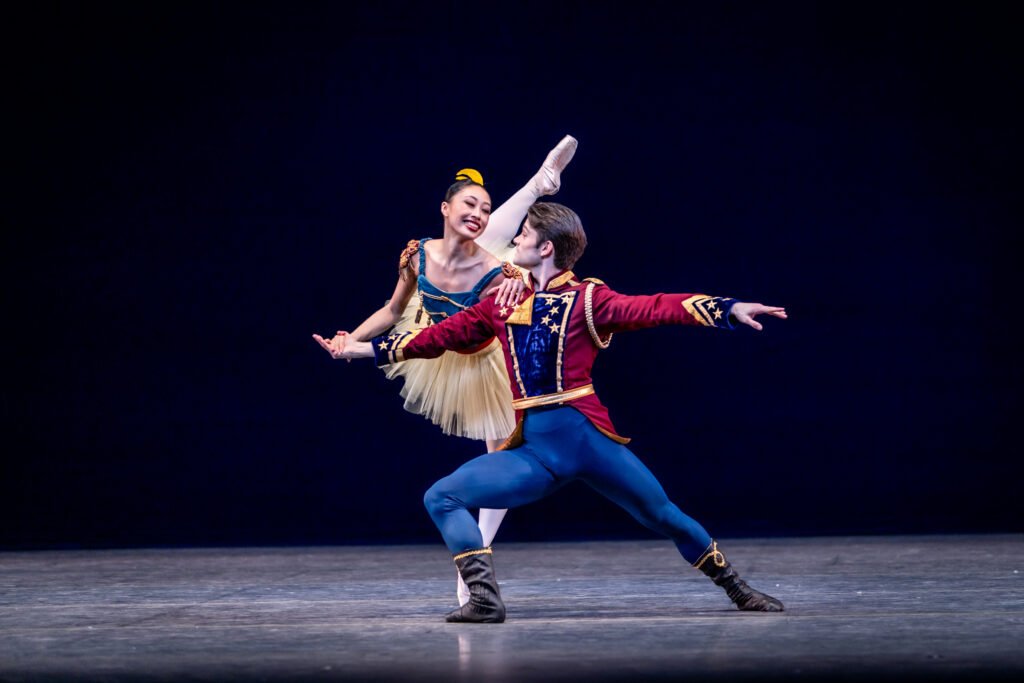
Watching it in an Olympic year, I could not help thinking about athletes. San Francisco Ballet is filled with artists from around the world, elite performers who train for years for a few exposed minutes under bright lights. Reaching that stage, like reaching the Olympic Games, is already a triumph.
When the cast returned for bows holding flags from across the world before a towering American backdrop, the image felt more layered than simplistic.
Yes, Stars and Stripes is theatrical. Yes, it is patriotic in full color. It flirts with excess and even a touch of vulgarity, but it does so knowingly, with a wink, and that is something I can always appreciate.
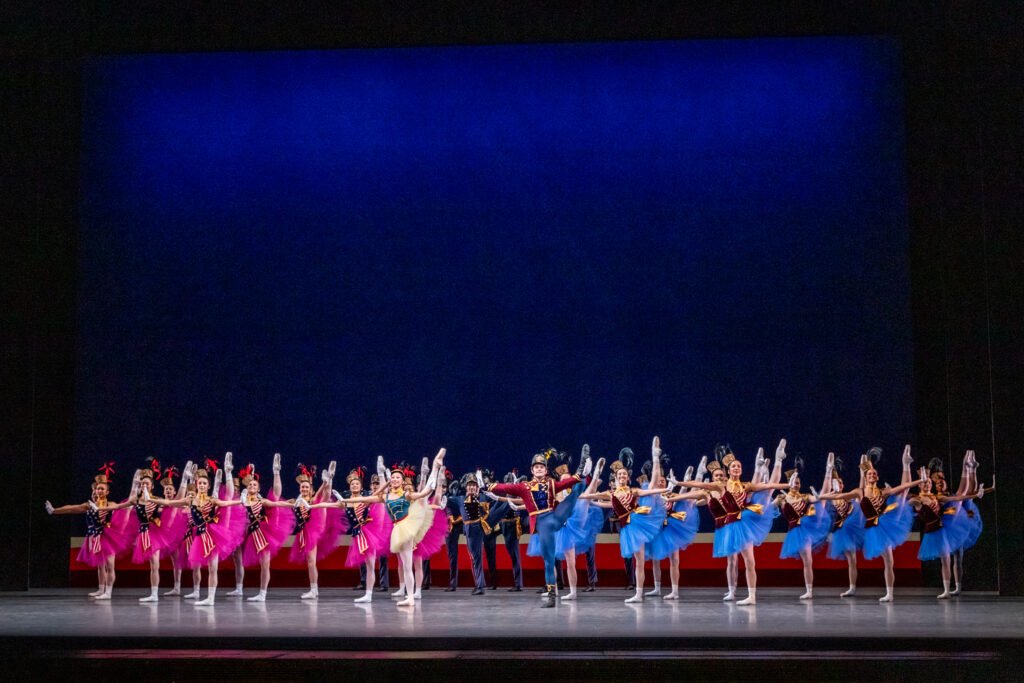
The evening begins with Diamonds, your favorite ballet dancer’s favorite ballet, and ends with Stars and Stripes, the ballet some people are quick to dismiss. Moving from one to the other in a single night is a reminder that ballet is wide enough to hold purity and pageantry at the same time, reverence and spectacle, the hush of white tutus and the blast of a Sousa march, and that may be its greatest strength.
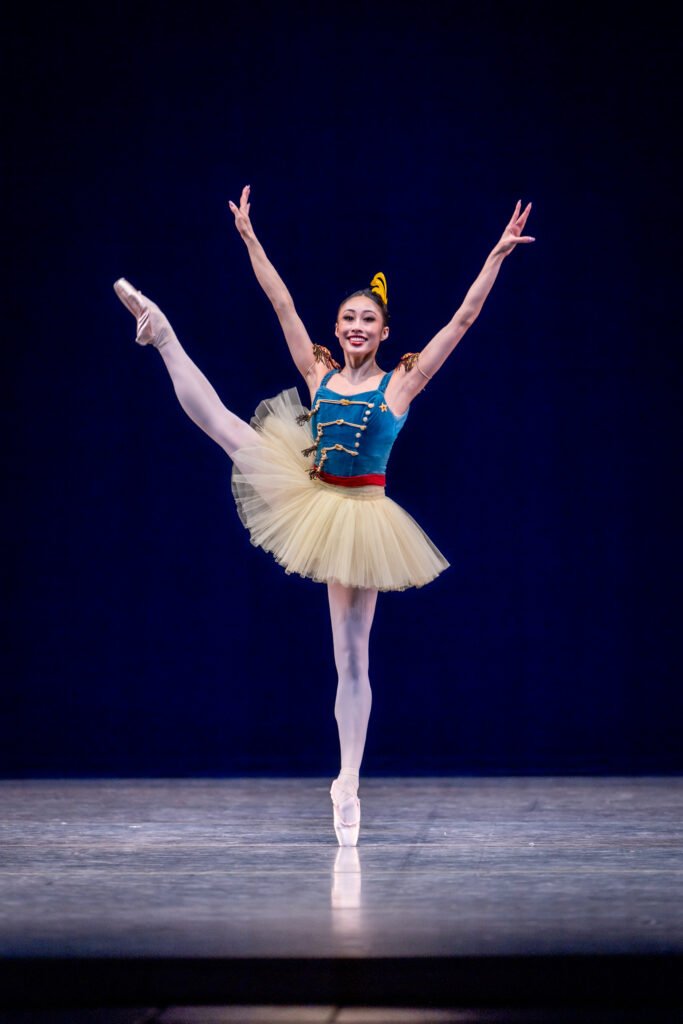
Balanchine: Father of American Ballet is onstage at the San Francisco War Memorial Opera House through February 15.
