

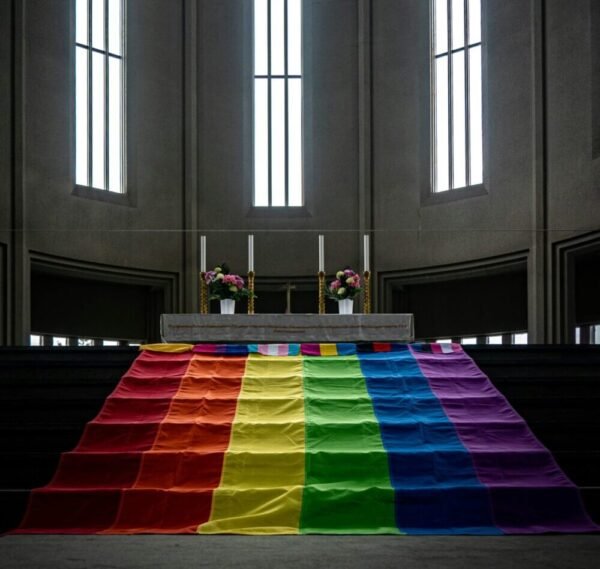
Churches that embrace all human beings are urged to identify themselves as such—not for branding, but for belonging. That doesn’t just mean affirming, but safe for all. I get that there are complications with branding as affirming that makes it impossible for some sects of Christianity, but as Jesus invites us to live like Him, He asks of us, “Love your neighbor as yourself.”
This ideology invites communities of faith to cultivate peace, compassion, and genuine welcome, and if a church claims to be Christian, this should be a guiding principle. As Christianity experiences a fresh movement rooted not only in Scripture but in living like Jesus, more churches are reconsidering what it means to be a healing presence in today’s world. Let’s look at some of these local churches that are accepting of all.
Nova Church
At Nova Church in Denver, Co-Lead Pastor Katie Fowler describes their approach to connection this way:
“Practice warm welcoming; honor stories by being a good listener; offer attunement and presence.”
This, to her, is what love your neighbor looks like in real time—not theory, but practice. Fowler speaks openly about a transgender member of her community, saying, “Our community wouldn’t be the same without him.” Nova interprets Scripture through cultural and historical context, allowing room for nuance and growth while remaining rooted in Jesus.
Because Nova is a church plant through Corona Presbyterian Church, publicly adopting the “affirming” label brings challenges. Yet the congregation remains deeply relational and open, even as Fowler navigates additional barriers as a woman in ministry—from unfamiliarity with female pastors to lingering misogyny in church culture. Still, the church’s actions speak loudly. “Come and rest in the love of Jesus.”
A transgender congregant at Nova told me: “This church has always been accepting. I’ve never felt a community like this before—not expecting me to be someone I’m not or to have a revelation that I should change. It’s a place where I can feel at home and build genuine friendships.”
Nova Church meets on Sundays at 5 p.m. at 8th and Downing for anyone looking to visit.
Denver Community Church
Jesus is the central doorway through which faith becomes action. Too often, Christians influenced more by cultural tradition than by Christ’s teachings use faith to justify exclusion. I’ve lost count of how many times someone told me, “I love you because of Jesus, but I don’t agree with your lifestyle.” Statements like this are harmful, stigmatizing, and deeply disconnected from Jesus’ example.
Pastor Hannah Thom of Denver Community Church (DCC) frames Christian life differently: “The call of Jesus is compassionate and generous, and we should be that too.”
She adds a guiding value at DCC: “Any action toward any group of people that doesn’t come from compassion and generosity misses the heart of God.” Denver Community Church fosters belonging by implementing a group for their LGBTQ+ congregation, Thom adds, describing their community: “The ones that go to the group are the ones that will show up when the community is in need, like if someone is moving.”
Following the True Teachings
This challenges the narrative that churches are universally hostile toward LGBTQ+ people or that LGBTQ+ people being in the church creates hostile environments. In fact, 59% of Christians in the U.S. believe in full equality, even though only a small percentage (7%) of pastors publicly identify their churches as fully affirming. Denver, with its progressive values, is fortunate to house many churches that are moving toward greater visible acceptance, and finding those churches is still easy even without rainbow advertisements at the door, though the “all are welcome” stickers do build that confidence.
There are Christian traditions—particularly the Archdiocese of Denver and many Catholic institutions—that maintain non-affirming doctrines. But across the broader landscape, countless communities are seeking to embody Jesus’ example of humility, justice, and radical love. We LGBTQ+ Christians are paving the way by pushing the societal boundaries into discomfort until we can stand together and become part of the norm. True growth happens out of discomfort, so sit in it and create those uncomfortable moments so that we can grow together as a whole again.
As writer Kiki Judith beautifully puts it, “Just because something was painful doesn’t mean there’s not beauty in your becoming.” Jesus’ inclusion of gender-diverse people in the earliest Christian communities shows that LGBTQ+ people have always belonged in the kingdom of God, like when Philip baptizes the Egyptian Eunuch, a bedside server to the queen, without any hesitation, and even within the two years following Jesus’s crucifixion. Jesus specifically calls on eunuchs during his pastoral reign, stating their acceptance no matter the reason they are different. Churches that are non-affirming or not open don’t take all of Jesus’s teachings to heart, and that stems the issue.
Throughout history, Jesus overturned harmful norms—literally flipping tables when the temple became corrupt. He washed the dirty, calloused feet of His disciples, a job considered lower than cleaning toilets today. Disciples following Jesus through animal-filled dirt streets in only thin sandals paints the picture of how degrading yet necessary this task was. His message was clear: leadership is service, and love is lived. Pastor Thom echoes this call to a faith of compassion, mercy, and generosity.
For churches wanting to foster a safe space for all, a simple “All Are Welcome” decal or joining networks like the Reconciling Ministries Network provides clarity and safety for seekers who fear being rejected at the door. These visible signs create a foundation for community, trust, and growth, and it opens the door wide enough for the LGBTQ+ community to feel like the door won’t hit them on the way out.
Humanity was not created for isolation. After the pandemic, rebuilding the community is essential for our collective healing. When churches openly declare welcome, they become places of refuge—fountains of abundant love. The more we share, the more blessing flows. The more the Congregation grows, the more people in the movement are able to scoop lost souls along the way to the next life of Jesus.
Photo courtesy of Unsplash
