

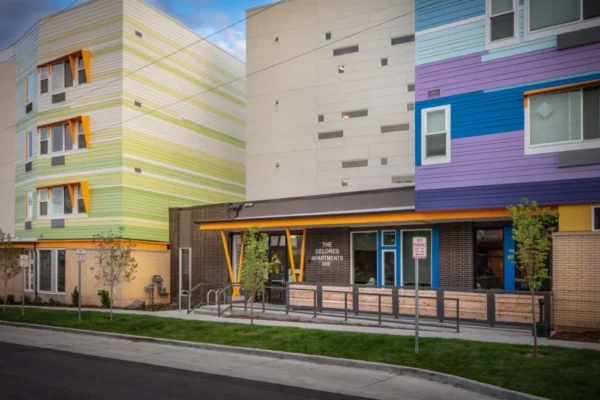
Since the year 2000, the generous spirit and warm hospitality of Delores Big Boy has intrepidly lived on through an organization named in her honor. Since her passing in 1999, The Delores Project has served women and trans people experiencing homelessness in the Denver area for 25 years and is undoubtedly an invaluable resource for some of the most vulnerable members of our community. The nonprofit has changed the lives of countless individuals for the better, but in its quarter-century anniversary year, The Delores Project is facing harsh funding cuts in 2026 thanks to the federal government.
In response to the slashed budget, The Delores Project has launched its new fundraising campaign, Bridge the Gap. The goal is to raise $250,000 by the end of this year. “Our supportive services would greatly diminish,” says CEO Emily Wheeland of the consequences of losing crucial funding. The shelter and supportive housing solution not only gives those down on their luck a roof over their head, but also currently provides meals, case management, essential goods, and much more for its residents. A lot of things will change, however, if the organization is not able to recuperate the loss. Luckily, Wheeland says, The Delores Project is willing to put in the work: “The good news is we’ve got a hell of a team steering the ship.”
One such ship-steerer is Lucas Land, Director of Development for The Delores Project. The trauma-informed design of the organization, they say, is key to its high success rate in terms of rehabilitation and client outcomes. “All the supports that make our program successful for folks would be less,” they say of the looming threat of the budget cut. There are, according to them, several components that contribute to clients’ ability to recover from the trauma of the homeless experience. Providing behavioral health support and full-time case management are the MVPs of this process. The ability to provide follow-up case management for clients 12 to 24 months after they exit the program and transition to living independently in permanent stable housing is also a factor.
Fostering a sense of belonging, familiarity, and healing in clients when staying at The Delores Project is also paramount to its work. The organization does this by providing a place for clients to just “be,” meaning there’s no requirement to leave the premises during the day. “I think people don’t realize how much being poor or unhoused is a full time job,” says Land. Indeed, having to wake up early to leave a facility, as is common in many homeless shelters, isn’t effective in fostering the healing and therapeutic environment necessary to recover from the unhoused experience. The Delores Project faces having to resort to an overnight-only model in their shelter in 2026.
The housing-first model has been a key element of operations at The Delores Project for many years. This means providing low-barrier access to the services offered, because none of the issues that contribute to homelessness in the U.S. can be solved without laying a foundation of stability first. The Delores Project site includes both a dormitory-style shelter for incoming clients, and permanent supportive housing apartment units. Each resident is offered support via case management, which on the permanent supportive housing side is overseen by program manager Brenna Kelly.
“For people with the most complex needs, PSH is a catalyst in achieving long-term housing stability, health, and community integration,” says Kelly. Not only that, but it’s more cost-effective than other measures commonly taken towards addressing unhoused individuals’ needs. More strain is put on crisis services and first responders such as paramedics and law enforcement when homelessness is neglected, as people living on the streets are less likely to have the ability to address serious health concerns and are often targeted by police when encampments are erected in urban areas. “Cuts to PSH funding (would) ripple through our public systems. As people lose access to supportive housing, emergency rooms, shelters, jails, and outreach teams absorb the consequences,” says Kelly.
The Delores Project has been supporting the community in Denver for a quarter century. Needless to say, the time for the community to give back to this important local non-profit is now. If we as a city truly want to see issues like homelessness improve, we must take action in whatever ways we can. Whether that looks like donating to the Bridge the Gap fund, spreading awareness, or volunteering onsite, anyone and everyone has a role they can play in contributing to The Delores Project. Those who are ready to help the cause can visit The Delores Project’s website to learn more.
Photo courtesy of The Delores Project
