

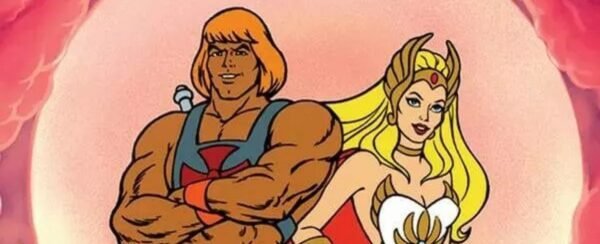
Without Ericka Scheimer—best known as a voice actress and producer at Filmation, where she brought life to beloved characters in She-Ra: Princess of Power—the evolution of queer representation in cartoons might have taken a very different path. In the male-dominated animation industry of the 1980s, Scheimer stood out as one of the few openly queer figures. In a 2007 interview with Prism Comics, she referred to Filmnation as “one of the gayest places in town.” Her visibility and creative influence helped carve out a “safe haven” for other LGBTQ+ voices to emerge, shaping the future of inclusive storytelling in animation.
During the time of Ericka Sheimer’s career, her work on She-Ra exemplified how queer themes appeared in coded or subtextual ways during the 1980s and even throughout the 1990s. Queer-coded characters often included strong female bonds, chosen family, and characters with flamboyant or non-traditional traits that resonated deeply with the LGBTQ+ audiences. This kind of “queer coding” became a survival strategy in mainstream animation, allowing creators to embed representation in ways that slipped past censors while still offering visibility to those who recognized it.
The seeds planted in the 1980s allowed for more overt queer characters to show up in cartoons years later. Shows like Steven Univere, Adventure Time, and She-Ra and the Princess of Power, the latter being a reboot of the She-Ra show that Scheimer herself worked on, offer more blatant representation today. The reboot by Transgender cartoonist Noelle Stevenson had gained praise for normalizing queer couples in kid’s cartoons, but also for the intentionality behind building the relationship between Adora and Catra slowly and naturally.
While Scheimer has not given her public opinion of the reboot, she did say in a 2011 interview with Pride.com that if She-Ra was made in 2011, she would definitely introduce a gay character. This statement was made seven years prior to the Netflix reboot created by transgender cartoonist ND Stevenson.
Stevenson speaks about the relationship that was written into the reboot to Gizmodo in a 2020 interview that his biggest fear was that if he built the relationship too quickly and too early on, that he would be told he wasn’t allowed to have the queer relationship in the show, he said “I sort of had a plan, and it was like: If I can get them to this place where their relationship and that romance is central to the plot, and it can’t be removed, can’t be noted-out, or it can’t be something that’s cut later, then they’ll have to let me do it.”
Ericka’s legacy is not just the voice she gave to characters, but the voice she gave to queer animation artists through her courage as an openly queer women in animation. Ericka’s courage not only shaped the world of animation but all areas of queer representation in the media. We have also covered queer voices like Ericka Ishii, who is well known in the world of gaming. As Scheimer once reflected, “Filmation was a safe haven where I could come out young and live openly.” That openness helped pave the way for the queer storytelling that now thrives on television screens worldwide.
Photo courtesy of social media
