

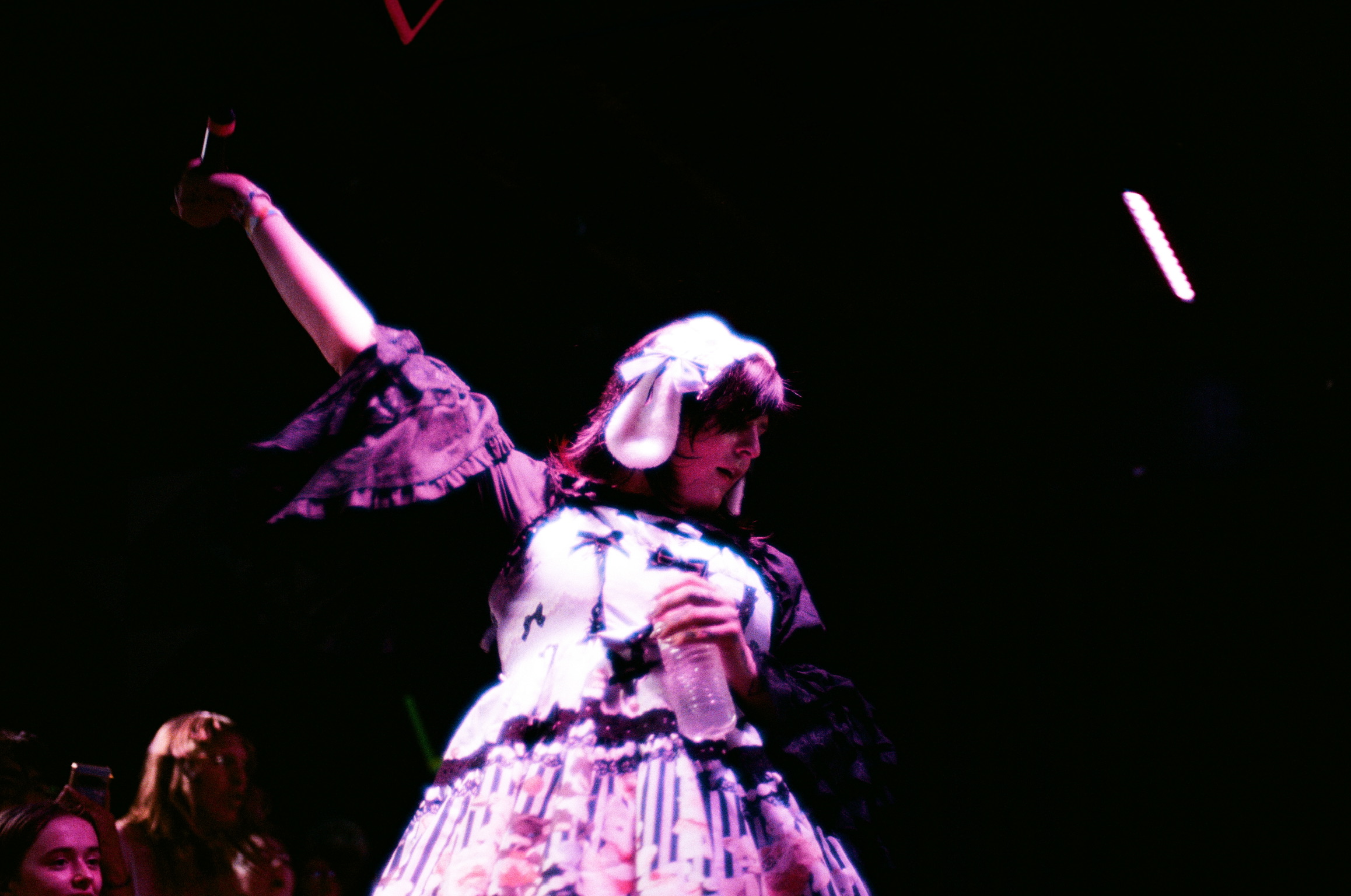
“I don’t think there is a single demographic that takes music more seriously than a 14-year-old girl that shops at Hot Topic,” Astrid Smith tells me.
Over Zoom I see a bookshelf of manga, a framed poster from her current Emo vs Rave Girls Tour and a CD rack with the Vocaloid album Supercell sitting on top. At one point, Smith, who goes by the stage name astrid, pans the camera over to a Chibi style drawing of herself she got after a show in LA.
“I very briefly made eye contact with like a little girl… she had made that for me (the drawing) and a little bracelet and a bunch of other stuff. Her dad was like, ‘This is her very first concert ever,’” Smith says.
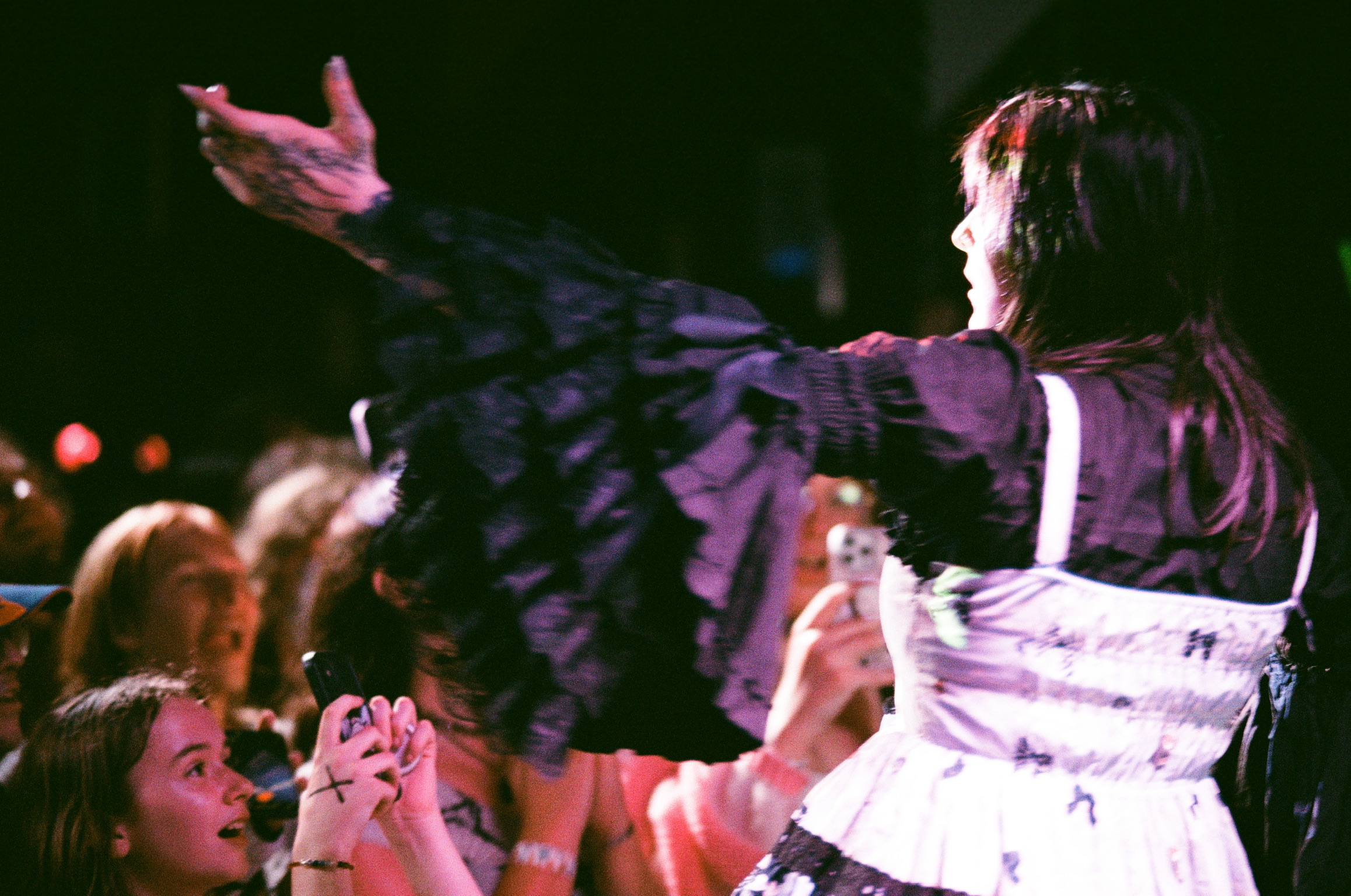
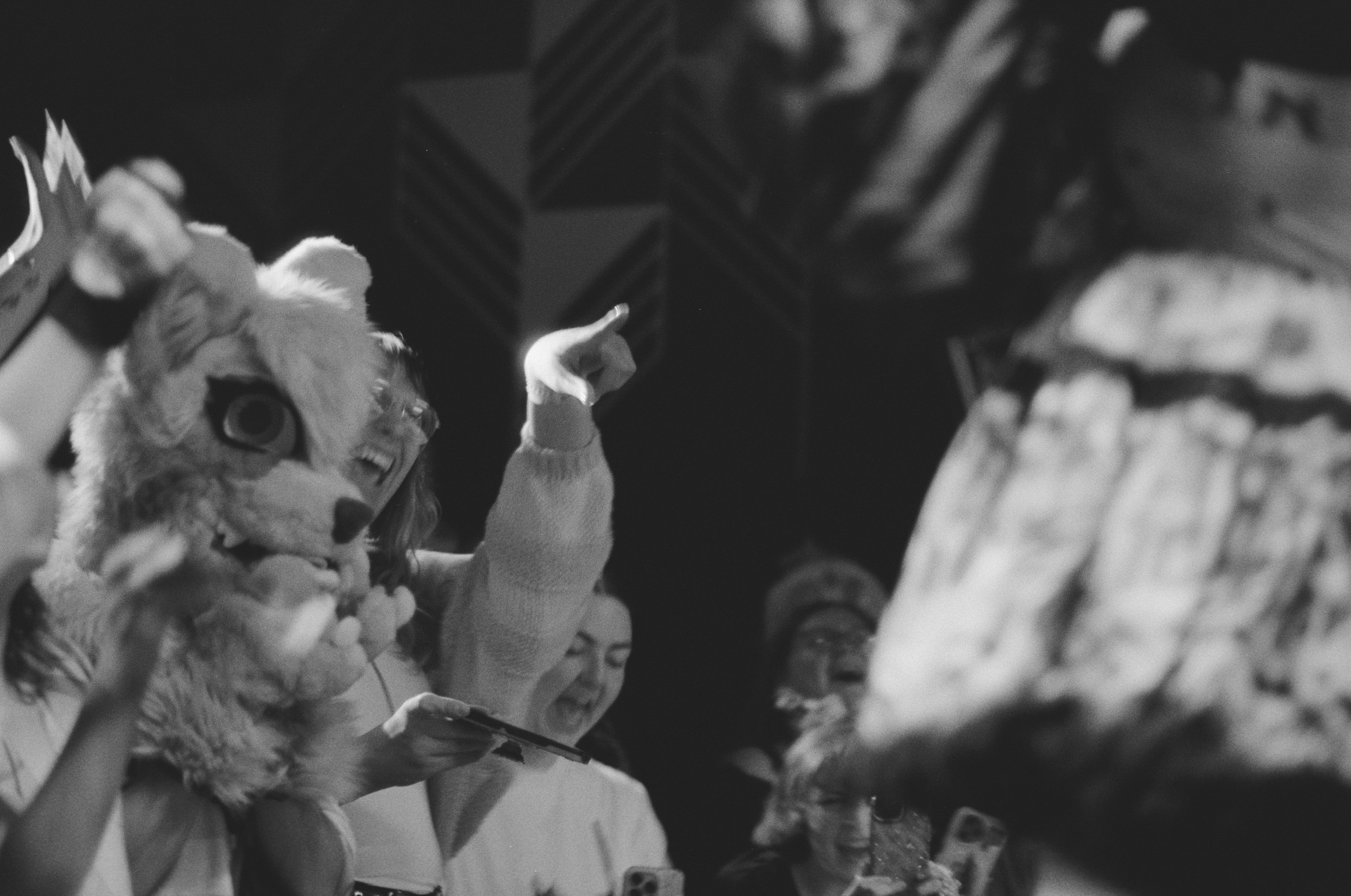
Despite what she’s been telling me about her listener demographics trending younger, I thought her May Market Hotel show felt familiar. My friend first saw astrid at Complex 24, a Denver DIY venue where another friend famously got the recipe for homemade poppers. So, the Market Hotel Show looked like what I expected: a broken HVAC, a pit full of furries, and tall girls to bum blue Spirits from.
“My view from the stage was a dad with his 12-year-old daughter … covering his ears,” Smith responds, “they (older trans people) are in the back huffing poppers and forming a pit; the kids are up in front because it’s literally their first show.”
It’s jarring to see astrid accumulate what my girlfriend called, at the Denver show, “a Gen-Alpha ass crowd.” However, it’s been even more jarring to hear the earnest, in Smith’s words “sickeningly sweet,” direction of her new album SUCKER. In late 2025, just after the release of her EP Cellophane, Smith said on an interview with Hidden Driveway that getting “milktoast” rap bros into her music felt like success. To me, dance singles like “what’s up??,” “FML,” or “War Girl” did just that. My brother, whose last hip-hop listen was a Paul Wall single, even added “what’s up??” to his Spotify downloads.
“Last year I had an entire album ready to go, like 16 or 17 songs of, like, hardcore EDM … and decided to start over…There’s been a shift in mindset, where I was expecting to find my people versus where they were actually at,” Smith says. “I thought the real ‘heads’ were gonna get this. Actually, the kids that go to Hot Topic and love “Hazbin Hotel” and Dandy’s World, like, those are the people that actually get me.”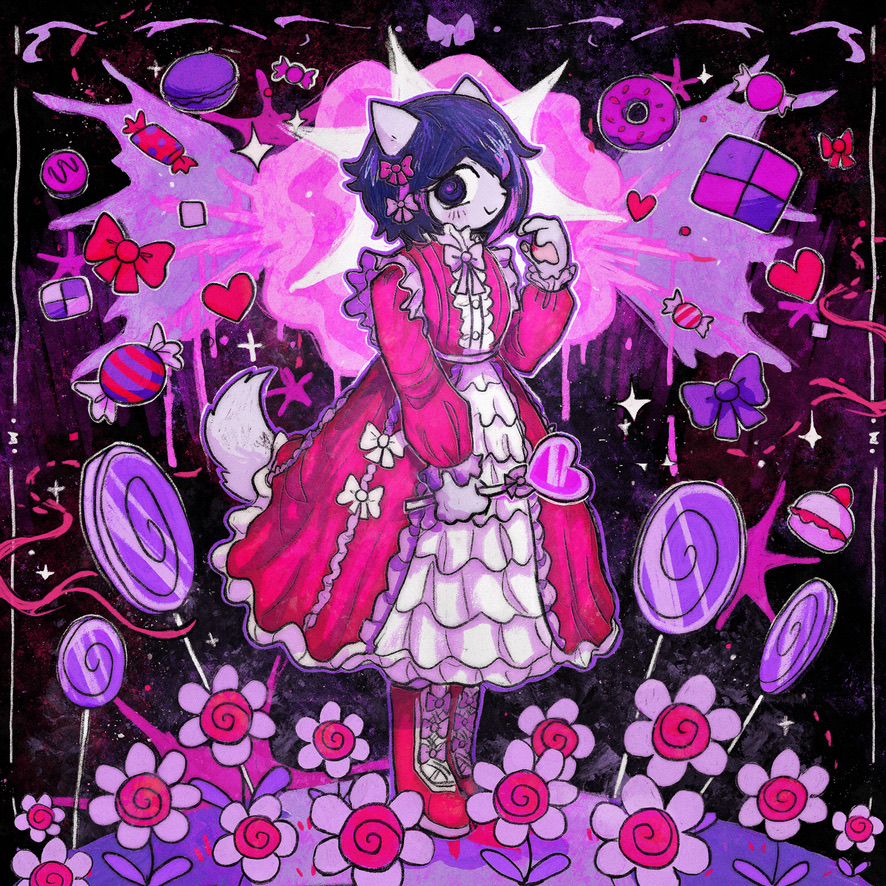
Deeply in conversation with NES soundtracks, Vocaloid, and musicals, I would describe the sound of SUCKER as tooth-aching. The opening track, “candy for breakfast,” which sets the tone of the project, sounds like the “Mii Channel theme” in girlmode—upbeat synth chords pushing a tacky pop aesthetic so far it becomes manic and oppositional.
“My writing style and my voice is very over the top, super angsty,” Smith says. “The album, it’s so forward in a lot of ways; if I didn’t just lean into it, it would be considered really corny.”
The album comes after a two-year album hiatus and immediately sets itself apart from astrid’s past discography. Voices on previous projects, like Viscera (2024) and Hellraiser (2023), alternated between indignant and detached, while THIS CAN’T BE GOOD FOR ME (2023) bounced between binge and burnout. The voice on SUCKER, however, is a deeply earnest mix of mania and vulnerability, wondering: “All I’ve ever wanted was the moon and a pony/ and someone to hold me/ is that too much to ask?”
“In my previous work, I sat down and essentially was like, ‘I want to take … my worst qualities and amplify and personify those into a character,’” Smith says. “Whenever I finished those albums, it was like, ‘I don’t want to feel this hopeless anymore.’”
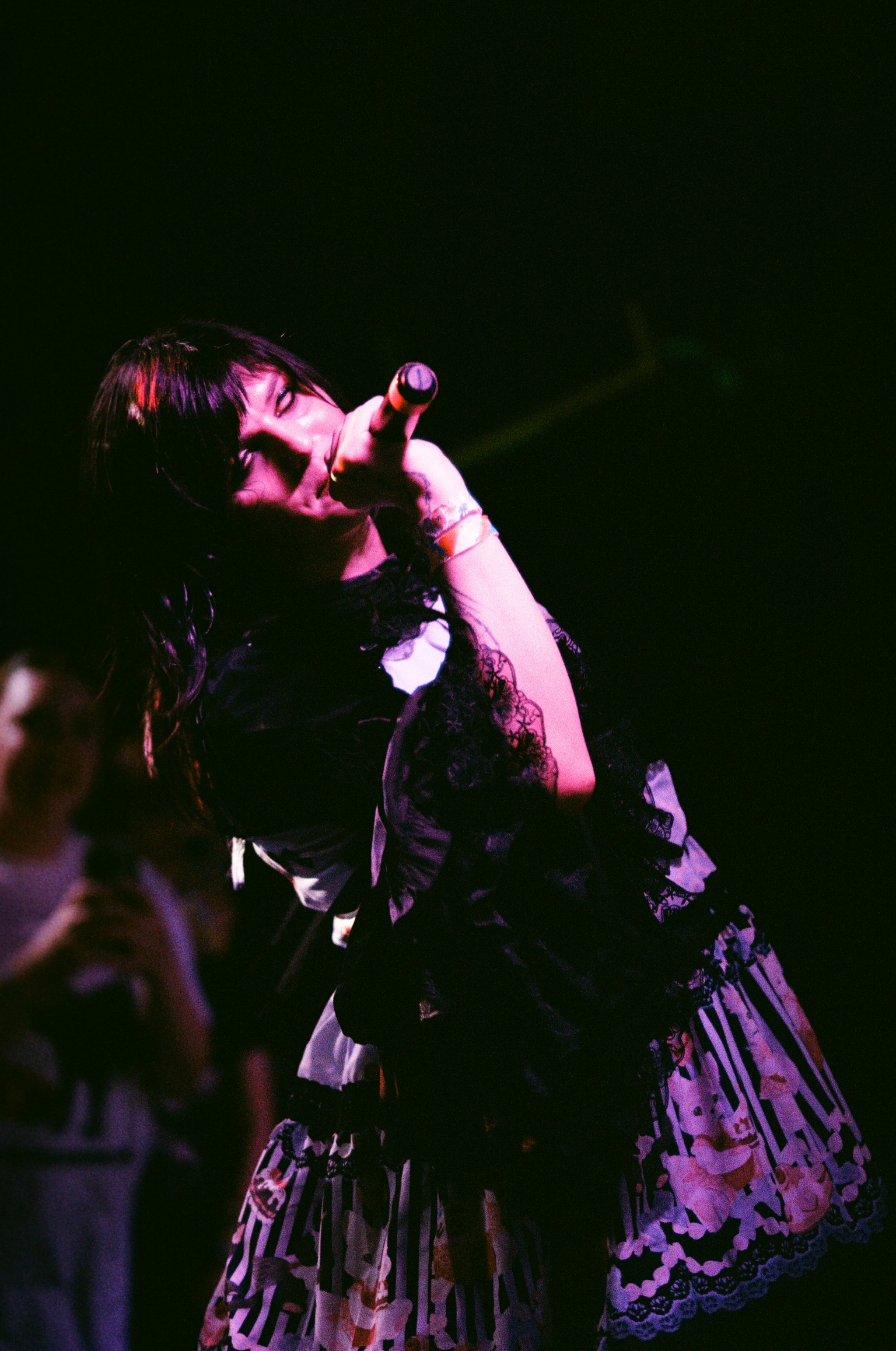
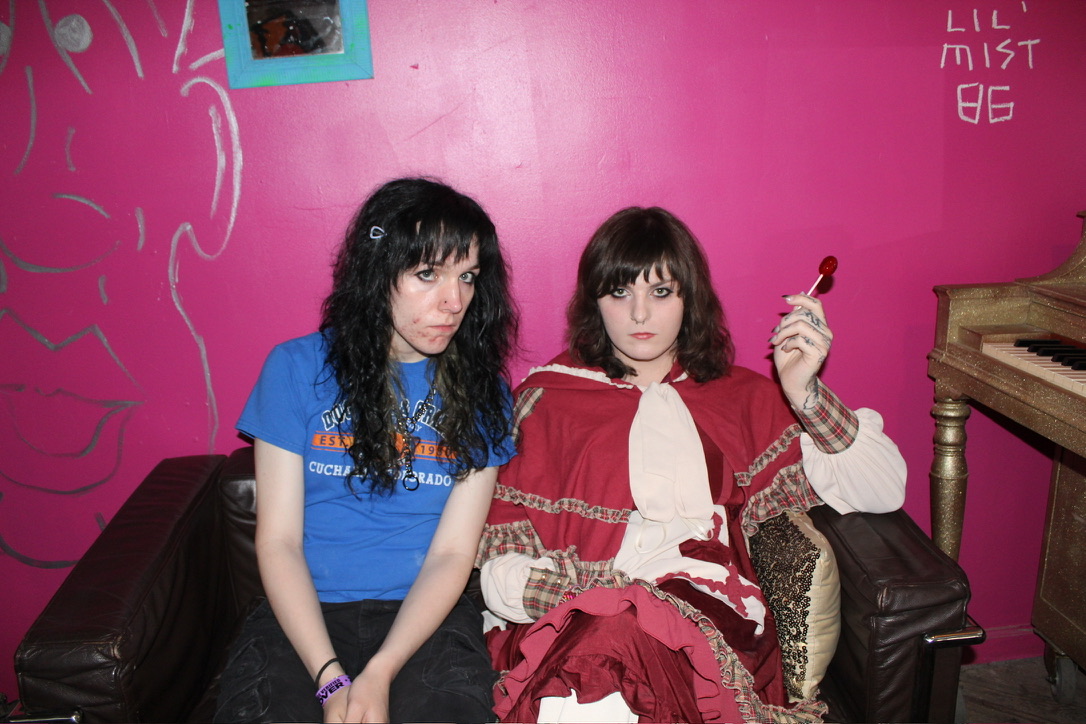
Smith’s art has always been attentive to an attempted, and sometimes failed, connection with its audience. Throughout her career, she’s struggled against the label of “hyperpop,” saying on Hidden Driveway that it means, “’Oh you’re a trans person that makes music.’”
“If you’re a trans woman online, (people) just round up to the nearest person that they know … For some reason, all the time, I get told my music is like 100 Gecs,” Smith says to me.
“100 Gecs is an envious parody of ‘Bling Bling’ hip hop for a generation of kids who still wonder if the internet made us women”
As a listener, and a tranny, the type of posturing that exists in Changeline, Jane Remover, and much of astrid’s past music provided aspirational bravado to the reality of trans vulnerability in American culture. To me, 100 Gecs is an envious parody of “Bling Bling” hip hop for a generation of kids who still wonder if the internet made us women, and I find that liberating.
On a past astrid album “bruises,” the thesis statement of Viscera, calls out a connection from rejection to over-reliance on creative validation, and “crashout” answers with an indignant trap banger. For SUCKER, however, the nostalgia and escapism of Chrono Trigger, Hatsune Miku, and emo-pop serve not to move the detached kid buried in their DS to from vulnerability to power, but from isolation to connection.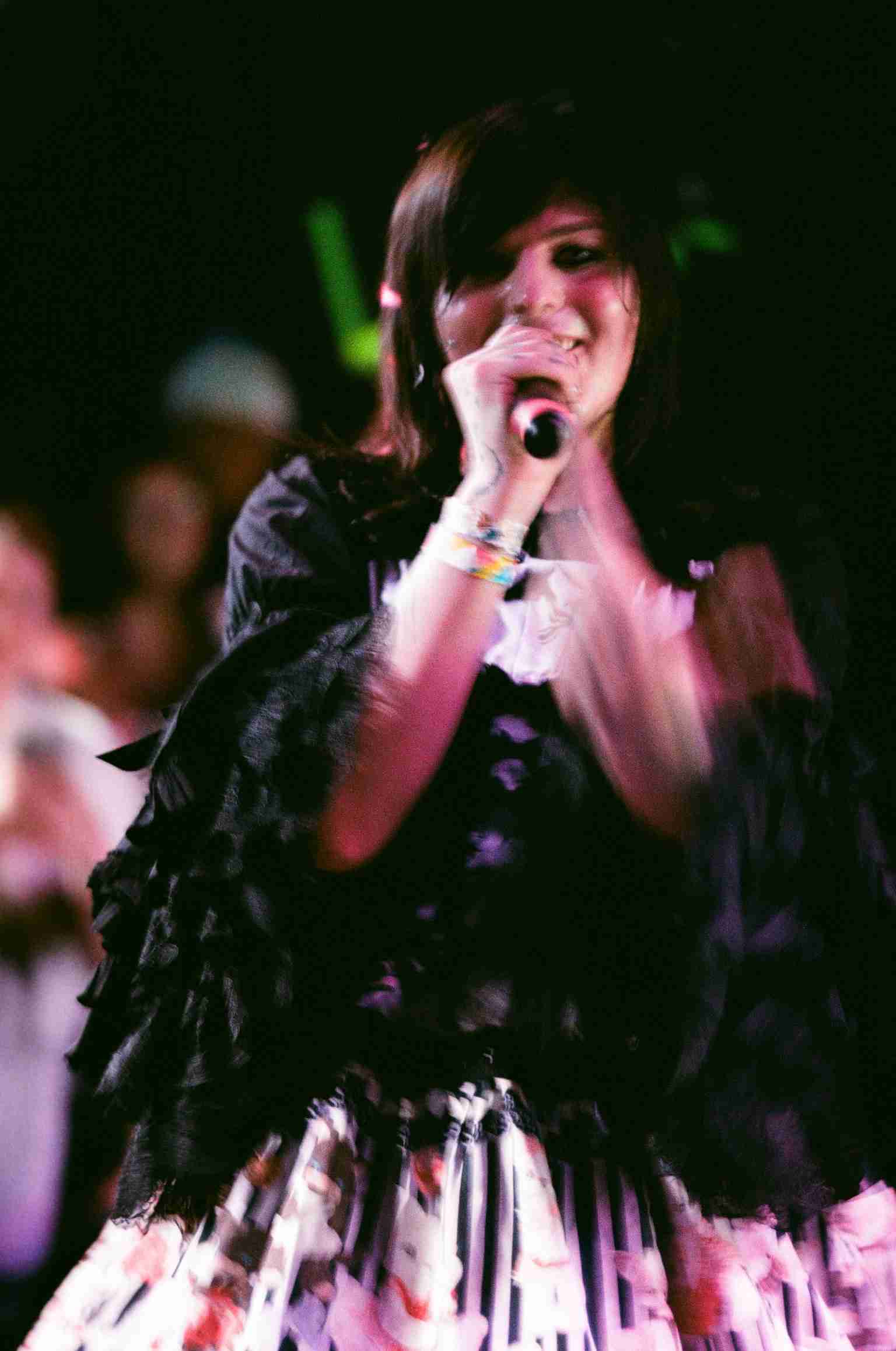
“In my real life, like if I’m having a bad day, I ground myself by hanging out with my friends,” Smith says. “Maybe that’s not as interesting of a song … as, like, ‘Oh, I’m at the club getting money.’ I think at the end of the day, it’s representative more of who I am.”
It occurs to me, too, that this is the most collaborative project astrid has put out. Mastered by longtime collaborator Charloux and featuring milkypossum, Clark Rainbow, and Stomach Book, the album is also entirely co-written with Vivian Koehn, who goes by the stage name sleepwalker.
“For the longest time … I wanted to show people that, like, I was a very capable self-made artist … I realize if I want to take my career to the place I want it to be, I have to learn how to trust people and take more off my plate,” Smith says.
If astrid’s music has gained a younger audience, it might be because the vision it’s developing is more hopeful than the ironic hedonism that filled out her older albums. As a fan of the latter, SUCKER initially confused me, but I’ve come to enjoy the authenticity that comes with astrid moving into her own sound. The maniacally sweet sound of the album feels powerful, as counterpoint to her reclaiming (and coopting) of machismo, and as development of a more authentic, while still subversive, voice in astrid’s discography.
“The album is about saying, ‘You know what, I think writing something that, if I were 13 right now, it would be my favorite album—That’s good enough,” Smith says. “I think this is a really great opportunity to kind of reintroduce myself to the world and to my listeners.”
Featured photo courtesy of Natalie Allen
If you enjoyed this post consider checking out Eden’s Substack for more coverage of emerging trans writers and artists.
