

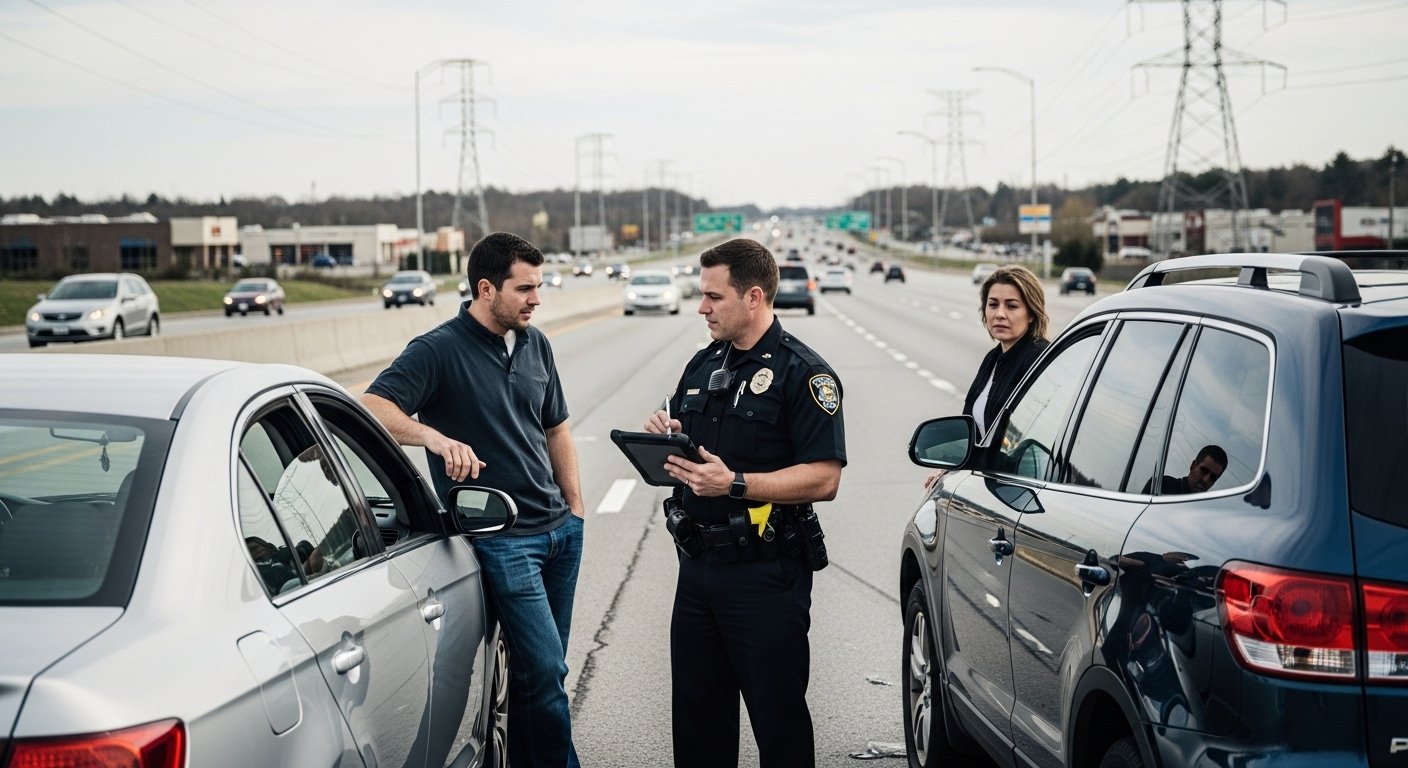
The intersection of modern technology and legislative updates is fundamentally reshaping the landscape of personal injury law within Gwinnett County. As local infrastructure evolves along busy stretches like Peachtree Industrial Boulevard, the rules governing how drivers seek compensation have become more intricate than ever before.
Understanding these shifts is not merely an academic exercise but a necessity for anyone involved in a collision. Recent changes in Georgia’s legal framework focus on precise documentation, meaning the way you handle the minutes following an accident can significantly impact the evaluation of your claim.
How are Digital Reporting Practices Evolving?
The threshold for what constitutes a complete accident report has shifted toward a digital-first approach. In Duluth, law enforcement officers now utilize expanded electronic reporting systems that capture real-time location data and synchronized timestamps. This shift aims to reduce the ambiguity often found in traditional paper reports, where human memory could be flawed or biased.
When an incident occurs near high-traffic areas like the Gwinnett Place Mall, the extraction of telematics and vehicle diagnostics is increasingly sought during the civil discovery process. The availability of this technology means that he-said, she-said arguments are increasingly supplemented or replaced by hard data. If a vehicle’s onboard system shows a sudden lane departure without a signal, the presumption of negligence becomes significantly harder to refute during the claims process.
What Role does Digital Evidence Play Today?
Modern evidentiary rules and the increasing prevalence of Event Data Recorders (EDRs) have moved digital evidence from the periphery to the center of the courtroom. Georgia’s rules of evidence allow for the integration of vehicle analytics, such as braking force and steering angles, to be used as primary evidence in determining fault. This transition ensures that the physical reality of a crash is documented with scientific precision.
A Duluth car accident lawyer, like the team at Slam Dunk Attorney, often highlights that while this technology provides clarity, it also demands immediate action from the involved parties. Because many vehicles are equipped with black boxes or Event Data Recorders (EDRs), the window to preserve this information is narrow. Under Georgia’s rules regarding spoliation, failing to protect this data can lead to severe legal penalties. Here is how the specific categories of data impact a modern claim:
Vehicle Telematics and EDR Data
Modern cars record the exact speed and braking patterns in the five seconds preceding an impact. This data is objective, leaving no room for the common exaggerations often found in witness statements or defendant testimonies.
Dashcam and Surveillance Integration
With more local businesses and residents installing high-definition cameras, video evidence is frequently requested by insurers. These recordings provide a visual narrative that can confirm or deny the data points extracted from a vehicle’s internal computer.
How do Recent Truth-in-Damages Provisions Affect Medical Billing?
“The integrity of a personal injury claim now rests on the immediate bridge between the accident scene and the clinic, as delayed documentation is frequently viewed as a lack of urgency rather than a lack of injury,” says Brian Wright, a Duluth car accident lawyer.
While there is no strict statutory timeframe, prompt and verified treatment documentation remains critical for establishing the causal link between the crash and the injuries. The law emphasizes actual costs rather than billed charges, a distinction that significantly affects the valuation of a claim. This prevents the introduction of phantom damages and ensures that settlements reflect the true financial burden on the victim. If you find yourself recovering from a crash in Duluth, the Slam Dunk Attorney team is ready to meet at 2250 Satellite Blvd, Ste, 10 minutes drive from Georgia Gymnastics Academy Inc. 120, GA 30097, or you can call (678) 329-9750 to speak directly with a lawyer about your situation.
How Does Spoliation Affect Your Evidence?
In legal terms, spoliation refers to the intentional or negligent destruction of evidence. Under the landmark Georgia Supreme Court ruling in Phillips v. Harmon, 297 Ga. 386, a party has a duty to preserve evidence as soon as litigation is reasonably contemplated. In the context of a Duluth car crash, this means that if a trucking company overwrites its digital logs after an accident, a judge may instruct the jury to assume that the missing data was unfavorable to the company.
This provides a safeguard for victims, but it is a double-edged sword. If a claimant deletes social media posts or repairs their vehicle before the defense has an opportunity to inspect it, they could face sanctions. The goal of these rules is to ensure a level playing field where the truth cannot be obscured by the disposal of inconvenient facts.

Where Do Modern Safety Initiatives Intersect With Law?
Local safety programs, such as those outlined by the Georgia Governor’s Office of Highway Safety, are increasingly influencing how reasonable care is defined in court. For instance, the ongoing reconstruction of SR 316 and the addition of new interchanges at McGinnis Ferry Road have changed traffic patterns and signage.
When a driver fails to adhere to these new configurations, they are not just violating a traffic rule; they are breaching a heightened standard of care established by modern engineering. Courts now look at whether a driver was aware of these local infrastructure changes. If an accident occurs in a Work Zone or a newly designated Safety Corridor, the penalties and the subsequent impact on a civil claim can be much more severe.
Frequently Asked Questions
What is the statute of limitations for a car accident in Georgia?
For most personal injury claims, you have two years from the date of the accident to file a lawsuit, while property damage claims generally have a four-year window.
Can I still recover money if I was partially at fault?
Yes, Georgia follows a modified comparative negligence rule, allowing recovery as long as you are less than 50% responsible for the incident occurring.
How does the Hands-Free Georgia Act affect my claim?
Evidence of phone usage while driving is considered a violation of the Hands-Free Georgia Act, which can be used to establish negligence per se in a civil case.
What should I do if the other driver’s insurance company asks for a recorded statement?
You are generally not required to provide a recorded statement immediately; it is often safer to consult with a legal professional to ensure your words are not misconstrued.
