

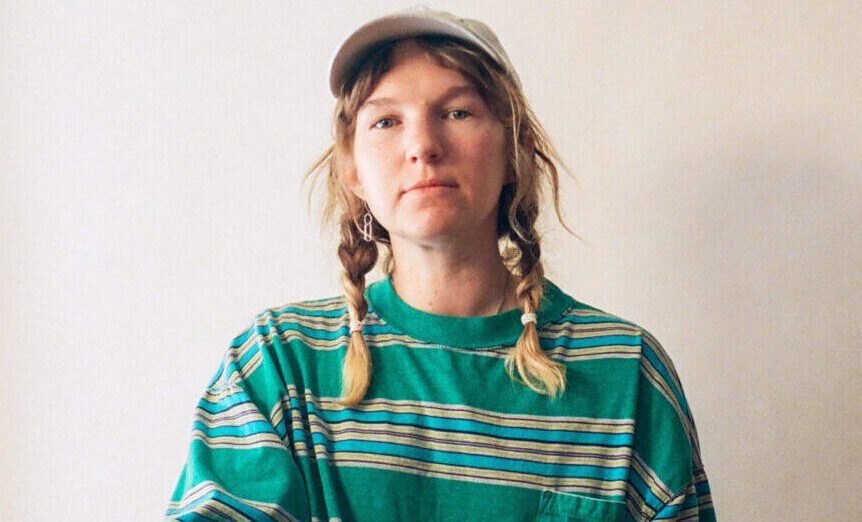
The Practice of Attention by Cody Cook-Parrott is a perfect springtime read for anyone who has been finding themselves doom scrolling too often lately, or who is struggling to focus on what they need to be. The book is a guide meant to help the reader reclaim their time and be more mindful about where their attention is going. It discusses digital detoxing as well as an auditing process the reader can conduct to observe where their attention goes. Mindful practices to help strengthen the attention span are also walked through in detail throughout the book. The Practice of Attention is available for preorder now and will release on March 17.
I noticed you don’t write the word “god” like a proper noun. When I started reading your book, what you’re referring to as god “with a little g” is more abstract or subjective than what some people think of as God, maybe like “with a capital G.” If it’s not an old man with a big white beard and a white tunic sitting on a golden throne in the clouds, what do you have in mind when picturing god “with a little g?”
Cody Cook-Parrott: So funny. I definitely do picture clouds still, and maybe there’s white tunics. I’m not sure. But I feel like, to me, god is definitely nature. It’s being in the forest. For me, it’s visiting the lake. And I like to say that god is anything that I’m not. So, you know, just something outside of myself that I can sort of put trust and faith in. But yeah, it’s definitely not an entity. It’s not like, a being, as much as it is, you know … I interchange the word “god” a lot with “higher power” or “spirit of the universe.” And I like that language that’s just sort of, you know, putting a little bit of faith in something outside of myself.
I love that. We’re all one with the universe.
Yeah.
Did you grow up religious or spiritual, and did that set the stage for the spiritual beliefs you engage with now?
I grew up in a pretty agnostic home. My parents didn’t go to church. They weren’t religious, and I’m really grateful for that. I feel like it let me go down some weird paths. Like my freshman year of college, I joined Campus Crusade for Christ. And I think my parents had like, the opposite thing that conservative parents are so afraid their children will find devil worship or something. And my parents were like, “Why have you joined Campus Crusade for Christ? That’s scary.” And I was like, “Oh no.”
It didn’t last long. You know, I was really looking for like belonging and community. I think it was like, before I knew I was gay or trans, I was just looking for people to be around and to feel accepted by. But yeah, I feel really lucky to have grown up in a home where my parents were always questioning their own definition of God, and really let me kind of experiment and figure out what mine was.
That’s awesome. I kind of grew up in an atheist house. For me, it was to the point where it was like, first or second grade at school maybe, and some kid talked about something they did at church over the weekend. I was like, “What is that?” “It’s church, like … Bible, and God and stuff.” They all seemed really confused. I didn’t know what they were talking about. I’d heard like the word God on TV, but I thought that was just, like, a word, like gosh or darn. So I felt that. Like, I also got to explore because I wasn’t tied down to any organized religion.
Totally.
I also am in recovery as well, for nine months now. I read about you getting sober in your book. I felt like a lot of unresolved feelings had came up after I stopped using drugs, that I had escaped with drugs. It’s kind of like a dam burst at times. Did you feel like that when you stopped drinking?
Yeah. Oh, definitely. I mean, you know, I’ve been sober almost 15 years, and I still feel like the dam bursts sometimes. Like, there are just moments where I’m like, “Yeah, drugs and alcohol, they worked, you know? They numbed me from whatever it was, childhood trauma, adult trauma, relational trauma. They’re great numbing mechanisms, until they’re not anymore. And so, yeah, sometimes I use the phrase “it feels like I’m playing whack-a-mole.” And that’s sort of in the book. Like if it’s not alcohol or drugs, then it’s like, money, shopping, or technology, or food, sex, or people, you know? I kind of just bounce around. So I think that’s why I’m so interested in god and a higher power. It sort of gives me access to something that I don’t find myself addicted to, but it kind of evens me out.
Nice. It gives you a equilibrium.
Yeah. And congrats on nine months. That’s really cool.
Thank you.
Do you have a date that you keep?
May Day.
Oh, cool. I have that tattooed on my ankle. May 1.
Oh, really?
Yeah, it’s a friend’s birthday. We have each other’s birthdays tattooed on on each other. But my sobriety day is May 17.
Oh, wow.
I like May Day.
May is a good time to do it.
Yeah, it is.
How do you ward off intrusive thoughts that stop you from focusing fully on what you’d rather think about?
Definitely movement is the thing that calms me the most. Whether it’s dancing, or doing Pilates, just stretching, going for a walk. I just had top surgery, so I’m feeling very, like, restricted in my movement right now, but I’m trying to remember I can open my arms and kind of slowly move my arms. So, really, movement. It doesn’t have to be like … Sometimes, I want to put on pop music and dance around really crazy, but other times, it can be really simple, gentle movement. And yeah, it just helps me. It really helps me. Also, my meds really help me not have intrusive thoughts. So, I always like to say to people, if you need extra help, doctors and psychiatrists are good helpers, too.
Yeah. It definitely helps my mood. That’s what my pill is for, mood. I was going to say, congratulations on your top surgery.
Thank you.
Also, you made me think of this. I’ll demonstrate. It’s like, something you can do. It’s really simple, but it’s to put you in a better mood. It’s the Superman pose. Or like, superhero, I guess.
(Ixora gets up and stands further back in the frame.)
OK.
You just like stand with your—
(Ixora knocks over a lamp.)
Oh, you OK?
Yeah. So you stand with your hands on your hips, like you’re a superhero standing on top of a building, looking over the city that you’re protecting. Or something. I don’t know. But you do this for, like, five minutes, and it’s supposed to help your mood. And it fixes your posture.
Wow, cool. I like that, I’m going to try that.
Let me know how it goes.
I will.
Do you find catharsis helpful? Like listening to Olivia Rodrigo on repeat after a breakup, symbolically getting rid of or destroying things that remind you of something upsetting, visiting a rage room, or something else that feels like closure or resolution?
Yes, I definitely, if anything, feel like I could stand to do more catharsis activity and work in my life. Like I do a lot of journaling, not like creative journaling, but, like, morning pages and brain dumping. And I like to burn those. So that always feels good to just be like, “All right, that was the last three months. We don’t need those anymore. Burn it.”
Definitely, if I’m mad at someone, I like to write a letter to them. Get all my anger out, and then burn that. And then, this is, like, a 12 step activity, but trying to pray for that person, which I hate doing, but has been helpful for me. Uh, but yeah … I definitely can like hyper-fixate on, like, a song or an album or something and listen to the same thing over and over, and I like doing that.
Me too. That was me with “good 4 u” by Olivia Rodrigo.
I love that. Yeah, that I was into. GUTS. Was that what it was called?
I think it’s SOUR.
SOUR. Thank you.
It’s also so crazy you say that, because we actually just had someone submit an anonymous letter they wrote to their ex-partner, that they felt burdened by a lot of unresolved feeling towards, that they never got to get out. So they submitted this letter to us, a letter to their ex from like four years ago.
Yeah.
That’s so long to be holding on to feelings.
Wow.
Maybe that was cathartic, especially to like, post it anonymously. Now anyone who goes on OUT FRONT can read it.
Yeah.
So I’m actually trying out this week-long attention auditing process that you talked about in your book. What was the thought process that made you develop this strategy? Did it go through versions, trying out different ways to do it before you landed on, like, the final way that’s made it into the book?
Yeah. The attention audit was really just from experimenting on myself and just trying to figure out, like, you know, I could hear myself saying, “I don’t have enough time for so many different things.” But I was kind of, like, scrolling for an hour, three times a day. That’s three hours. Sometimes I’ll find myself saying, “Oh, I can’t afford this thing,” but then I notice I’m spending a lot of money eating out or on thrifting or something, and I’m like, “Oh, maybe I could use some of that money in in this way, or pay down some of my debt.” And so, yeah, I think the attention audit just came out of wanting to pay better attention to how I was spending my time and my energy. And I had a few friends try it out before I put it in the book. And they all found a lot of success in reclaiming some of their time and attention. And that’s kind of how it came to be.
I love that. I’m really excited to see what happens for mine because I actually cut out social media, like, in the past few months because I saw this, ironically enough, on social media, this post that was like, you might as well sit there for an hour counting grains of rice out of a jar for how good scrolling social media for an hour is for you. And I was like, I don’t like how true that is, now that I think about it. So, I don’t use social media.
Every now and then I’ll ask my girlfriend if I can look at it on her phone, and she keeps up with the news, and the memes and TikToks, and the drama. So sometimes I’ll get things from her, but for the most part, yeah, I don’t look at it.
It really stood out to me when you pointed out that perfectionism can consume too much attention. I never really thought of it like that before. Do you have tips for anyone who might struggle to finish or break away if something’s done? Like if I struggle with torturing things. I feel like, sometimes I don’t know when to finish. I just have to keep tweaking things, and then it sabotages me. Sometimes things don’t need any more attention at the moment. How do you break that cycle in your mind?
Yeah. A phrase I really love is, just like, shoot for your B+. Because my B+ is my audience’s A+. Like, if I like keep trying to make something better better better better, it’s just not worth it.
It’ll be so fucking fierce that no one will be able to take it.
Exactly, exactly. And I really like finishing things. Like, I love to finish a quilt. I love to have a blanket, you know? Like, that is so satisfying. I like the process of quilting. But to me, so much of it is about having the blanket at the end of the process. So sometimes I tell people, like, if you’re working on a novel, also work on some short stories.If you’re working on a quilt, make some pot holders. You know, it’s like, have those little versions of what you’re doing so that you can feel the feeling of completion and the good dopamine that brings. I don’t like to necessarily name “good” or “bad” dopamine, but, like, to me, it’s better than the dopamine I get from, like, looking at my phone. So, to finish a little pot holder or a little small project or something.
I was sold as soon as you said, “feel the feeling of completion.” I wanna feel the feeling of completion really bad.
Totally. Is there anything you’re working on right now that you want to be feeling that about?
I have to write an article about a new Nintendo Switch game that will have gay and nonbinary Miis, and bisexual and asexual Miis, for the first time. So you won’t have to do wacky things anymore to, like, cheat the system to have gay Miis.
Cool. What’s the game called?
Tomodachi Life: Living The Dream.
OK I’ll have to tell my girlfriend. I’m not much of a gamer outside of Animal Crossing, but my girlfriend is deep in it. She’s trans and deep in gaming culture, and I’m always trying to keep up with her gaming world. So, I’ll impress her by being like, “Oh, did you hear about the news?”
I’m not much of a gamer either. I do like Nintendo, though. And I love that Nintendo is going to be gay and trans now.
I know. Me, too.
I have one more question for you.
Cool.
Do you have any advice for breaking away from the mindset of making art as content? Like, it’s for sale, doing side hustles, or just creating art with the expectations of other people’s interests in mind. I feel like the best art comes from artists who just make whatever they feel like is cool. They don’t really give a fuck what other people might want. But that’s hard to do now because everything has to be monetized, viral TikTok content that goes on everyone’s algorithm, so everyone has to like it. How do you break away from the notion that art is for anyone else other than yourself?
Yeah, it’s a great question. I really feel like this is hard in capitalism, like we have to make stuff that pays the bills. And also I hope we can all make things that are fun, and, you know, my starting point is often what would be of service to my readers? The people who read my newsletter, like what have they expressed an interest in learning more about, or what are their struggles, and how can I support them. So I like to start there, just how can I be of service with my art, and then from there I try to just ask myself, what do I like? What do I like doing? What, for lack of a better word, sparks joy, you know, and Marie Kondo my art practice a little bit.
And yeah, don’t give a fuck about the haters. And, you know, I’ve written six books, and if I took the advice of everyone who wrote a review, I would never write another book. It’s like, a lot of people say very nice things, but for every nice review, there’s one that says something really mean. And it’s like, “This book sucked, and it was just bad.” And it’s like, I just keep writing books though, you know? What are you going to do? So I think just keep on keeping on.
It’s like, you have to tune people out to get into your flow state.
Yes.
You’re not thinking about the end product while you’re making it. It’s about what you’re doing right now.
Exactly.
Photo courtesy of Anna Friss
