

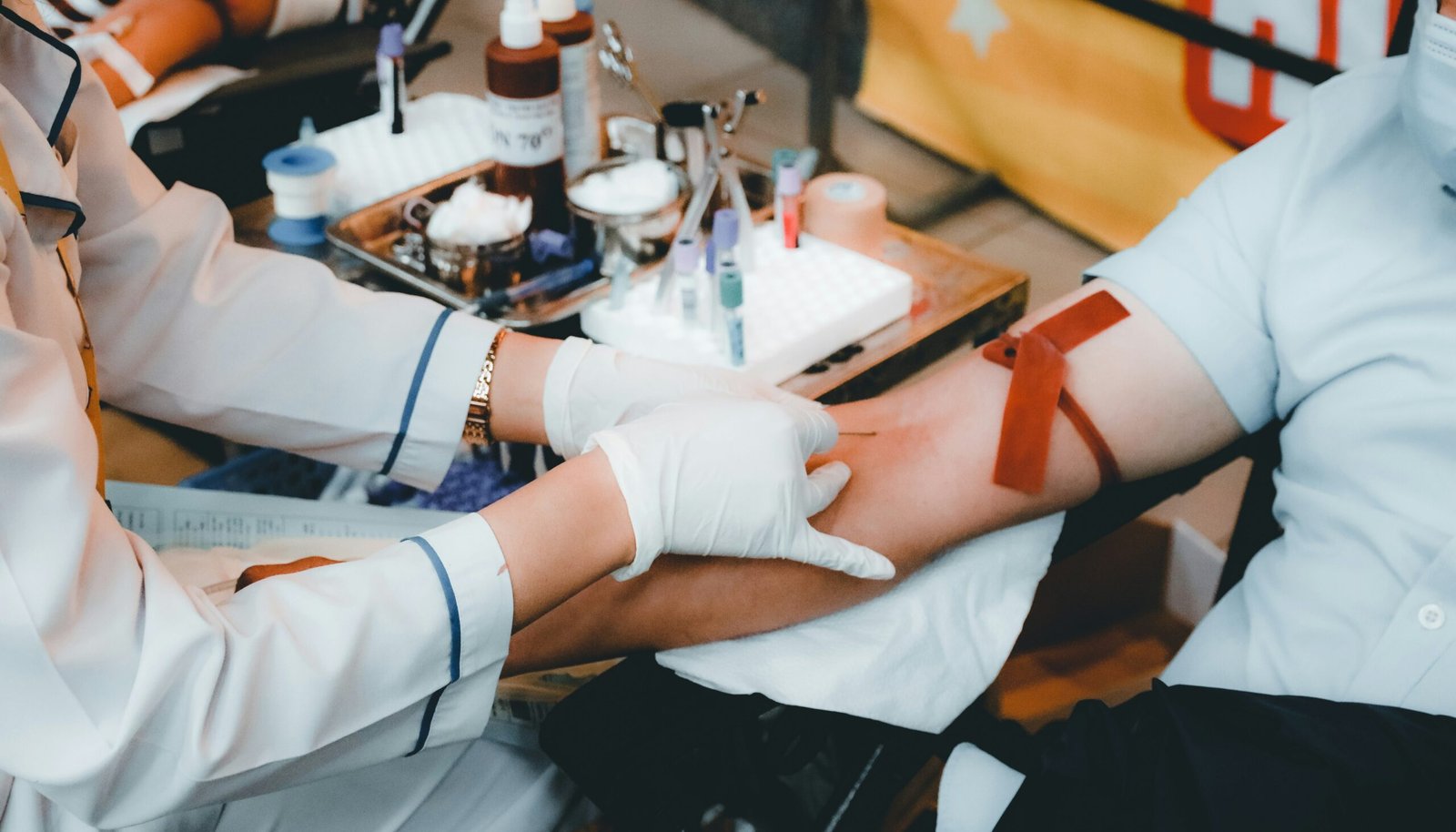
The days of people being denied the opportunity to give blood based on their sexual orientation are finally coming to an end.
The National Health Service has introduced new health guidelines presented as “an individualized, risk-based assessment for donors of all genders.” Now everyone regardless of gender or orientation is subject to the same three-month waiting period if they’ve had anal sex with a new or multiple partners.
The new donation rules were put in place June 2021.
“Patient safety is at the heart of everything we do. This change is about switching around how we assess the risk of exposure to a sexual infection, so it is more tailored to the individual,” says Ella Poppitt, Chief Nurse for Blood Donation at NHS Blood and Transplant.
Under the 2021 ruling, all patients are subject to a pre-donation health screening consisting of a health questionnaire asking patients about their recent travels, medical history and any medications that they are currently taking. As well as a hemoglobin check and a physical examination. The blood is then tested for infection.
In a 2023 statement, Sarah Kate Ellis, president and CEO of GLAAD, stated that the new donation guidelines decision “signals the beginning of the end of a dark and discriminatory past rooted in fear and homophobia.”
The NHS collects around 1.5 million blood, plasma, and platelet donations annually, and requires about 200,000 new donors every year to maintain a constant supply. This appears to be no issue in England, as donation numbers have risen substantially.
A recent survey has found that a record 7.5% of all male donors identify as LGBTQ+. This is up from 1.8% in 2014, as reported by SceneMag.
Among this string of new donators was Manchester gymnastics coach Thomas Yates.
“I went to donate in 2018 knowing I wasn’t able,” Yates says. “Even though I was tested and had no infections, morally, I couldn’t go through with it. I was left incredibly upset. I felt it was another way queer people are marginalized.”
Since the rule change, Yates has donated blood 16 times—and counting, I’m willing to bet.
In recent years Australia and the U.S. have moved to the new individualized risk assessment model. New Zealand is on track to do the same.
The world is only just beginning to heal from the stigma brought upon queer individuals from the 1985 AIDS epidemic but still it’s a start, nonetheless.
Photo courtesy of Unsplash
