


Beloved Canadian Sook-Yin Lee is incredibly multi-talented, with extensive expertise across a wide range of artistic fields. Storytelling has always been a huge part of her career. She is an actress, director, musician, multimedia artist, a former MuchMusic VJ (video journalist), and a former CBC radio host. Her latest film, Paying For It, which she co-wrote and directed, is an adaptation of her ex-boyfriend Chester Brown’s (whom Lee calls “one of the best storytellers”) graphic novel memoir of the same name. Ahead of the American theatrical release of Paying For It, OFM chatted with Lee about the film.
The Origins of Brown’s Paying For It and Why Lee Wanted To Adapt It Into A Film
Lee briefly recounts what led Brown to write Paying For It. “I was based in Vancouver and got a job at MuchMusic as a VJ, so Chester and I moved to Toronto. All of a sudden, I was this VJ interviewing all these rockstars, super extroverted, going to all these shows, and being a musician. I was very young at the time. I started developing crushes on other people, but I never wanted to cheat on Chester because I love Chester a lot.
A lot of our friends from Vancouver were opening up their relationship and swinging. I was like, ‘Chester, I think I’m developing a crush on this person over here. What do you think about opening up the relationship?’ He’s a person who really appreciates and respects people’s choices and is not one to just fly off the handle in jealousy because he loves me. He said, ‘If that’s what you really want to do and if you don’t want to break up, sure, why don’t we try this.’”
Continuing, Lee shares what happened after they opened up their relationship. “I made all sorts of dating decisions and choices. Chester, on the other hand, remained celibate for a few years because he has no ability to flirt, and he didn’t want to be in a relationship until he couldn’t take it anymore, and then the option was to explore paying for sex in the ‘90s …
“Chester and I remained together for years after opening up the relationship and lived together in this little house that I’m still living in … We never broke up. It just after a while turned non sexual. He is still my best friend. Years later, in 2011, he wrote a memoir of that time exploring paying for sex in Toronto in the 90s.”
Lee was incredibly moved by Brown’s book and wanted to adapt it into a movie. “Many great filmmakers asked to adapt the book, but he let me do it because he liked my work and knew I would do my utmost to deliver it responsibly,” she says. “He basically had the wherewithal to write about what he was witnessing, and in addition to paying for sex, he was seeing a real lack of rights for sex workers that put them in harms way.
He drew the parallel to queer liberation, which, to me, was significant and poignant—We all know the history of criminalizing of queerness. He astutely drew the parallel between the fight for gay liberation and the struggle for sex workers’ rights, which, to me, I found extended to human rights and human rights of all sides, and when we can protect the most vulnerable among us, then we are on the right path for society.”
The Adaptation Process
It took Lee many years to adapt Brown’s book into a film. “I thought it was going to be easy peasy,” she states. “My first draft was literally transcribing it verbatim, and Chester and I looked at each other and said, ‘Oh my God. This is terrible’—doing a literal adaptation of his book wasn’t working.”
One reason why a literal adaptation was not working was that Brown’s novel was unable to fully portray the sex workers’ perspectives. “It was very important to have it beyond the sphere of a guy’s perspective,” Lee explains. “I (needed) to bring the sex workers to life … He wouldn’t tell me any details about anything because he was protecting everybody’s private stuff. His book is very myopically from his perspective. We don’t see any attributes of the women because he was trying to protect their identities.”
Bringing the sex workers to life was a priority for Lee, as she knew those perspectives were essential to showcase. “All the actors who play the sex workers have a nuanced understanding of sex work,” she shares. “That veracity or real feeling was really important so that they could elevate the material with their knowledge and tell me whether I was on the right path or not because those depictions are really, really important.”
Lee also blended her sensibilities as a filmmaker with the political nature of Brown’s graphic novel memoir. “I’m very interested in love and relationships—all my films are love stories,” Lee says. “It really became a story about a couple navigating their choices after they open up their relationship: She goes out on precarious dates, and he pays for sex, and what becomes of them … The last one-fifth of (Chester’s) book is his appendices with all kinds of intellectual historic footnotes, notes, and cultural historic things, and I knew those were important, (but) I had to distill three or four aspects of those that I was compelled by.
(Those four things were) the notion of the struggle for queer liberation parallel, human rights, and the questioning of possessive romantic monogamy. We are sold on the idea of traditional monogamy, yet Chester asks, is that the most loving behavior to put a fence around your lover to stay inside there and you stay on your own side. Plus, the sex worker rights at the heart of the book. I was compelled by those ideas.”
Lee also wanted to interact with the original source material in a thought-provoking way. “I wanted to be able to challenge Chester’s political perspective because I didn’t just want to give him a slam dunk,” she reflects. “It was important to me to spar with the material and not necessarily tie everything up in a bow but make something that makes you think, hits the tender part in your heart, and makes you laugh, but also leaves room for the audience to bring their own ideas to it.”
Once Lee figured those things out, she realized that expanding the canvas and inserting more of what happened in her and Chester’s lives would flesh out the movie even more. “I am a character in his book, the inciting incident when I say I developed a crush on someone, but other than that, I kind of disappear … I asked him about that, and he said, ‘I didn’t include our stuff because I was protecting your privacy,’” she shares. “It was interesting to me to bring a ton of stuff about our relationship, our separate choices, the separate obstacles and challenges we both faced, and how we worked together to maintain our friendship and relationship.”
However, not everything that happens in the film is completely like what happened in real life. “The person based on me is called Sonny, not Sook-Yin, because I took some creative liberties,” Lee says. “A lot of what happened to Sonny happened in real life to me, but I also made up a lot. Whereas with the character of Chester, I was trying to honor the depiction of how Chester saw himself in his memoir.”
Casting the Two Leads
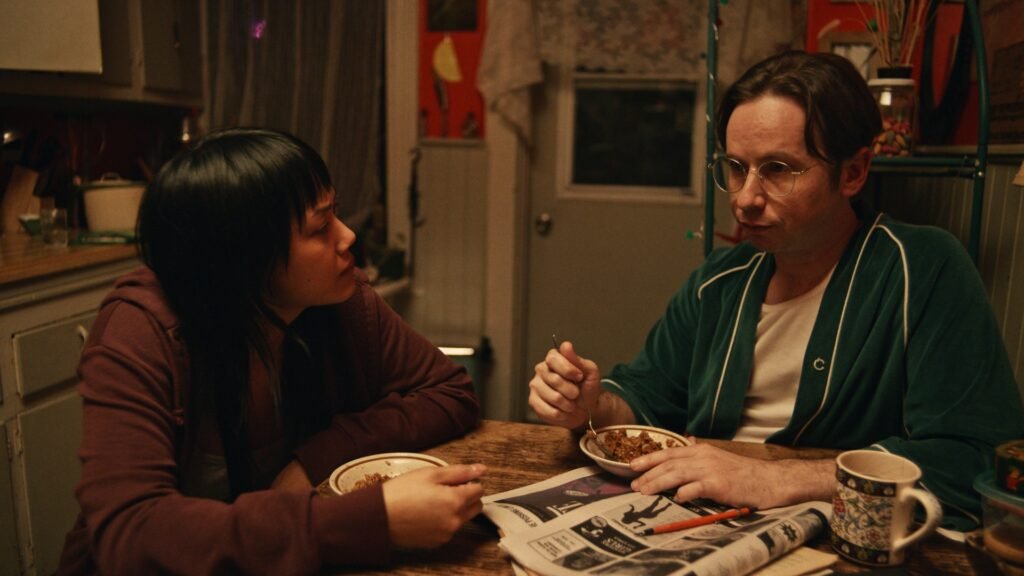
Lee searched for a long time for an actress to play Sonny. After she saw the film Riceboy Sleeps, she knew Emily Lê would be the perfect person to play Sonny. “In this scene, where she has very few lines, I was like, ‘Who’s that kid? She’s grabbing my attention,’” Lee says. “I asked her to do an audition, and she did a great audition.” Meanwhile, for the role of Chester, Dan Beirne was one of only two people to capture Chester’s personality. “I had seen very many actors, with the same script and the same lines, and only two embodied Chester with a human quality, as everyone else made him seem like a jerk, (even though) he is one of the sweetest and kindest people I know.”
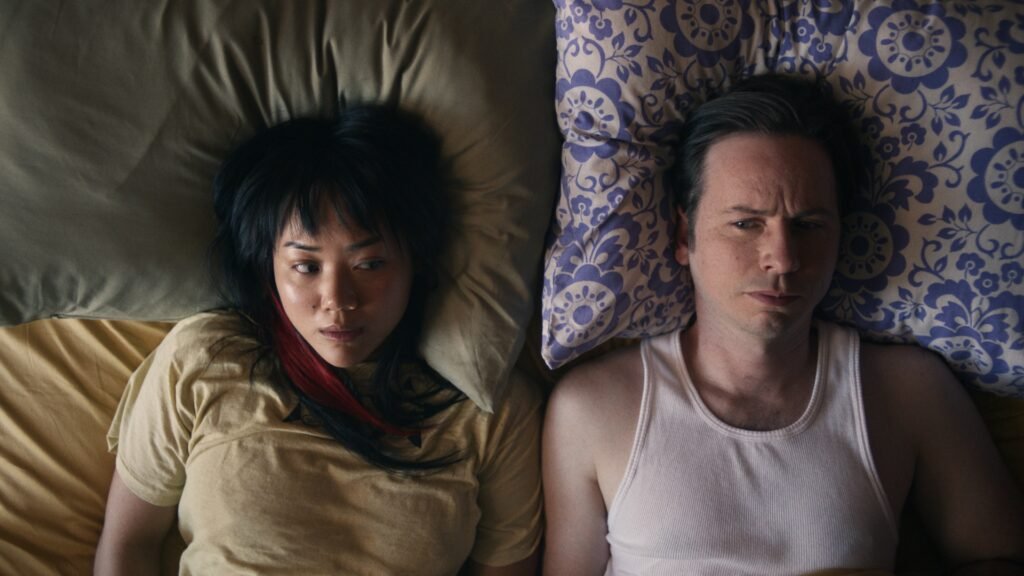
The chemistry read between Beirne and Lê was another huge reason why they were cast as the two leads, as Lee was amazed by how perfectly in sync they were. “They never met, were on separate laptops, and weren’t even in the same room, yet together they had a remarkable chemistry read,” Lee explains. “(They practiced) a scene where Chester passed Sonny a book he’d painted the cover of and given to her as a special present. They literally seamlessly passed the book to each other through two separate laptops, and I was like, ‘WHAT!’ Most importantly, these two characters are deeply flawed humans; they are not perfect people by any means, but there is a lot of love between them. They bug each other like crazy, but there is a lot of love. What I saw (during the chemistry read) was a deep sense of care between them despite bugging each other, so I was like. ‘Oh my God, you’re the best. I need to have you two do this movie.’”
Grassroots Community and Problem Solving
Lee describes the team that helped make Paying For It as a grassroots community. “It really was a community of people that put it together,” she states. “Many of the locations were restaurants, galleries, and spaces in my neighborhood … I casted a lot of my friends.” Likewise, being a musician and her time working as a VJ allowed her to draw from some of her musical peers and friends. The film features old music videos from bands such as cub, Gob, and Thrush Hermit. “I grew up with cub in the same city. Gob and I were on the same label, Mint Records, who actually put out the soundtrack album of Paying For It … Ian (McGettigan’s) band Thrush Hermit, I yelled over the fence, ‘Ian, can I use your video?’ and he’s like, ‘Yeah, I’ll bring it over.” Also, Lee and her frequent creative collaborator and friend Dylan Gamble composed the score for the film.
Alternatively, Paying For It also really challenged Lee’s sense of problem solving. “We’re talking 19 days shooting, and I literally had to turn into Arnold Schwarzenegger in some sci-fi movie because you’re having to go fast, and lots of problems come up in a day … (You need) to make sure that nothing is falling apart.” She shares one instance of something falling apart. “We are shooting in my house, which is like a turn-of-the-century 1870’s house, and I don’t have much power in here, so suddenly it’s like, the fridge is melting in the basement because the power went out. ‘Oh my God! What!’”
Additionally, once everything had been filmed, Lee had to quickly reshoot certain parts. “Afterwards, when everything was shot, and I was looking at the footage, there were certain continuity errors and gaps, so I had to really think on my toes about how to do it. I went out with my own camera and shot pickup scenes, went to Chester’s house, and shot in his apartment because we needed Chester’s apartment. I made little dioramas like a Godzilla movie—little models and put them outside and reshot them.”
Concluding Comments
To celebrate the American theatrical release of Paying for It, Lee and Brown will take the film on tour with Q&As after each screening. The American theatrical release date is on January 30 in New York City. “I never tire of watching it because I see everybody’s good work, from the art director to the cinematographers, to the community of artists that lent me their artwork to put on the walls, to all of my brave cast members who gave it their all,” Lee smiles. “Many people watch their own movies and only see the flaws. I see the great work and teamwork that went into it.”
Main Photo Credit: Dylan Gamble
