

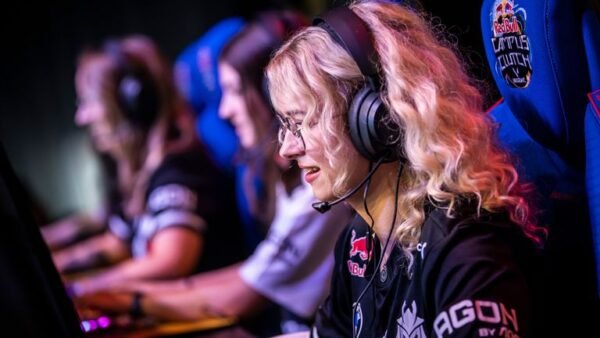
Several women of all identities are choosing not to participate in the Dead by Daylight Women’s World Cup due to the repeated absurdities from organizers that blatantly infringe on the rights of trans women esports players. The excuses given are not only implausible but also deeply harmful, reflecting patterns of exclusion that society has been seeing for decades.
In a world where various groups are consistently excluded from events, competitions, and spaces under the guise of fairness or technical limitations, we should recognize these patterns of harm and actively move away from them instead of falling into the same tired narrative. There is no legitimate reason for the exclusion of trans women in this tournament. Yet, when organizers believed they could escape scrutiny, they put forward justifications like technical and operational limitations, claiming they could not verify the “degree of woman-ness” of any player. This kind of reasoning is not only absurd but also discriminatory—It targets trans players while ignoring the fact that cisgender players are never asked to prove their gender identity.
Esports tournaments like this one are among the few professionally recognized spaces where gender-diverse individuals can compete on an even playing field. In traditional sports, trans and nonbinary individuals are frequently banned or heavily restricted. When someone finds a community where they are accepted and can excel, they should never be held back simply for being themselves, nor should they have to prove the authenticity of their identity.
I have enjoyed the Dead by Daylight games, but seeing the organizers choose the easiest path—open discrimination instead of finding a reasonable accommodation—makes it difficult to support the event financially or morally. What is heartening, however, is the strong pushback from the community. Multiple creators and teams are withdrawing in solidarity with trans players, sending a clear message: Inclusion is not optional, and exclusion under the guise of convenience is unacceptable.
If a tournament cannot be organized in a way that includes everyone, from all walks of life, then perhaps it should not be held at all. Esports, at its best, should celebrate skill, strategy, and teamwork — not discriminate based on identity. This moment is a reminder that inclusion and fairness are not just ideals; they are non-negotiable principles in any competitive or professional space.
Photo courtesy of social media
