

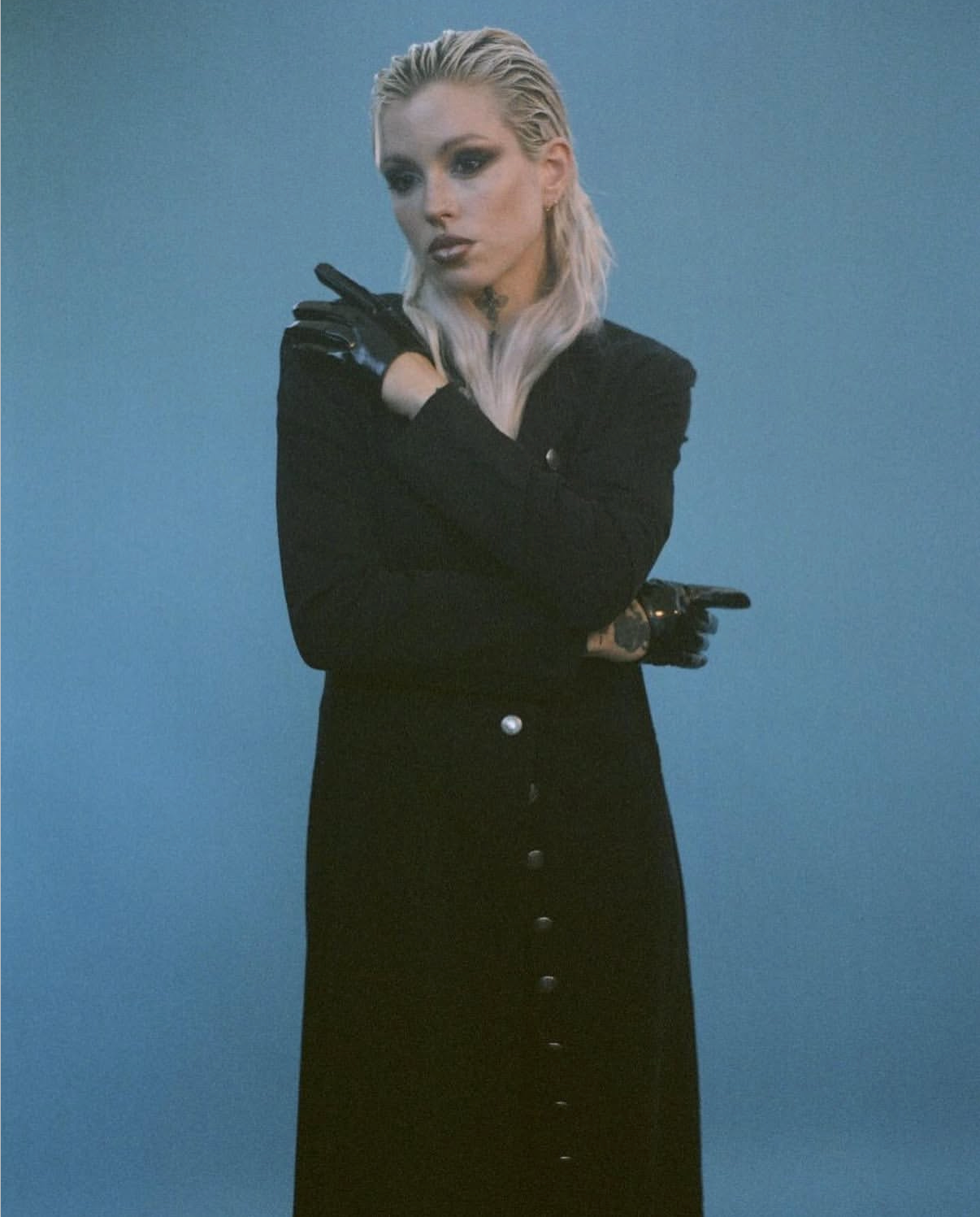
Jessi Hildebrandt (they/them) has been a tattoo artist for a little over three years in Seattle, Washington. Hildebrandt recently shared their story about the abuse they went through growing up in the Mormon church, but specifically the abuse and isolation they encountered with their aunt, Jodi Hildebrandt.
OFM had the chance to chat with Hildebrandt about their story and learn more about who Jessi is.
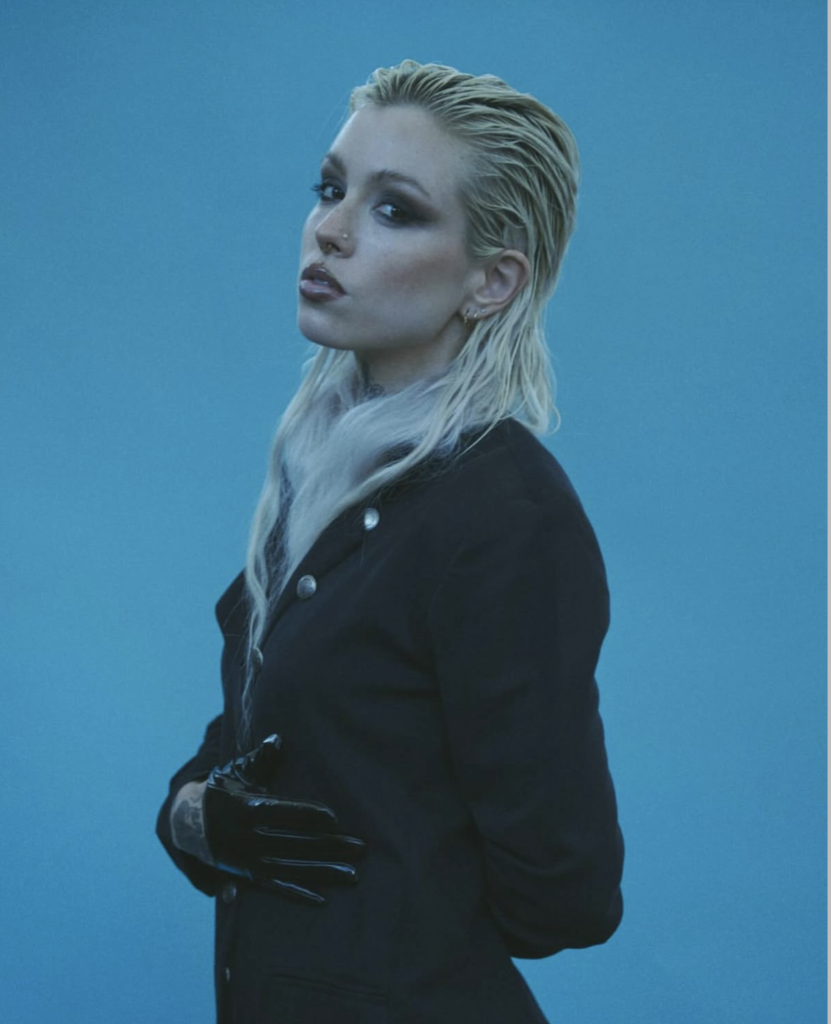
Let me begin by asking, who is Jessi Hildebrandt?
That’s such a tough question. Ever evolving, insatiably curious, definitely someone that has to learn from experience and not from other people’s bad choices, a hands-on learner, driven. It’s tough Because I feel like as a nonbinary person, it’s (about) trying to live outside of this or that. But I think curiosity and intentional as well. Those are my core values.
How did your journey with queerness begin?
I’ve known something was different when I was probably 6 or 7. Second grade, when I started experimenting with my friends, and they seemingly were like, this is not really my thing. I don’t know. It’s just kind of fun. I feel like that’s probably a pretty common experience for people.
Thinking about this makes me so happy, and I think it’s so funny. I remember Googling. I had no idea about cookies or history. I was just Googling boobs. After I get caught, my parents had the sex talk. But my family is very, very religious, very conservative, and believe very strongly that sex should be taught in the home and not in school and not through the government. it was when a man and a woman loved each other, they lay naked and then had babies; okay, we will never talk about this ever again.
So, I pushed that down real hard, I pushed down this feeling of being queer. And the messaging that I had all around me was, being gay is disgusting. Being gay is evil. Being gay destroys families and destroys the church. I had a crush on the trans kid at my school, and I never was going to talk about it. I was so terrified of repercussions, you know, the eternal salvation backlash, that I just shoved it down, shoved it down. That was kind of the beginning of admitting it to myself in any sort of real, intentional way. Obviously, it is a process of unlearning and relearning and self acceptance.
Can you talk more on the abuse and isolation queer folks experience?
Mormonism is very anti-gay. the world was anti gay, predominantly, and in the microcosm of Mormonism was especially anti gay. I mean, the things that I went through. There are many reasons that my aunt used as rationale to treat me the way she treated me, my queerness being one of them. That it’s a sexual addiction. And, like, all queer people, they are just “sex addicts.” sexual deviance, which is not a new story narrative that we’ve heard throughout history.
I internalized that for a really long time. If I was acting out in any way, sexual queerness being one of them, then you have sin inside of you, and you need to confess that sin. And in order to get someone to confess, you need to make them as uncomfortable as possible to force—in her words—force the sin out, which is just torture. Like, that’s just a euphemism for torture and to do anything to get what you want by any means.
And, yeah, and that’s what she did for just under a year, which is very ironic given, and I don’t, by no means am I trying to out someone that is not ready to be outed, especially even someone as horrendous as Jodi. The amount of questions and lack of clarity around her own sexuality is just very deeply disturbing and sad.
What’s one thing that has helped you work through your trauma and mental health challenges?
I can’t say that it’s, like, one thing in particular I can hang my hat on. Learning how to self-witness, learning how to find that within myself through inner child work, saying all the things that I was craving to myself—I see you. even just saying “I see you,” I remember the first time I did that, and I just immediately broke down. I was so desperate for mirroring and learning how to do that for myself. I think that has been one of the most helpful tools in my healing.
What do you hope audiences take away from hearing your story?
There’s a number of things, one of them being, these types of stories are not unique. My story is not unique. My story may seem sensational because of the extreme nature of it. But people, queer folk, marginalized folk, go through similar experiences all of the time. This is not a unique story; this is not an isolated moment, or an isolated incident.
And what I think that we need to do as a community is start looking at where we are disempowered to step in, and to call out and to call in. Abusers take advantage of disempowered systems. It was those adults that were willing to stand up even if they couldn’t do it completely. It is ingrained into my memory. And I don’t know who I would be without those moments. You never know what your impact is going to be on children of abuse.
What was it about the tattooing specifically that you learned to love about it?
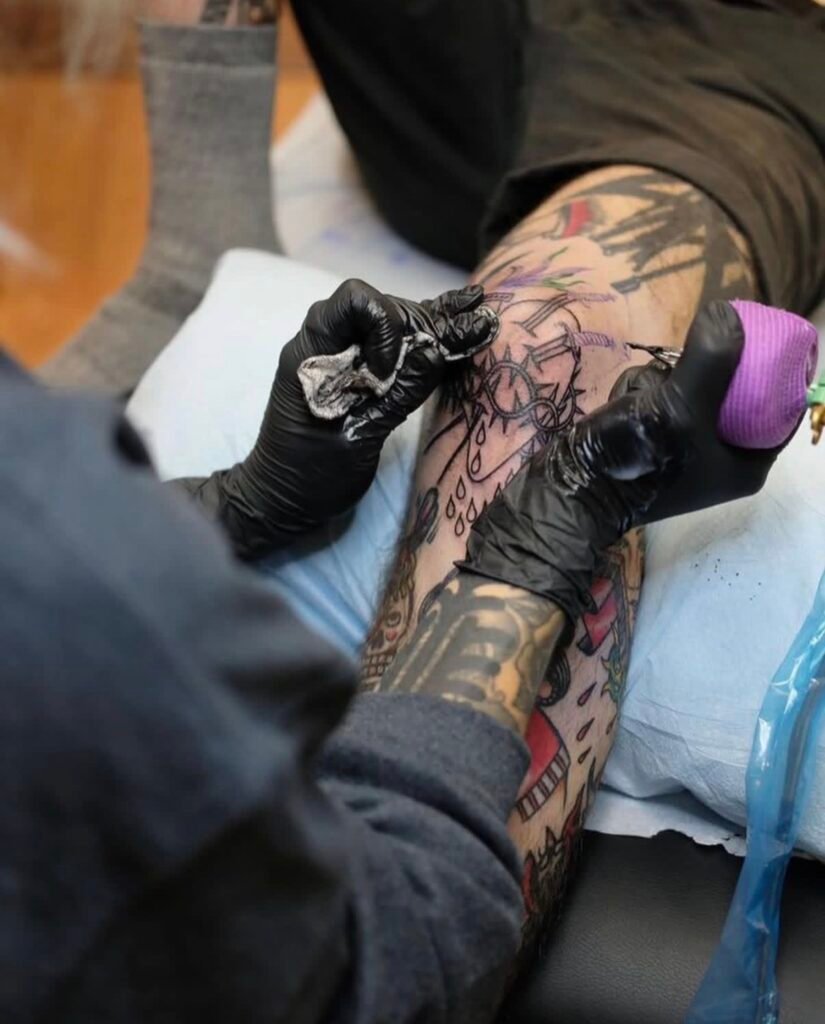
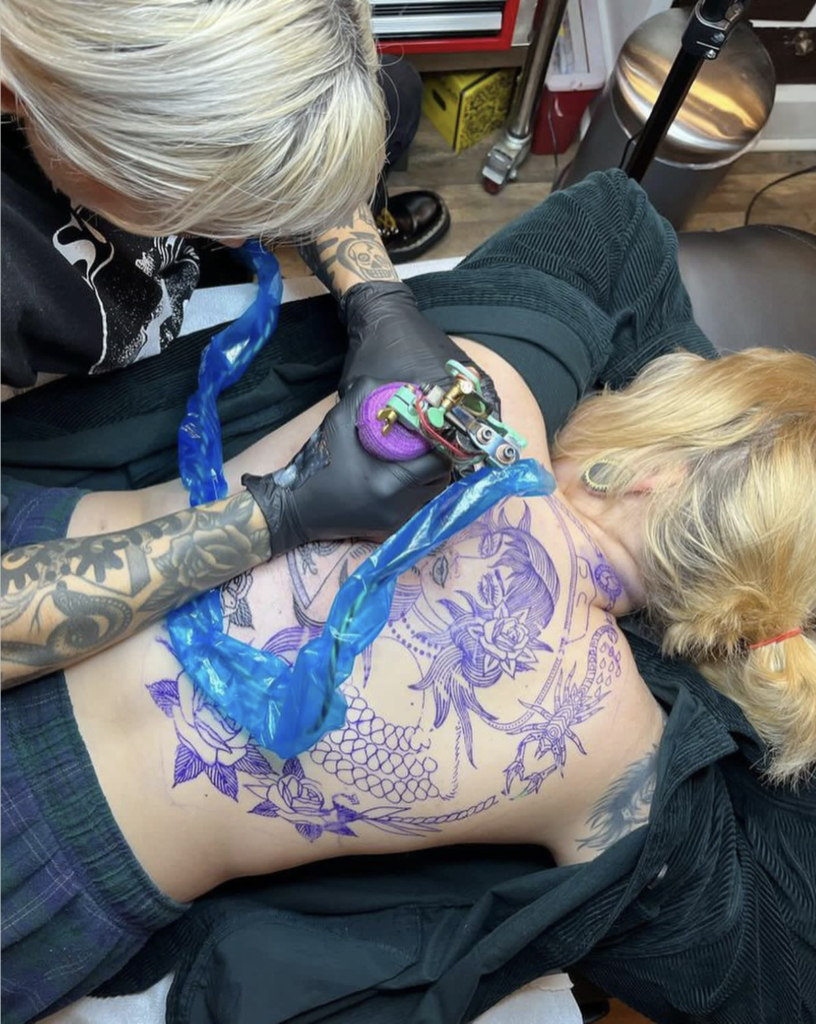
I didn’t even know that I liked visual art until I was about 20 or 25. I was always getting tattooed from age 18. I already loved the culture and loved the scene. And when I was 25, when I found that I enjoyed art, I also learned that I’m potentially highly related to one of the grandfathers of traditional Americana, Martin Hildebrandt. So I just decided to claim him as my own. Body art is just a really beautiful experience and has brought me so much joy to facilitate it and to experience it myself.
Do you have a favorite tattoo?
I just did a stomach piece a few days ago. It’s one design that I reclaimed. I loved my client, so I just loved every part of the tattoo. I feel like 95 to 98% of my clients, by the end of the tattoo, I’m like, “Are we friends? Are you my best friend? What’s happening?” It’s just so fun. I absolutely love all the time I get with my clients. And this piece I was really proud of, and they loved it. I loved it. It was just a really great experience.
We all have things that are therapeutic to us; do you tattoo as something that’s therapeutic?
I think getting tattooed, for me, is a form of—kind of like what I was saying (about) reclaiming and self-ownership. So in that way, I definitely think it’s like a form of self care, at least for me, (and) I know that (it is) for a lot of my clients it is as well. And so being able to facilitate that is just really, really cool.
As we wrap up, is there anything I’ve missed that you would like to share?
Something I would love to leave on is just a message of hope. There is healing available; there are people who will love you and accept you. There are communities around you that are wanting you. If you feel alone and isolated, just keep going. I know that can sound patronizing, but there is hope and for myself that was a really important thing that kept me alive is the hope for something more and the hope for something better and more beautiful.
Follow them on Instagram @jessitattooer
Photo courtesy to Mimi Chakravorty
Makeup by Tanya Crosland
