

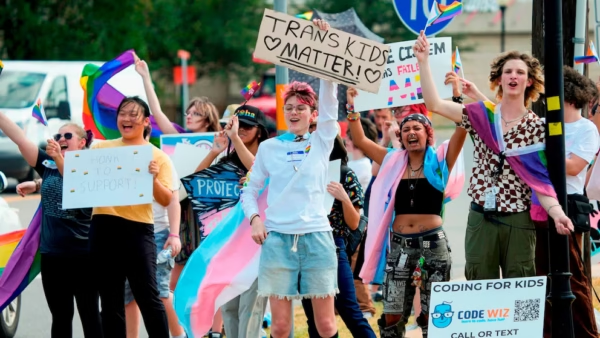
When a student is addressed by pronouns that do not align with their identity, it can feel defeating and degrading. Erasing someone’s existence has a direct impact on their mental health—not just for gender-diverse youth, but for anyone who experiences dismissal or invalidation. Respecting a person’s identity is not a small act; it can be the difference between despair and hope.
History offers grim reminders of what happens when people are bullied and erased. Take the Columbine shooting in Colorado: while gender identity was not the central issue, the tragedy was rooted in the relentless bullying and social marginalization of students. One of the students, for example, was reportedly ostracized and harassed for simply being different. This demonstrates how harmful suppression and dismissal can be, especially when repeated over time.
Research confirms the stakes. The Trevor Project reported that LGBTQ+ youth who are not affirmed in their identity are nearly 10% more likely to attempt suicide. And for those who have already attempted once, the likelihood of a subsequent attempt rises sharply. These statistics are not abstract—They represent real kids, like 15-year-old Maya (name changed for privacy), who shared that being called by the wrong name every day at school made her feel invisible, pushing her to the edge of despair. Affirmation, she said, “felt like someone finally saw me.”
Schools play a pivotal role. Too often, staff and teachers dismiss or disregard students’ preferred names and pronouns. If a student wishes to be called Jeff rather than Jannet, it may seem trivial to some adults, but refusing to honor this choice crosses a line. Teachers are entrusted with the care and education of students, not with enforcing personal beliefs or opinions. Students should never have to navigate their identity in an environment where adults openly undermine them.
Families, too, can either affirm or harm. Non-affirming parents or guardians may try to reshape a child’s identity to fit their own beliefs, instilling harmful messages that persist into adulthood. Even children without gender-diverse family members can internalize these narratives through society and social interactions, reinforcing feelings of invisibility and suppression. One young person recalled being told repeatedly, “You’ll never be happy if you try to live that way,” a message that echoed for years before they found supportive friends who affirmed their identity.
Affirming gender-diverse youth is simple but powerful: Respect their names, honor their pronouns, and create spaces where they can safely be themselves. These actions can save lives. Every student deserves to be seen and valued, and every small act of affirmation can make a profound difference.
