

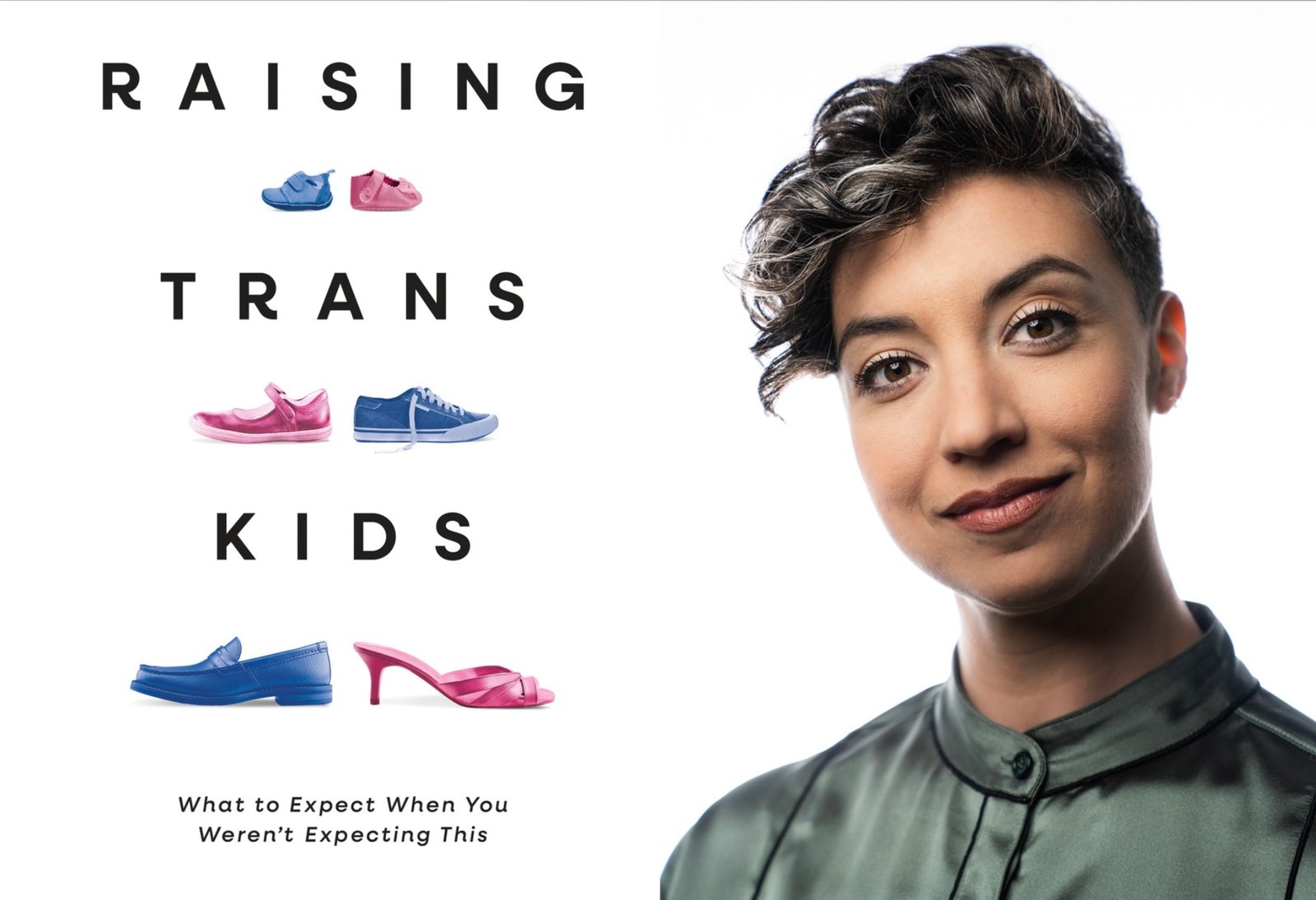
As a transgender youth myself, I wish I had this book when I first started my transition as it even helped me realize what I was going through and gave me the words I needed to explain how I felt. Raising trans kids isn’t something that is taught to a parent or caregiver when they find out the gender of their baby when they are born. Rebecca Minor, LICSW wrote a guide that provides insightful information on how to support a trans child/teen in the best way possible backed up by research. I wholeheartedly recommend this book to anyone who knows a transgender kid navigating their journey. It’s an essential resource—one of the first of its kind—released at a time when the world needs it most.
OFM had the chance to interview Rebecca and learn more about the meaning of her new book.
What inspired you to write Raising Trans Kids? Was there a specific moment or experience that pushed you to begin this project?
I don’t know if there was a specific moment; I found myself continually sitting with parents who were having the same questions and feeling really alone in their experience.I found myself wishing there was a resource that captured all that I want to say to these folks and I could just be, like, here, read this and then we can talk about it. There were some, but a lot of them were quite clinical, and the size of a textbook. Parents would tell me they bought it and never cracked it open. I really wanted to create a resource that would actually be tangible, accessible, and the type of thing that parents can just flip to the thing they’re currently worried about or that’s keeping them up at night and be able to get the answers they need in short order.
What do you think are the biggest misconceptions parents have when they first learn their child is transgender?
That their child is wrong, and it’s just a phase. (That) supporting them would be detrimental in a way. I see that a lot with parents, where they’re worried that if this is just a phase or a passing thing, that endorsing it in any way, or affirming it, would be a way of pushing them towards this. So what if your kid does want to wear dresses and then they don’t anymore? That’s really not the end of the world, especially when we’re talking about young children. We’re not talking about a major medical transition. We’re just talking about social things and affirming them for who they are at that moment. So I think that’s probably one of the biggest ones.
What challenges did you face while writing this book?
When I initially wrote it, I pitched it, and it was declined. I was told that it was too niche, and there wasn’t a market for it. I would say that one of the greatest challenges now is keeping up with updating the book. I kept doing rounds of edits to make sure it was the most up-to-date. But even since I finished the last round, new legislation has passed, or new research has come out. I tried to write it in a way that would be timeless but also take into account the very acute situation that a lot of families are finding themselves in at this current moment.
You spoke with transgender individuals and families during the writing process. How did their stories influence the direction or tone of the book?
It really is the basis for the book. Of course, my clinical interpretation of things and what other colleagues and folks I worked with also contributed. Although many of those colleagues were also trans folks, I really wanted to make sure that I was centering those voices. It really set the tone in terms of striking the balance between meeting people where they are, while also really breaking down some of the limiting beliefs that they might have so they could stop getting in the way of supporting their kid, and that’s a tough balance of how do I get you to not put this book down? But also, stay long enough to maybe have your mind changed about something that’s hard to hear.
Is there a chapter or section that you hope every reader pays special attention to? Why?
“If they are neurodivergent, can they know?” There are a lot of them that I hope people pay attention to, but that one. Especially in the last handful of years, that question comes up a lot in the work that I’m doing, and I really just wanted to drive home for people that being neurodivergent does not preclude your kid from knowing who they are. We still need to believe them and support them and maybe do so in slightly more thoughtful or conscious ways given the balance of their conflicting needs. Like balancing sensory needs with also being gender affirming. That one feels especially important to me.
Your book was released during a politically charged time for trans rights. How does that context shape its message?
At every turn writing this book, I thought, Now, this is the moment. It’s never been more needed. And then I was like, Nope, this is the moment. It’s kind of shocking that this is where we are. I’m glad it’s coming out. A year ago, I was like, “It needs to come out now; I’m scared that if we don’t get it out, it will never come out.” I think there’s a lot of risk in putting it into the world, but it’s a risk I’m more than willing to take.
What’s one piece of advice you’d give parents/caregivers who feel overwhelmed or afraid when their child comes out?
Take a deep breath. You don’t have to figure this out alone, and you don’t actually have to have all the answers or understand everything to affirm and love your child.
What resources would you recommend for trans youth seeking support?
I think that depends on where you live, like, I think in person, support is really wonderful, and it’s not accessible to everyone. So if it is accessible to you, get out there and try to meet people, whether that’s, like, a support group for other kids your age, or whatever the community resource that might be available like a mentor program where you can have a trans sibling to support you.
There are opportunities for online resources. Sometimes parents don’t want their kid on screens, or always on Discord, but if that’s where they feel affirmed and supported by their peers, it can be a safe space. I’m a believer that it’s far more important for kids to feel connected and not feel alone. Remember that you always have resources like The Trevor Project or phone lines that you can call if you’re ever feeling unsafe.
How can readers access your book and support your work?
They can follow me on Instagram or Facebook. My website is genderspecialist.com. They can find the book there. The book is pretty much available wherever books are sold. I encourage folks to seek out your local queer indie bookstore, and if they don’t have it, request it.
Photo by Saami Bloom courtesy of INDIVIDUAL.studio
