

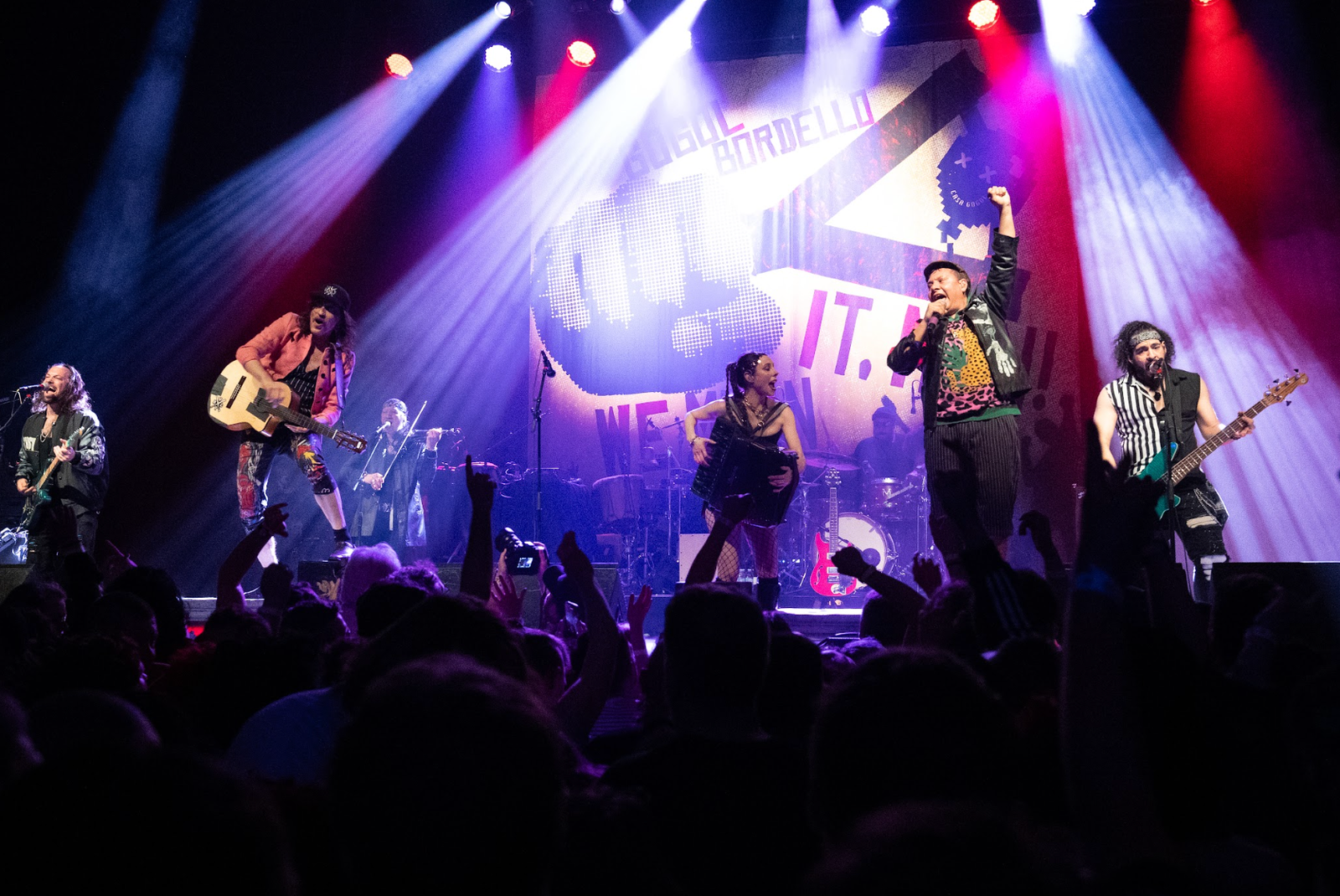
These guys have been around for at least, what, like 20 years at this point, right?
That was one of the first things that came to mind when I settled in to watch Gogol Bordello at The Warfield in San Francisco earlier this month. I remember actually saying it out loud to my photographer, Patrick, because when I really thought about it, I’ve known about this band since at least the mid 2000s, and for whatever reason I just never caught them. Not because I didn’t want to, it just never lined up, and suddenly enough time goes by and you start to realize how long they’ve actually been doing this — twenty six years and three months, to be exact.
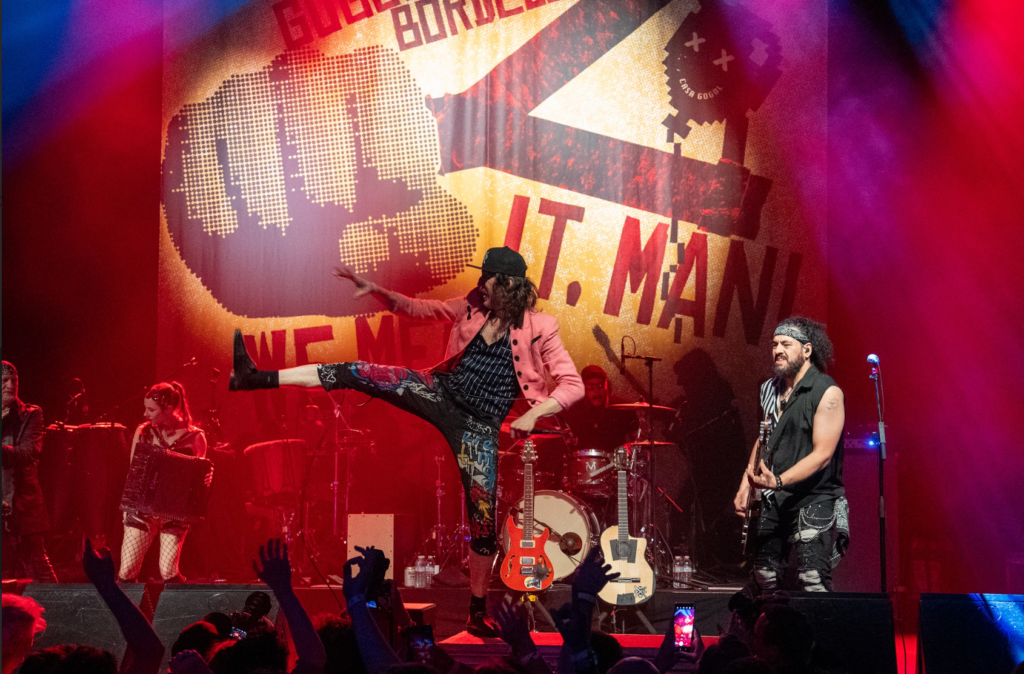
Which is strange, because this is exactly the kind of band you’re supposed to see live.
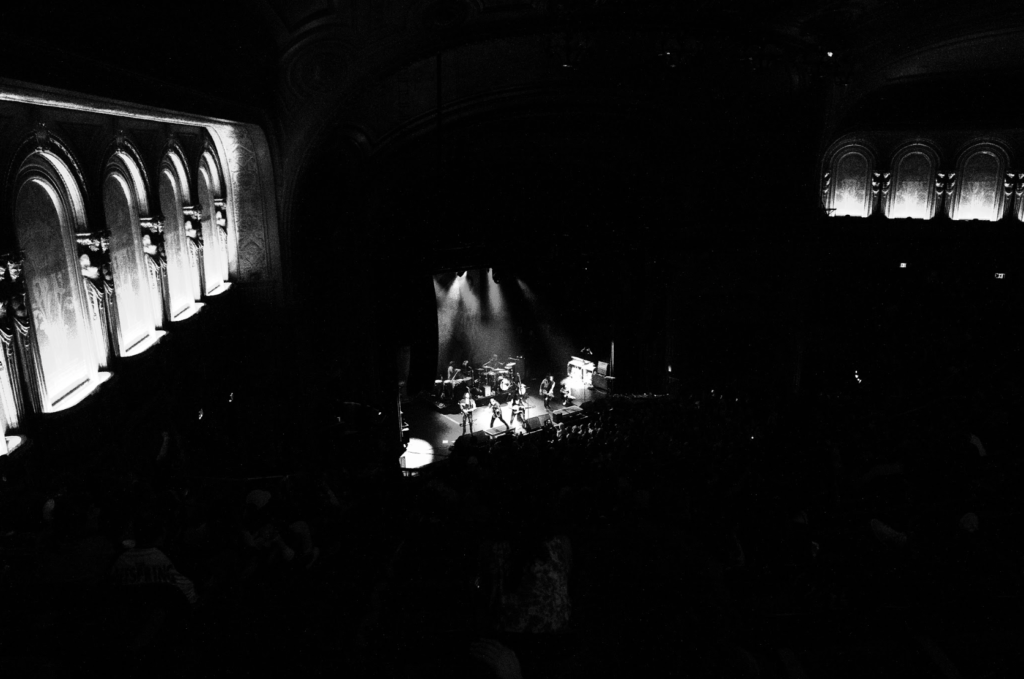
The Warfield is a good place to finally see a band like this, mostly because it doesn’t get in your way. The pit is already there, slightly sunken, built for exactly the kind of movement their music invites, and the floor rises just enough that you can stand in the back and still see without doing that constant repositioning dance. It’s one of those rooms where you don’t have to think about where you are once the lights go down.
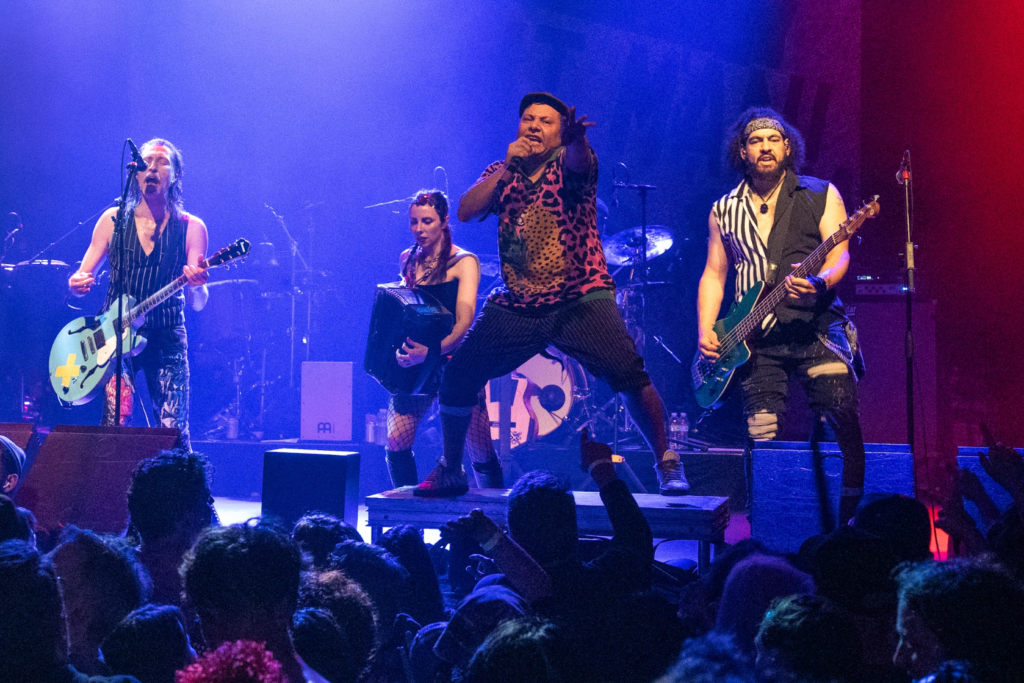
When the infamous band from the Lower East Side finally came out, there wasn’t much of a buildup. They hit full speed immediately, and the set never really reset from there. Instead of clean starts and stops, everything felt like it was already in motion and you were catching it midstream. Songs weren’t introduced so much as recognized as they passed through, which changes how you experience them, because you’re not waiting for anything to begin, you’re just trying to stay with it as it keeps moving.
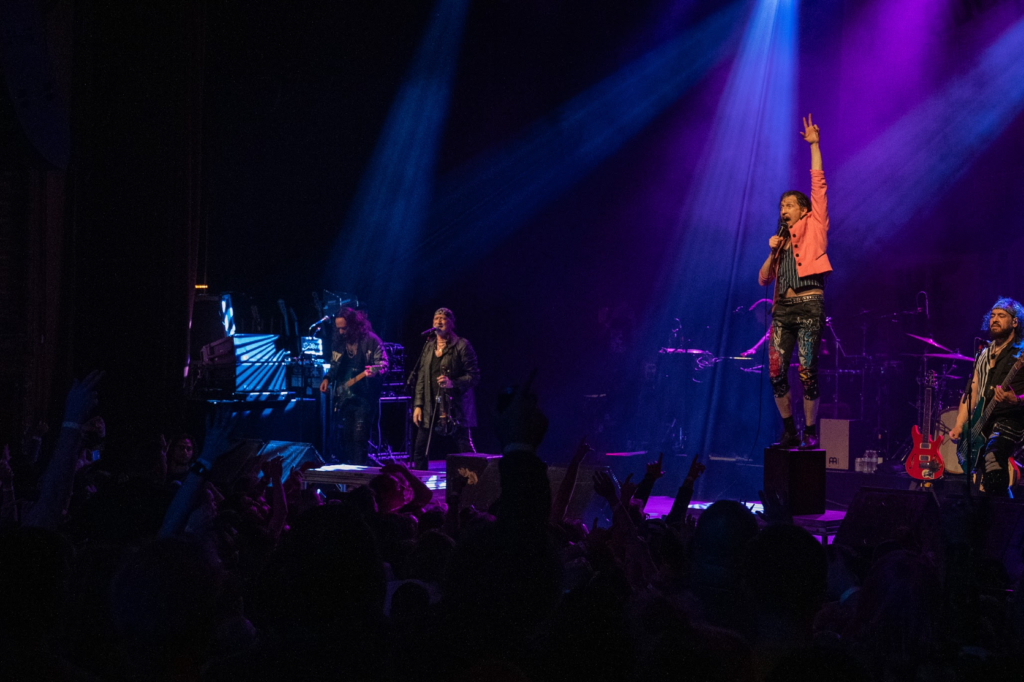
The first thing that really cuts through is the voice. Eugene Hütz has that dry, worn rasp that sits somewhere between Joe Strummer and Shane MacGowan in a way that places it in that same lineage where singing and shouting aren’t all that separate, and where the texture of the voice carries as much weight as the melody itself. It holds everything together even when the rest of the band starts to expand outward.
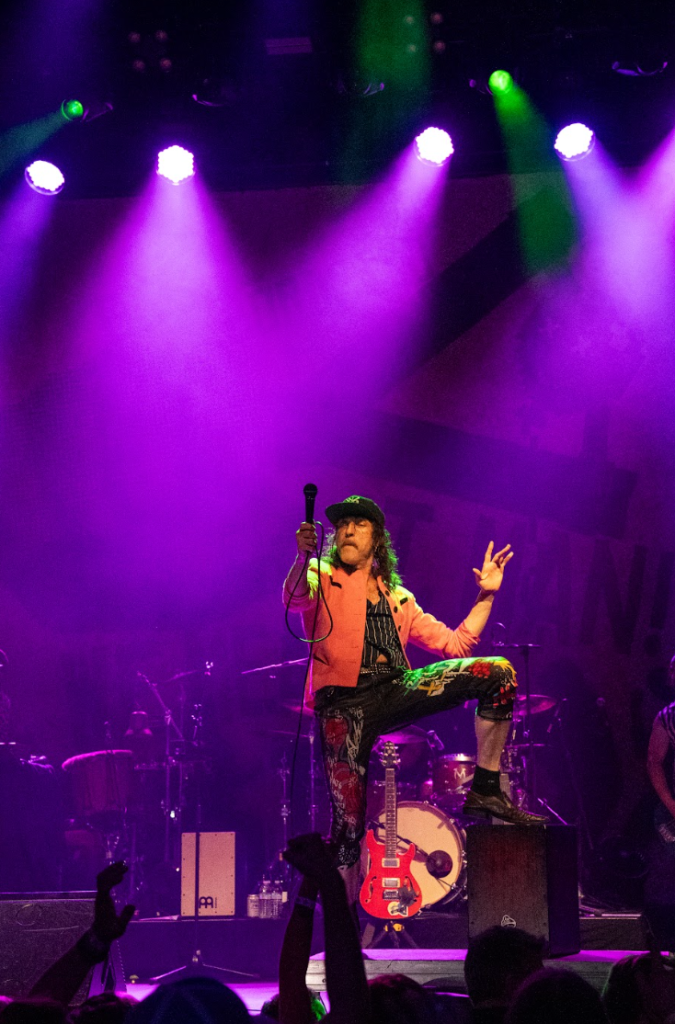
Calling this just a punk band doesn’t really make sense once you’re actually watching it. Yeah, “gypsy punk” is the tag, but live it’s more like a collision of things that don’t fully sit still. There’s folk punk in the structure, especially in the way the melodies carry and how the fiddle and accordion sit right on top of everything. There’s crust punk in the way it’s pushed, that sense that everything is slightly overdriven and never quite lets up. And then there’s that busking energy running through the whole thing, like if you stripped the stage away this could just as easily be happening in the street with the same intensity.
The band itself reflects that.
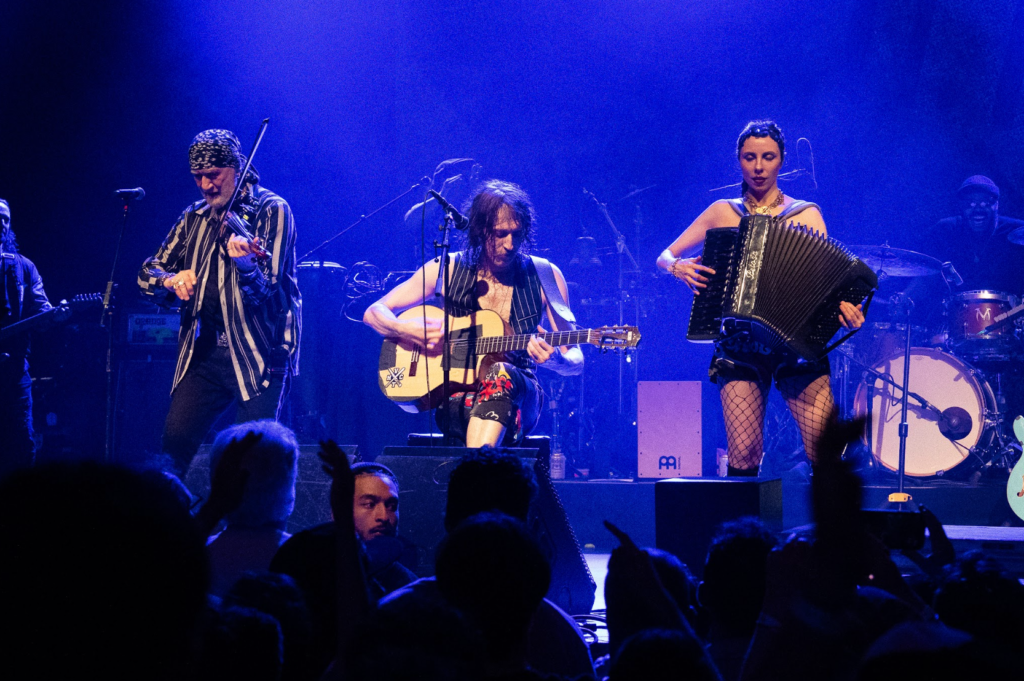
Two drum setups. Fiddle. Accordion. Synth. People switching instruments, moving across the stage, grabbing things mid-song. At one point that huge marching bass drum comes out and it somehow feels completely natural within seconds. It should feel like too much, but it doesn’t. It’s actually locked in tighter than you expect, like all that movement is part of the structure, not decorative.
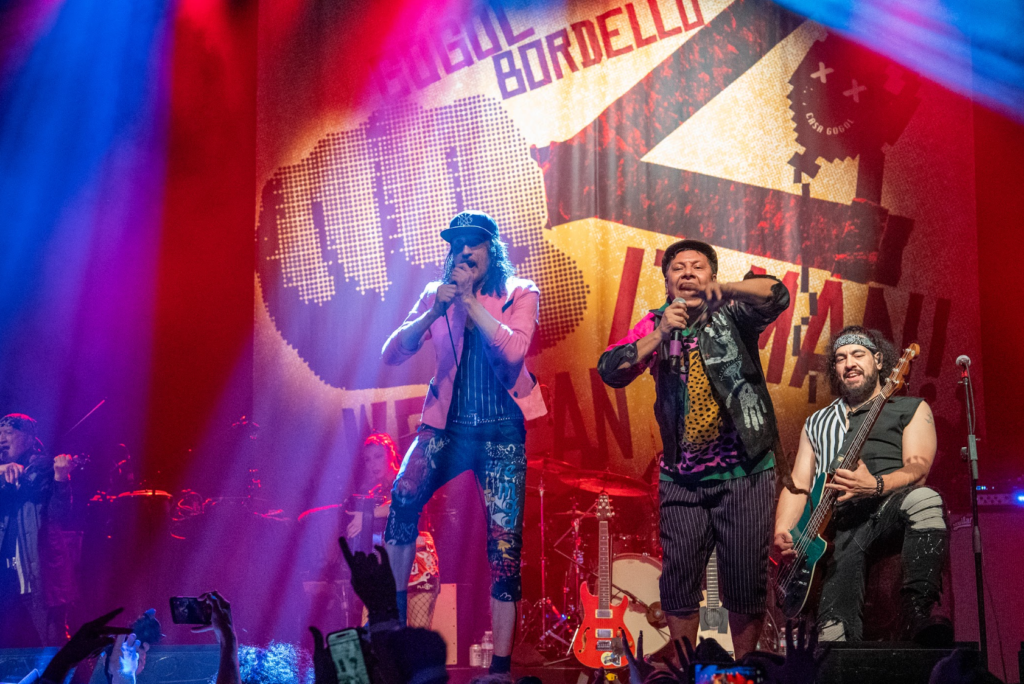
And the sound they make is big, but it doesn’t feel distant. That’s the part that stands out. With that many layers, it could turn into a blur, but instead it feels like it’s sitting in the room with you. Dense, but close. You’re not watching it from a distance, you’re kind of inside it.
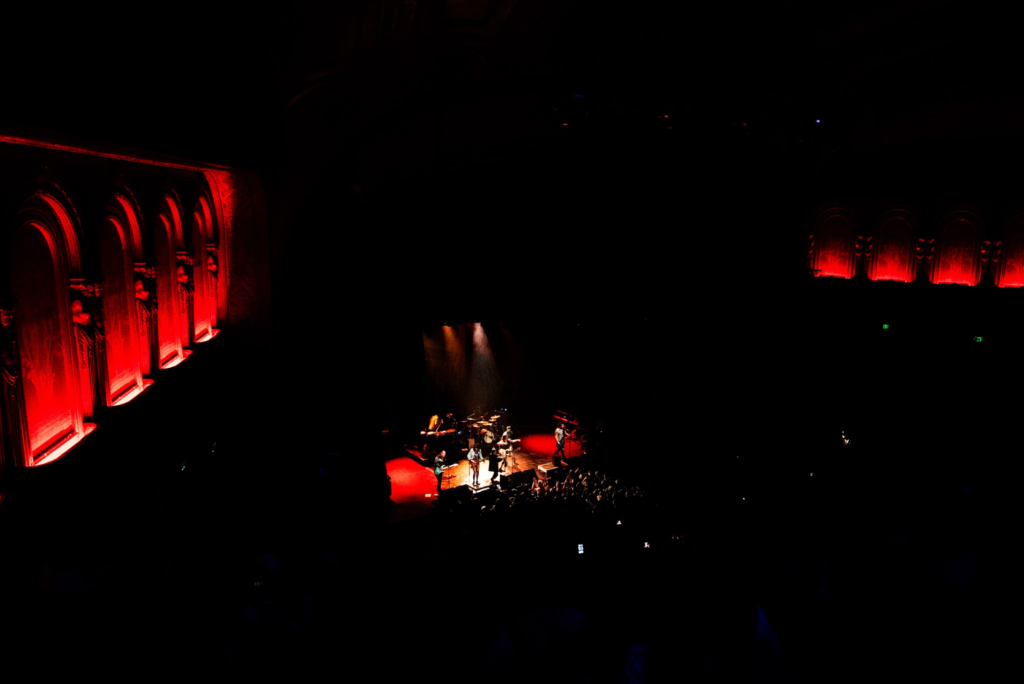
You can see that in the crowd. From the back, nobody’s really still. Not in an exaggerated way, just constant motion. People in the pit are doing their thing, but even outside of it, people are shifting, stepping, turning, moving without really thinking about it. Even the people just trying to get from one place to another are doing it with some kind of rhythm. It’s not stiff, it’s not detached, if anything, it felt more like a shared release.
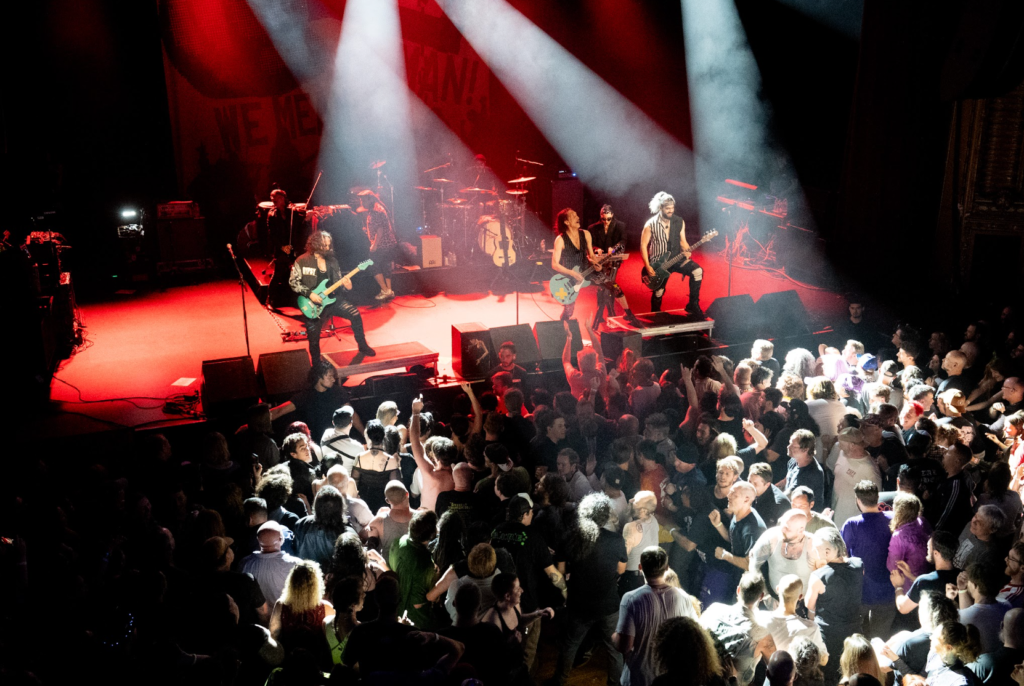
And that ties directly into what they’re pulling from.
A lot of the Eastern European and Romani influence isn’t just aesthetic, it’s structural. That sense of movement, of travel, of instability, of carrying something with you instead of planting it somewhere. So when the songs lean into immigration, resistance, all of that, it doesn’t feel like the band is switching modes to make a point. It’s already in there. The message is coming through the form as much as the lyrics.
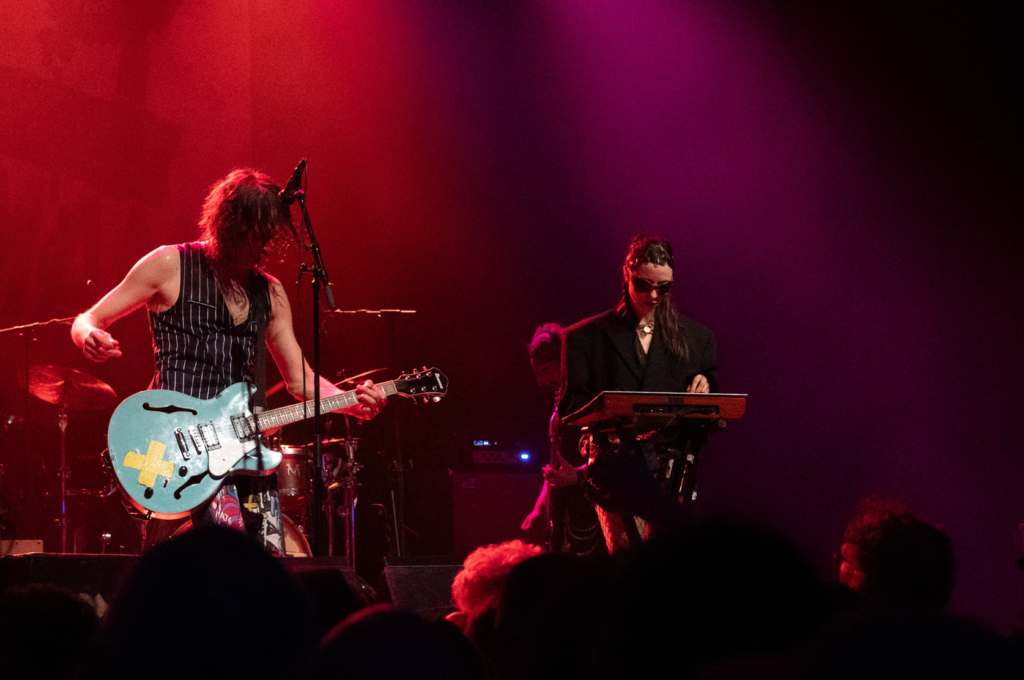
Midway through, the newer material starts to shift things. You can hear it immediately. The older songs have that layered, almost piled-on folk/crust energy where everything is happening at once and pushing forward. The newer ones open up. More space. More synth. Less of that constant churn underneath. It edges closer to something that feels almost post-punk at times, but still anchored in the same DNA.
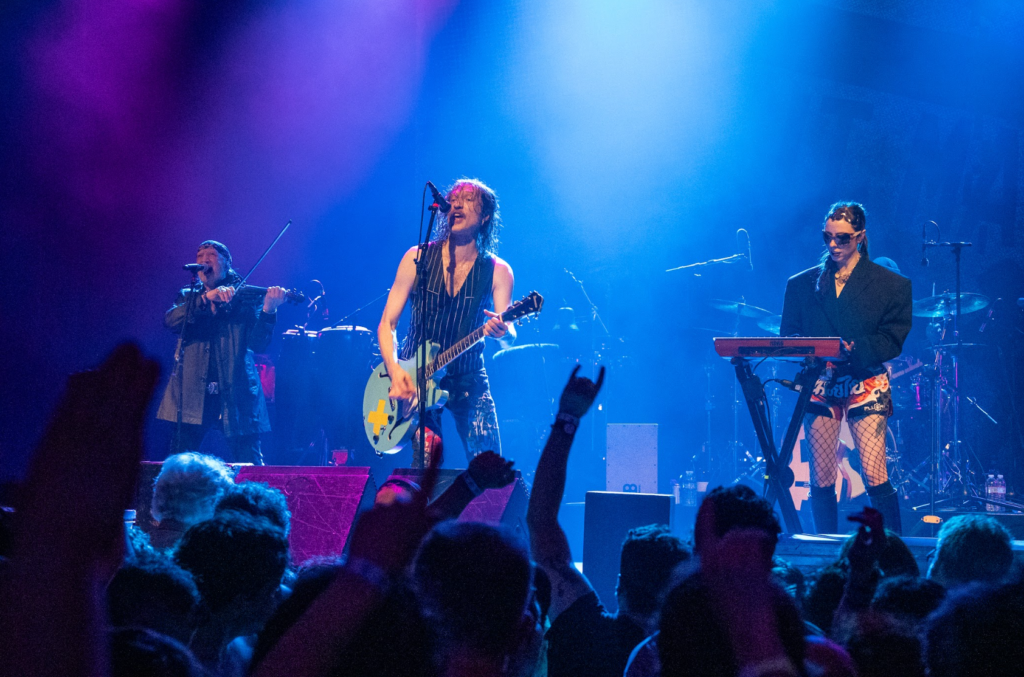
And they don’t try to smooth that over. They lean into it. The transitions feel deliberate. There’s even a visual shift when those songs come in, mini-costume changes and all; like they’re marking the difference instead of blending it away. It actually works in their favor, because it keeps the set from becoming one long blur. You move between textures instead of staying pinned in one.
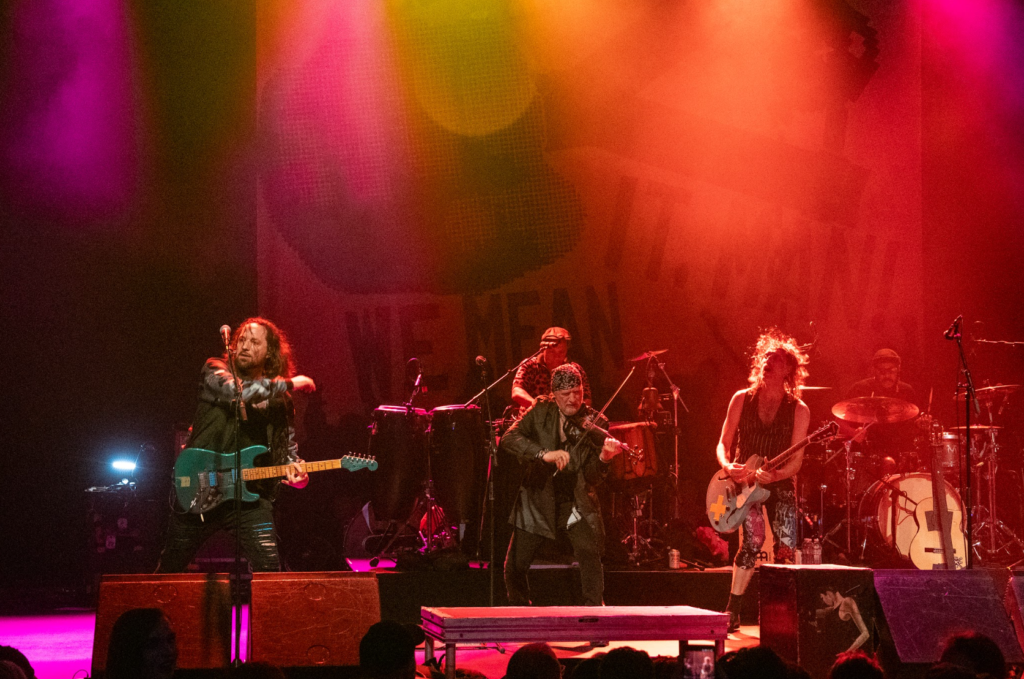
Then they swing back into the older material and the room tightens again. You can feel recognition hit immediately. No delay, no hesitation, just instant buy-in. That kind of response only happens when songs have been sitting with people for years, and you hear it again when “Not a Crime” or “From Boyarka to Boyaca” comes through and people lock back in.
At one point, members of the opening band, Puzzled Panther, come back out and join them, and suddenly the stage is completely full. It should feel crowded, but instead it just pushes everything higher. More bodies, more movement, more sound, but still controlled. It felt like an extension of what was already happening, just scaled up even further.
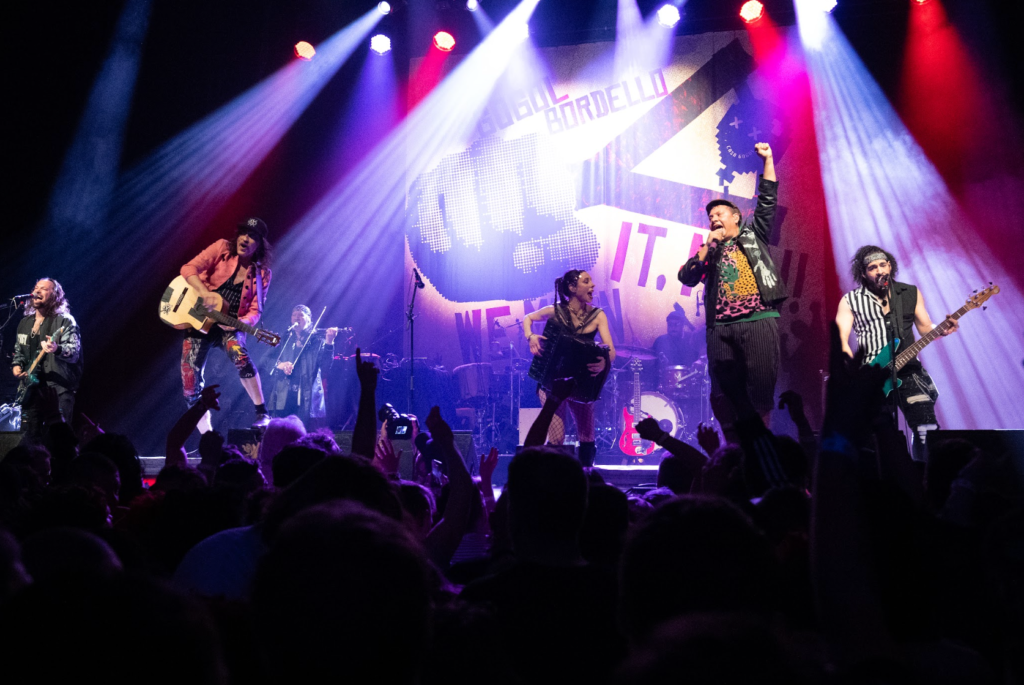
From there, everything starts to compress. Less space between songs. Faster transitions. It stops feeling like individual moments and starts feeling like a run. By the time they hit the final stretch, with something like “Pala Tute” driving it forward, they’re all pulled up toward the front of the stage, close together, playing like they’re trying to keep it from ending.
And that’s the part that really sticks. It doesn’t feel like a band going through a rehearsed closing section. It feels closer to something instinctive, like the same energy that would drive them to keep playing in a backyard or a house show, just scaled up without losing that core.
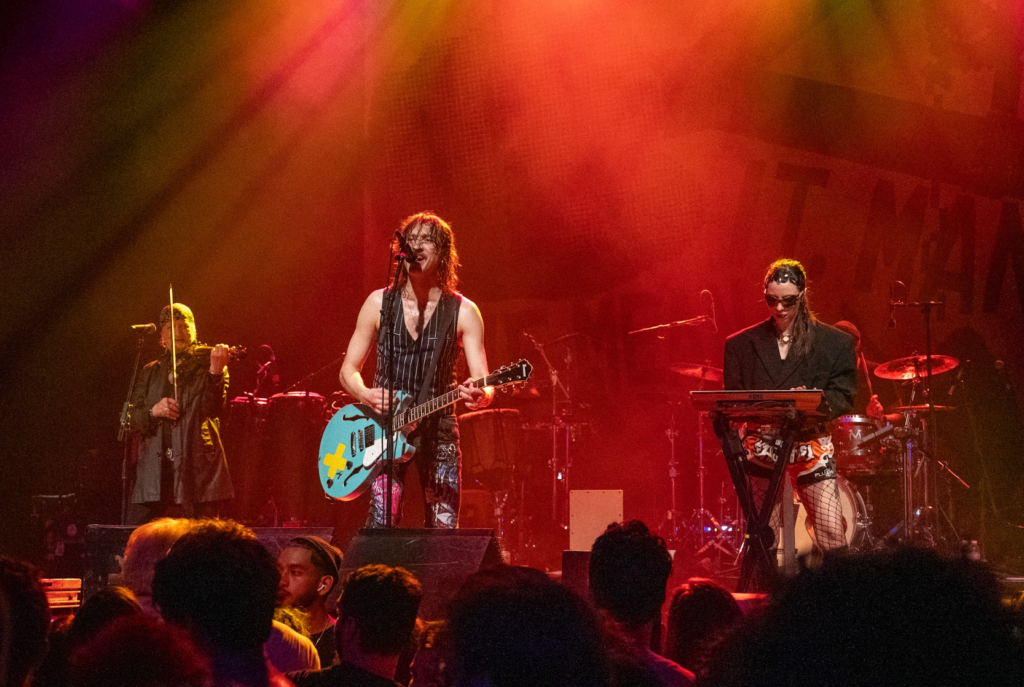
After this long, that’s not something you can assume. A lot of bands smooth out, or settle into a version of themselves that just delivers what people expect. This didn’t feel like that. If anything, they’ve added more over time. More layers, more contrast, more intention in how they move between sounds. But the core of it, that mix of folk punk, crust punk, gypsy punk, and something that still feels like it could spill out of the venue if you let it, is still intact.
And finally seeing them now, after all this time of just knowing about them, doesn’t feel like catching up. It feels more like grabbing onto something already in motion, like hopping a train that never really stopped, just slowed down enough for you to get a hand on it.
Featured image credit: Patrick Craig
