


B.K. O’Connor’s Debut Novel
Eve’s story has always been inside of B.K. O’Connor. O’Connor debut novel, Eve, was released March 3, into local bookstores and retail bookstores alike across the country. Her goal with the novel was to give a voice to a character who represents the women that feel trapped within traditional expectations.
During her undergrad, O’Connor took a course on John Milton and fell in love with the “moral imperative” that was Eve’s choice to take the fruit. Within Milton’s undoubtedly sexist illustration of Eve, O’Connor found a “proto-feminism revolution.” The lines leading up to Eve’s first bite in Milton’s Paradise Lost leave it logically infallible for Eve to make any choice other than to take the fruit. Milton’s own description makes it impossible for Eve to choose otherwise. Eve must take a bite; she does not know the consequences of the bite, but she knows if she does not bite, she will never know.
Eve hungered for knowledge; Milton had the same desire. Unbeknownst to him, he was an Eve sympathizer. O’Connor possesses this same insatiability. Unexpectedly, O’Connor found herself living a much more traditional life than she had imagined. And Eve’s bravery in breaking free from her entrapment inspired her.
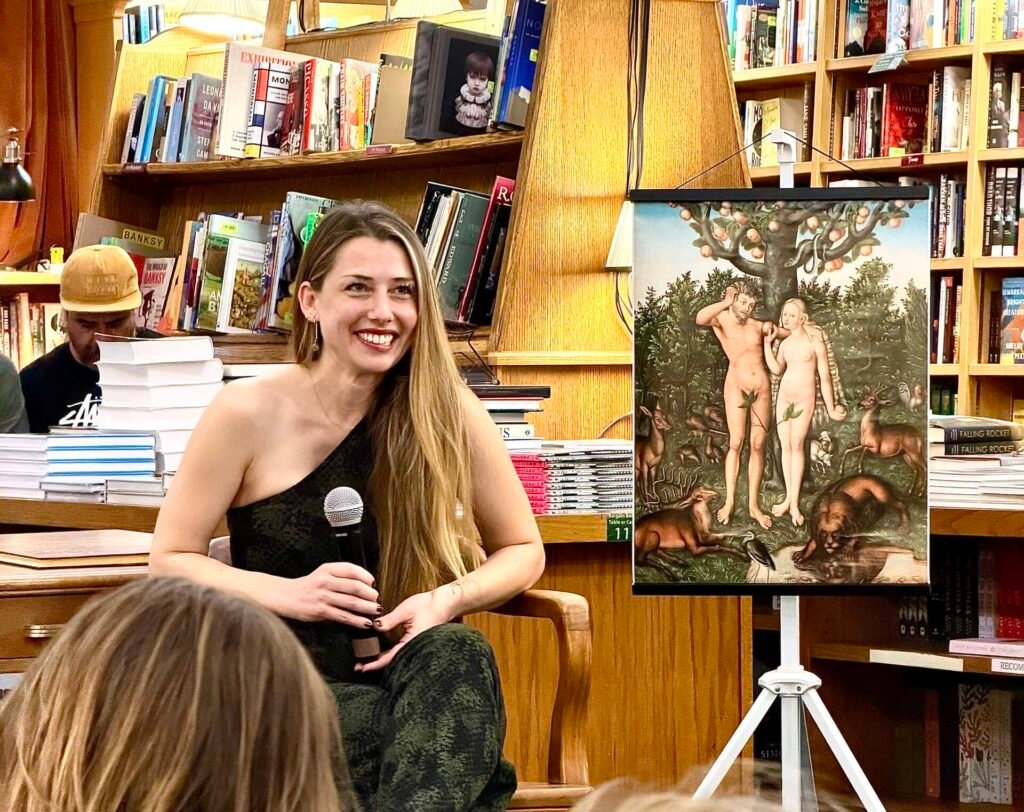
The novel was born in O’Connor’s classroom. A part of an initiative to teach her students to write narrative fiction, O’Connor began to write Eve.
Eve
O’Connor’s Eve is a beautiful and contentious web of moral contradictions and complexities drenched in coexistent dissonance and harmony.
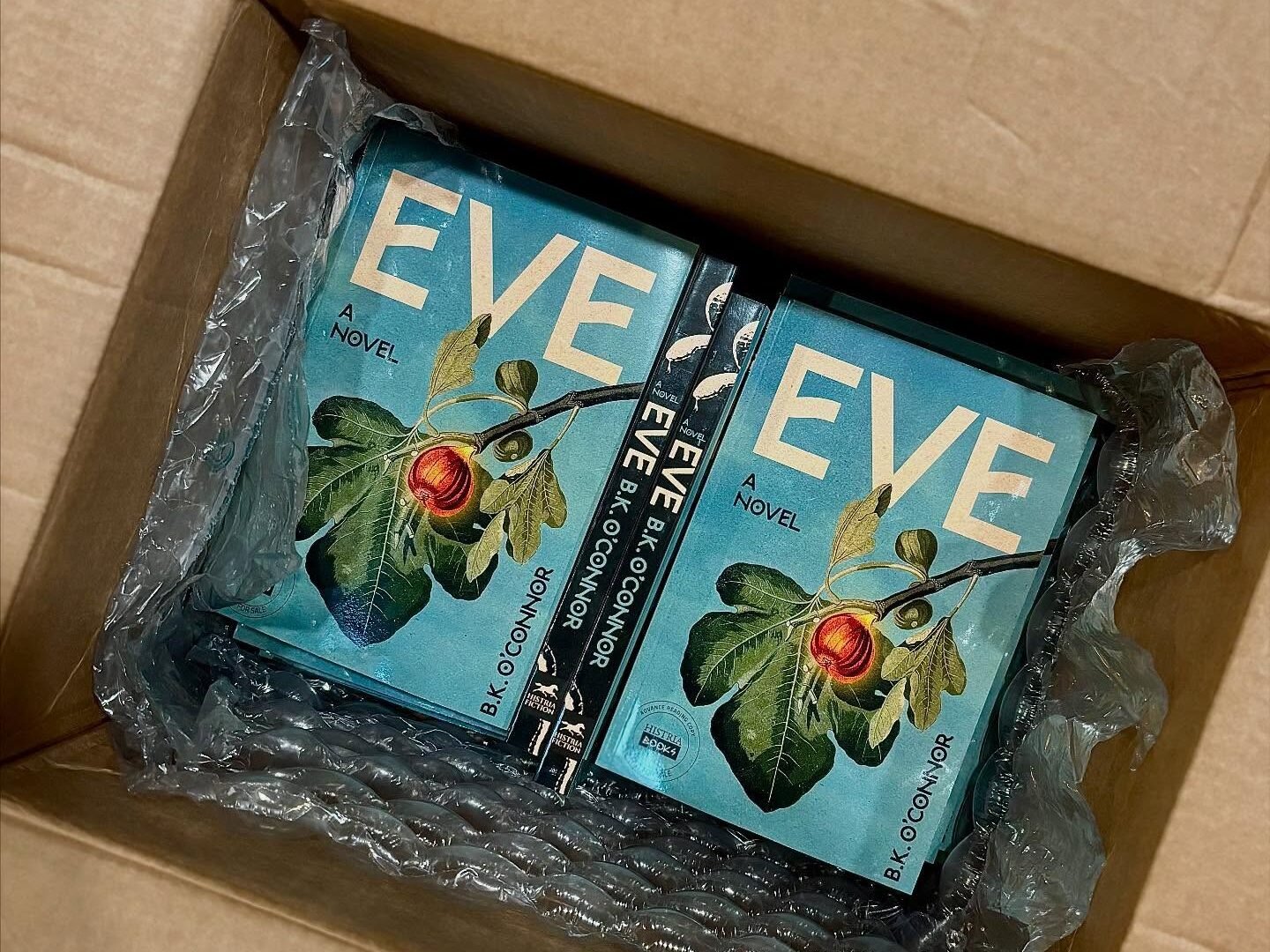
Eve is a free and true representation of what it is to be human. Her life and journey is defined by her ravenous craving for knowledge and truth. Throughout the novel, Eve’s goal does not change: to find the answers to all of her questions, to know the secrets of the world. Distractions make her waver at times. Children, lovers, and stability challenge Eve to give up on her goal. All of which are strong reasons to give up her dream of nomadic wandering in the name of knowledge seeking, yet, she refuses.
Eve journeys through worlds, through civilizations that the archaeological world has proven existed at the same time in which the Bible places Genesis. She is acquainted with people, cultures, and environments in which she finds patterns. She recognized the similarities that naturally arise in human nature, and she questions them. She challenges them. She fights to change them.
Eve was created for Adam, and she learns to challenge this form of obedient love that was presented to her at her creation.
Her first challenge is monogamy. Eve challenges the idea that she must be loyal to the one man that God created her for. She did not choose Adam, and when she falls in love with Lucifer, it is her first act of rebellion. Her second challenge is homosexuality. Eve falls in love with a goddess, and it takes her until she must part with the goddess to realize that this love is romantic. A form of love that she did not know existed rose out of her naturally.
Throughout her journey, Eve challenges love and knowledge. As she wades through trials and obstacles, she works through stages of enlightenment. She breaks free of her tether to man that God created and learns to honor her desires.
The Narrative and Why it Matters
To B.K. O’Connor, Eve is in everywoman. In our society, women are expected to behave in specific ways that are often restricting. A woman should get married; a woman should have children. But once a woman has children, the responsibility falls on her, not her partner. Her world changes; she is no longer living for herself but her children, while the father can continue to live his life the same way.
Adam receives the love and praise for “providing” for his family while living his life. Eve is isolated and neglected as the care-taker. When Eve challenges this way of living, she sets on a journey that is both individual and for a collective feminist goal.
Paradise Lost and the Bible have never been feminist texts; neither are obvious stories for feminist discourse. Yet, O’Connor chose to create a feminist re-imagination of Milton’s epic. O’Connor believes that in order to fight the narrative, you have to use the narrative. She chose to lean into biblical accuracy to prove her point. The Bible is not meant to be Law; it is meant to be a guide. O’Connor used it to guide and voice her own narrative.
“Bringing awareness to the chains, and the way it feels to feel the sun on your face for the first time, is the action.”
Photos Courtesy of B.K. O’Connor
