

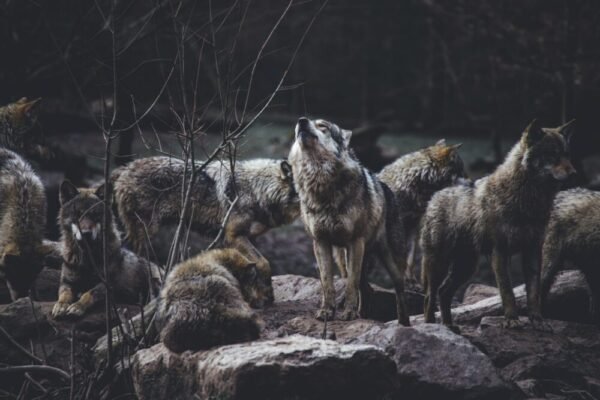
Trump’s plan to source wolves from neighboring states could weaken already fragile bloodlines as America’s wolf populations continue to grow at a crawl.
Trump has once again tried to call the shots on activism, imposing restrictive guidelines that prevent organizations from achieving real results. The new rules require Colorado’s repopulation plan to source wolves exclusively from neighboring Rocky Mountain states. Colorado launched its wolf restoration program to bring 30-50 wolves into the state over five years, aiming to save a dwindling breed native to the Rockies across the U.S. However, outsourcing wolves from Canada could help prevent inbreeding and reduce the risk of genetic defects or mutations—issues that have already surfaced in Colorado’s wildlife, as seen when the horned bunnies made headlines in August.
The Trump administration argues that wolf populations in neighboring Rocky Mountain states have recovered enough to no longer be considered endangered. However, these regional repopulation efforts have kept bloodlines dangerously tight. If Colorado sources wolves locally instead of internationally, the genetic strain will only worsen, turning the state into a potential hotbed for mutations. Such outcomes could endanger both wildlife and nearby communities, exposing them to unpredictable diseases.
Once again, Trump overlooks long-term consequences in favor of short-term political optics, framing his decision as a push for national unity rather than international collaboration. His history of acting impulsively for small, immediate gains—and his tendency to dismiss expert advice—continues to limit his effectiveness as a leader. Unfortunately, that stubbornness doesn’t just affect the American people; it also puts the nation’s recovering wolf populations at serious risk.
Colorado has reliably imported 10-15 wild wolves per year from a Canadian partnership that has strengthened both nations’ conservation goals. America has seen these positive results back in 1995 with the Yellowstone wolf release program that saved America 94 billion dollars in revegetation funding. Revoking that alliance, as Trump proposes, would not only disrupt successful repopulation efforts but also strain America’s relationship with Canada—an unnecessary tension in already uncertain times.
Rather than building and supporting alliances that work, Trump continues to alienate key partners, fostering fear and instability at home. If Canadian wolves are already thriving in Colorado, and neighboring states have refused to share their own populations, the logical path is to continue what’s proven effective. Introducing Canadian bloodlines strengthens the American genetic pool, helping wolves grow in both number and health. This debate isn’t just about wolf counts—It’s about ensuring future generations inherit a resilient ecosystem, not one weakened by shortsighted politics.
