

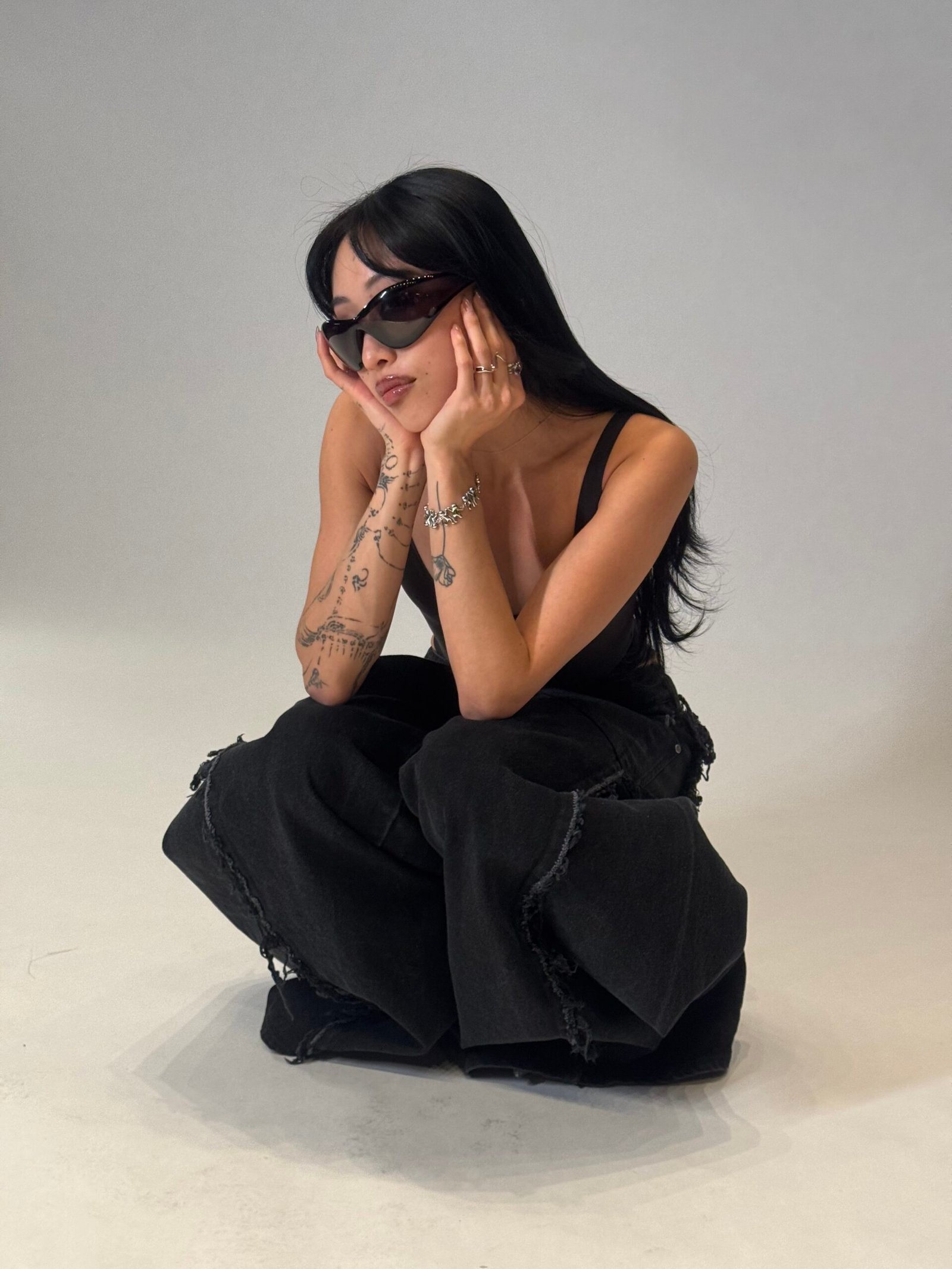
There are dancers you admire from a distance, appreciating the technique, the clarity, the discipline, and then there are dancers who make you feel as though something is unfolding in real time, as if the choreography is being discovered moment by moment, with enough presence that you stop observing and start following. Madeline Woo belongs to that second category.
I discovered her earlier this season, not long after she joined San Francisco Ballet as a principal dancer following her years with the Royal Swedish Ballet, and what stayed with me was not simply the technical command, though that is unquestionably there, but the immediacy of her presence, the sense that nothing about her performance was sealed off or held at a distance. She did not arrive as someone adjusting to a new stage or negotiating her place within a company. She arrived already fully inside it, moving with a kind of certainty that allowed everything she did to register without effort.
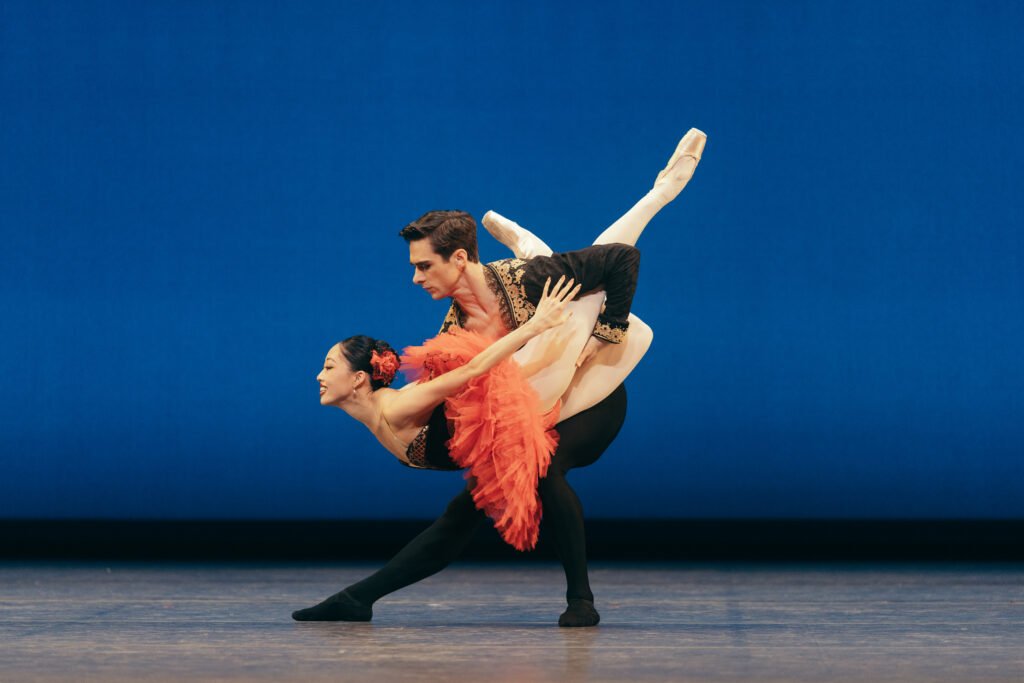
What makes her compelling is not just the technique, but the completeness of it, the way each line is carried fully through the body without interruption, without tightening, so that nothing feels abbreviated or decorative. There is a brightness to her dancing that reads instantly, as a kind of openness, not as projection in the theatrical sense, but an ability to let the audience meet her without resistance. That quality is inseparable from her instincts as an actress, which shape the performance as much as the steps themselves, giving weight to transitions, to glances, to the small decisions that accumulate into something far more dimensional than choreography alone. You are not simply watching classical movement. You are watching thought, intention, and response unfold within it.
That is what holds your attention. Not force, not exaggeration, but continuity. She does not drop out between phrases or treat certain moments as connective tissue to be passed through quickly. Everything is inhabited. Everything matters. And because of that, the experience of watching her shifts. You stop scanning the stage, and you stay with her.
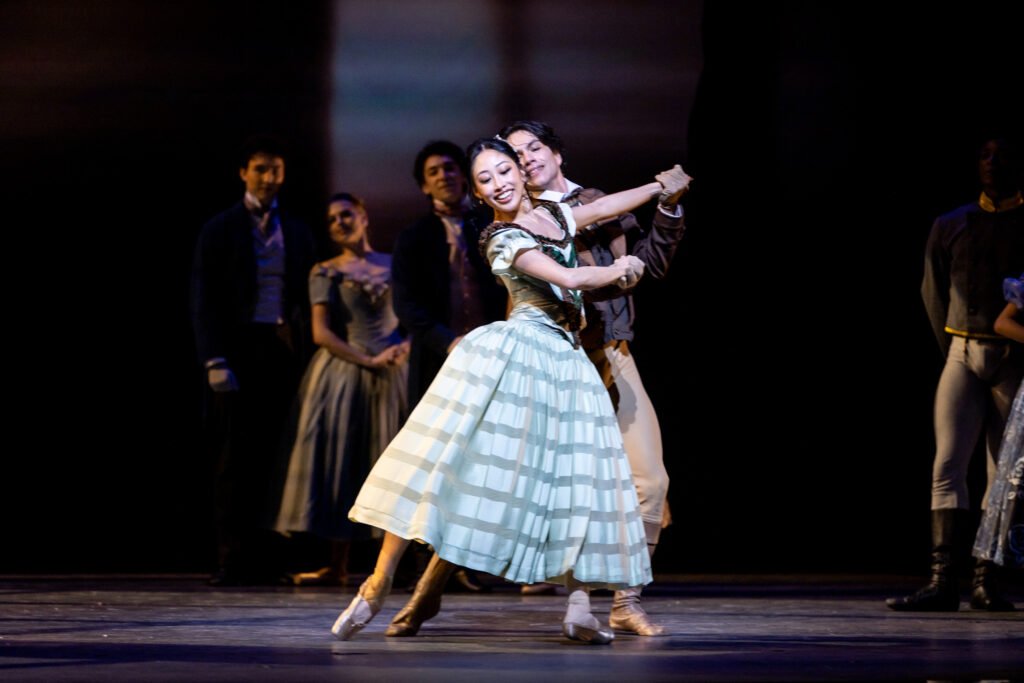
Sitting down with her, that same sense of multiplicity carries into conversation, though it takes on a quieter form. When I ask how she introduces herself, she moves through a range of answers without trying to resolve them into something singular, dancer, artist, founder, content creator, before pausing and softening it with a small correction. “I’m just Maddie.” It is an answer that resists hierarchy rather than definition, a way of holding multiple identities at once without collapsing them into a single, more convenient narrative.
Her path to San Francisco reflects that same resistance to settling too quickly. In Stockholm, she had built a career that was not only stable but actively expanding, with opportunities, repertoire, and the support of a director who recognized what she could do. It would have been easy to stay, and for a while she did, extending her time there season by season, each decision supported by something tangible, another role, another project, another reason to remain. Over time, though, the accumulation of those reasons began to point in the opposite direction, toward the realization that comfort, while valuable, can also become a form of inertia.
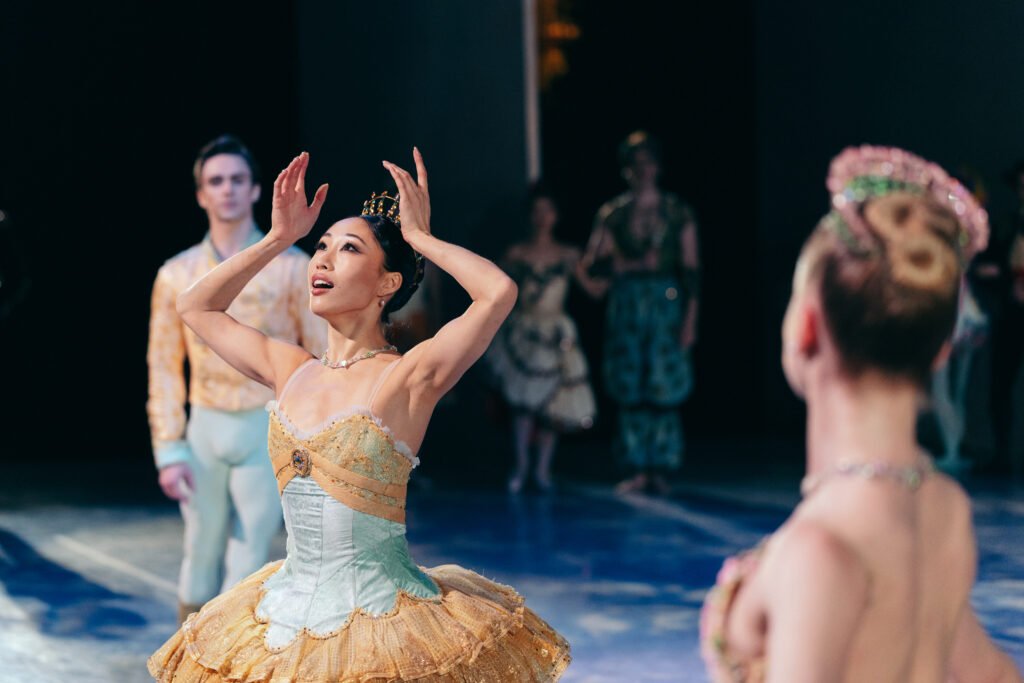
“The older I get, the more comfortable I get,” she says, describing the moment with a clarity that suggests she recognized it as it was happening. Leaving, then, was not a rejection of what she had, but a decision to move before that comfort solidified into something harder to break.
At 26, she made that shift, returning to the United States and stepping into a company that operates with a different intensity, where the pace is faster, the expectations are immediate, and the margin for adjustment is minimal. She describes the transition without dramatizing it, acknowledging the increase in workload and the demand it places on her both physically and mentally, but what comes through more strongly is the sense of engagement, the feeling of being pushed in a way that is productive rather than destabilizing.
At the same time, she carries with her a perspective that feels unusually grounded within ballet, which is the insistence that the work does not get to consume everything around it. Her experience in Sweden introduced her to a model in which work exists alongside life rather than replacing it, and that distinction has remained central to how she structures her own.
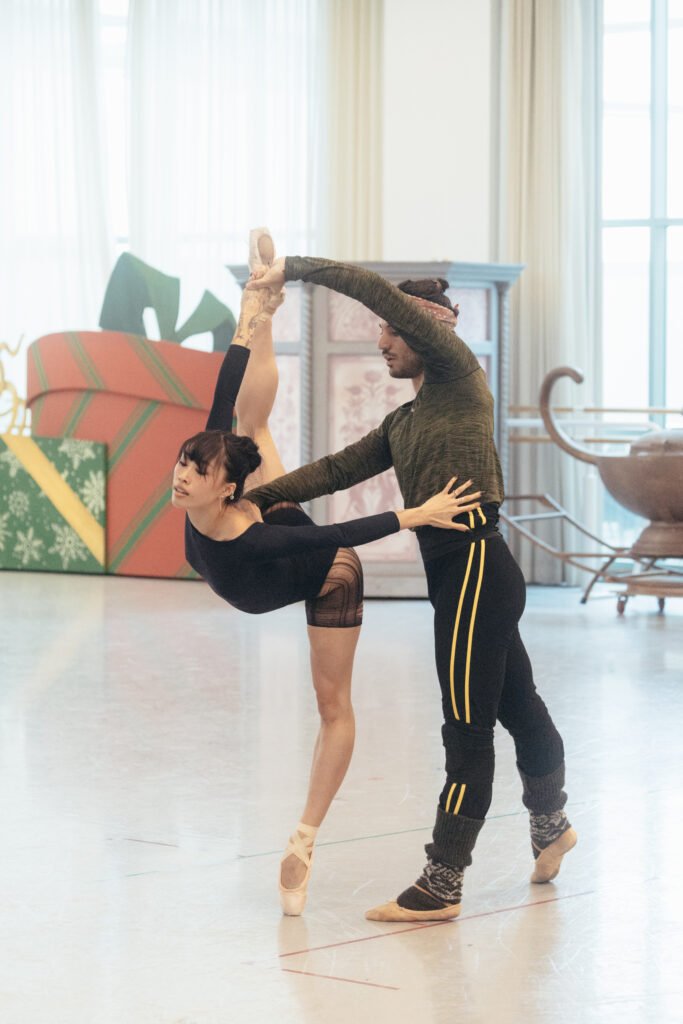
“It’s very easy to let ballet take over everything,” she says, referring not just to rehearsals and performances, but to the constant maintenance that surrounds them, the recovery, the preparation, the ongoing awareness of the body that extends far beyond the studio. Maintaining space outside of that, for relationships, for time that is not structured around performance, for creative work that exists independently of the company, becomes not just a preference but a necessity.
“I really value my life outside of it,” she says. “That’s what keeps me grounded.”

That grounding is visible in her dancing, not as detachment, but as ease. There is no sense of someone gripping tightly to prove her place or secure approval. The work is already there, fully developed, and she is able to move within it without tension, allowing it to expand rather than constrict.
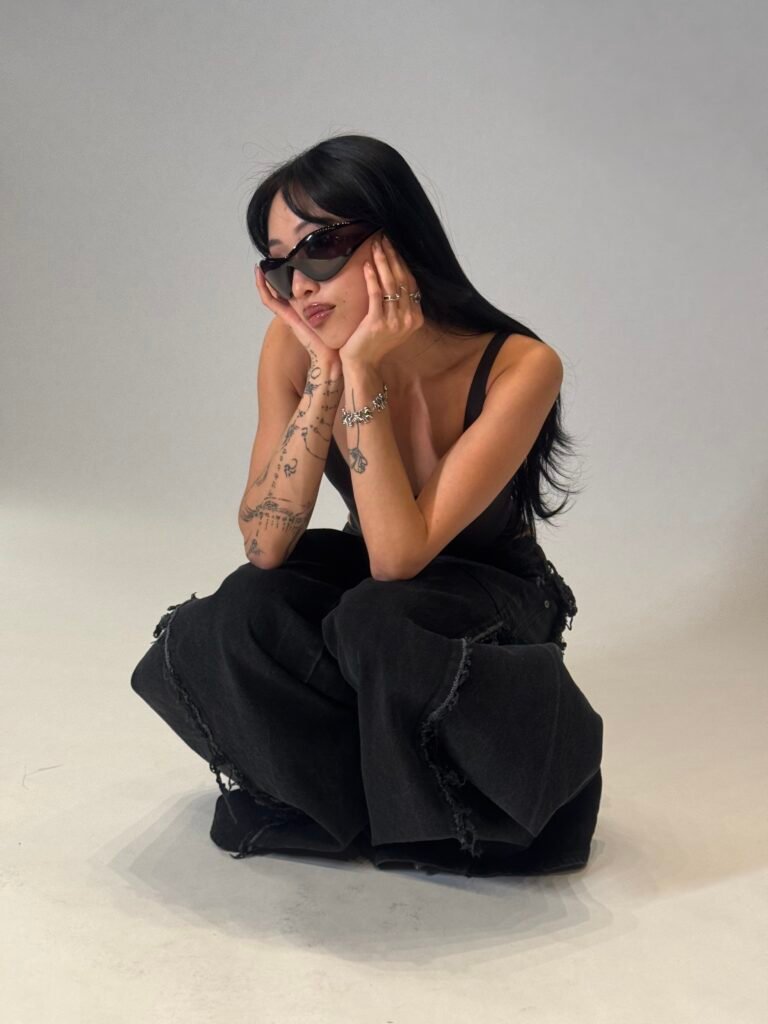
That same instinct toward expansion is evident in her work beyond the stage, particularly in her fashion label, Maddwoo Studios, which draws from the physical language of dance while deliberately refusing to remain confined to it. The pieces move across contexts, functioning as easily in a studio as they do in a social or urban setting, and that fluidity reflects a broader approach to identity, one that does not separate the dancer from the rest of her life.
“It’s inspired by movement,” she says, “but it’s for everyone.”
The impulse behind that is rooted in something more personal. She speaks openly about her experience in ballet school, about the scrutiny placed on the body at a time when identity is still forming, and about the way those expectations can take hold when there is not yet a stable sense of self to counter them.
“When you’re younger, you don’t have a strong sense of self yet,” she says. “So you believe what people tell you.”
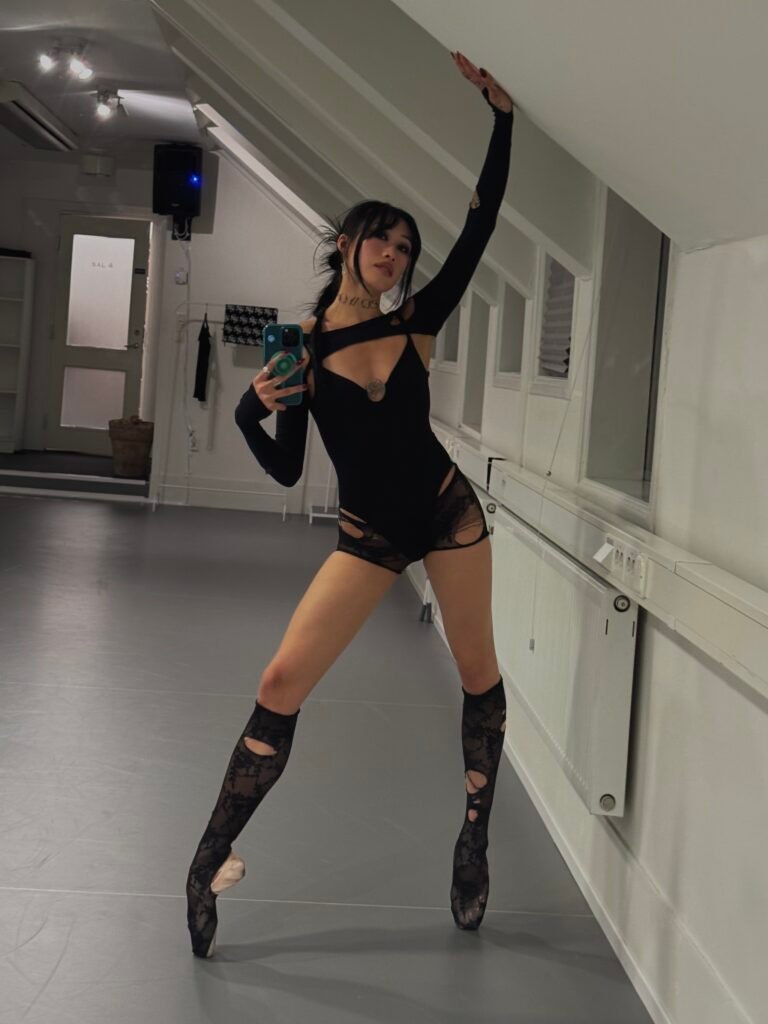
What followed was not a sudden reversal of that dynamic, but a gradual process of experimentation, cutting and reshaping clothing, trying different aesthetics, building a sense of alignment through iteration rather than instruction. Over time, that process evolved into something more defined, but its foundation remains rooted in that same search for authenticity.
“Clothes make you feel more like yourself,” she says.
And that idea, the alignment between movement, appearance, and identity, runs through everything she does, linking her work onstage to the way she moves through the world more broadly.
Part of what makes her presence feel particularly resonant at this moment has as much to do with timing as it does with her individual trajectory. It is an Olympic year, and with it comes a renewed focus on performance at the highest level, on the discipline required to sustain it, and on the individuals who manage to embody that discipline without disappearing into it. There is a heightened awareness of the body as both instrument and expression, and of the tension between precision and personality that defines so many classical forms.
Watching athletes like Alysa Liu this year, there is a distinct sense of recognition that accompanies the admiration, a feeling that what you are seeing is not only technically extraordinary but also personally legible, that the individual remains visible within the structure.
Watching Madeline Woo, that same recognition emerges as her dancing doesn’t present itself as an untouchable ideal; something polished to the point of distance. It remains immediate, grounded in choice and presence, allowing the audience to engage with it as something lived, rather than an abstraction.
When I ask whether she thinks of herself as representing ballet or reshaping it, she pauses, not out of uncertainty, but because she considers the distinction.
“I hope I’m helping reshape it,” she says.
The answer reads as an observation, an acknowledgment of a process already underway that doesn’t position itself as a declaration.
Later, when the conversation turns to the season ahead, her focus shifts to something more immediate.
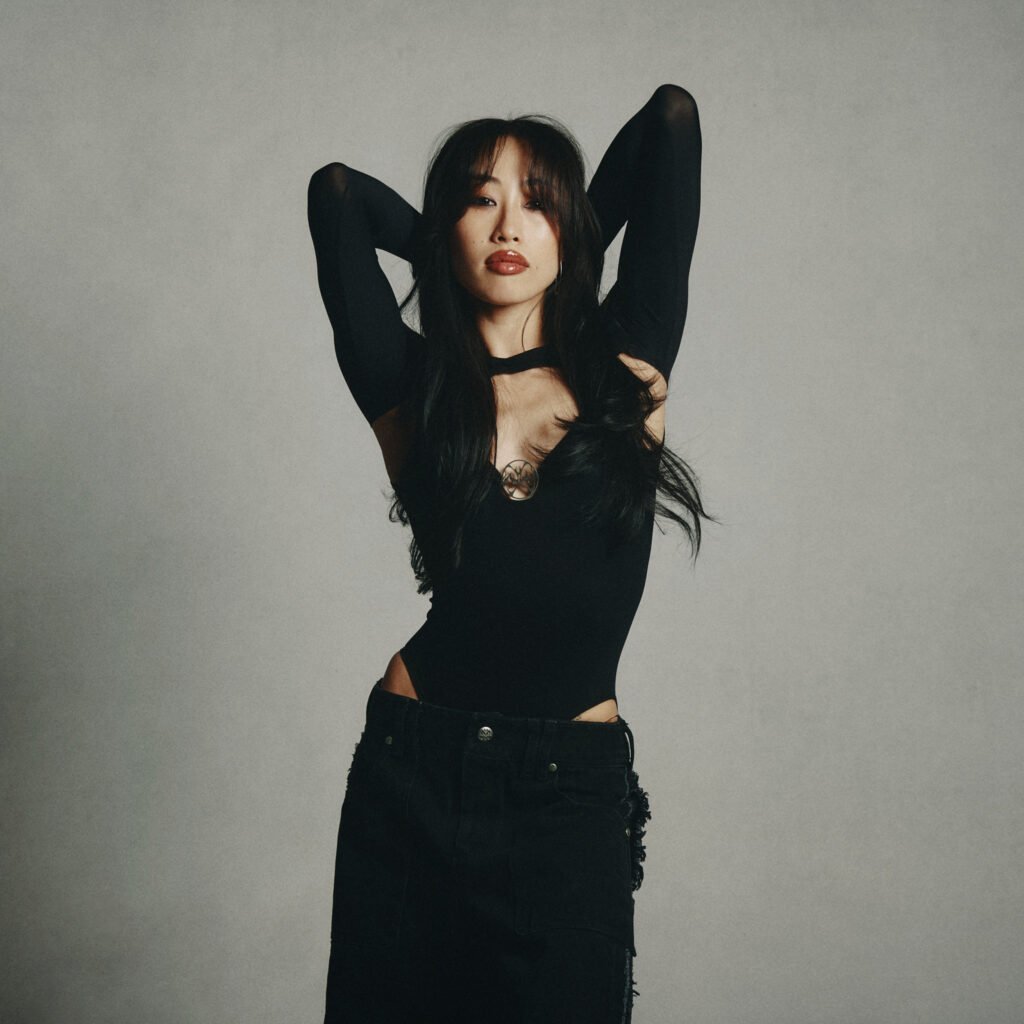
“I just want to stay healthy,” she says, “and to send the audience home feeling something.”
Within a form defined by control, repetition, and precision, that objective carries a particular weight. To produce a genuine emotional response, consistently and without artifice, requires a level of presence that cannot be manufactured.
And watching her, it becomes clear that this is not an abstract goal or a distant ambition.
It is already happening.
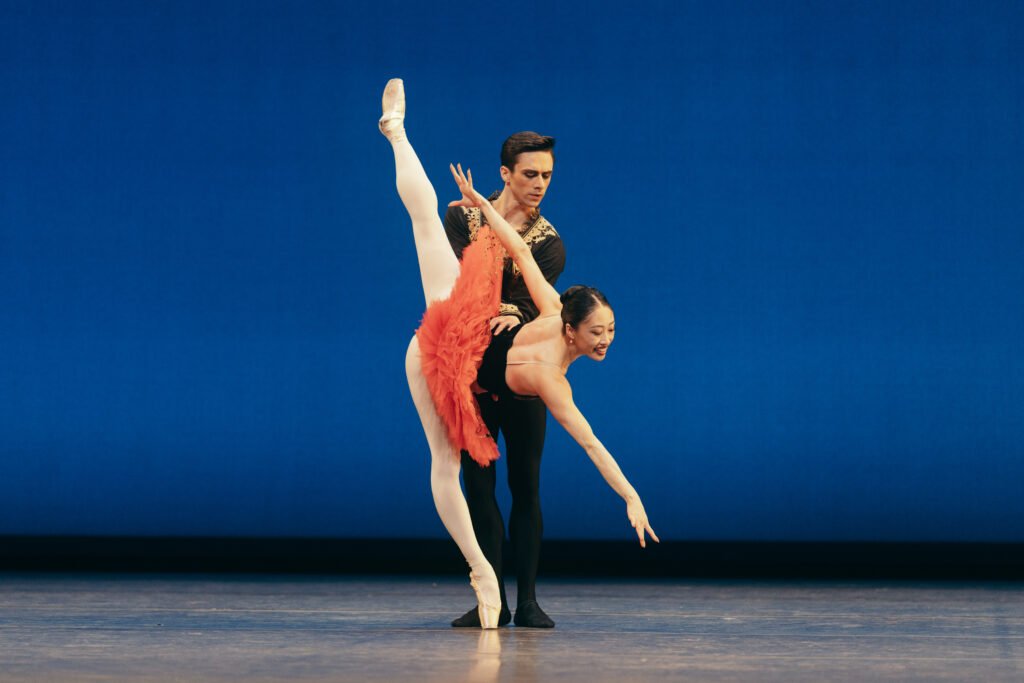
And for those who want to see that presence carried into a full-length classical role, she steps into Kitri this Friday night, March 20 at 8:00 pm, in Don Quixote, just one night after the production opens on Thursday. It’s a role that demands not only technical brilliance but wit, timing, and a kind of unapologetic charisma, all of which sit naturally on her. Tickets and performance details are available through the San Francisco Ballet box office. If this season has made anything clear, it’s that she is not a dancer you wait to catch later. You go now.
Don Quixote runs from March 19 to March 29th at the San Francisco Ballet.
Featured image credit: Madeline Woo
