

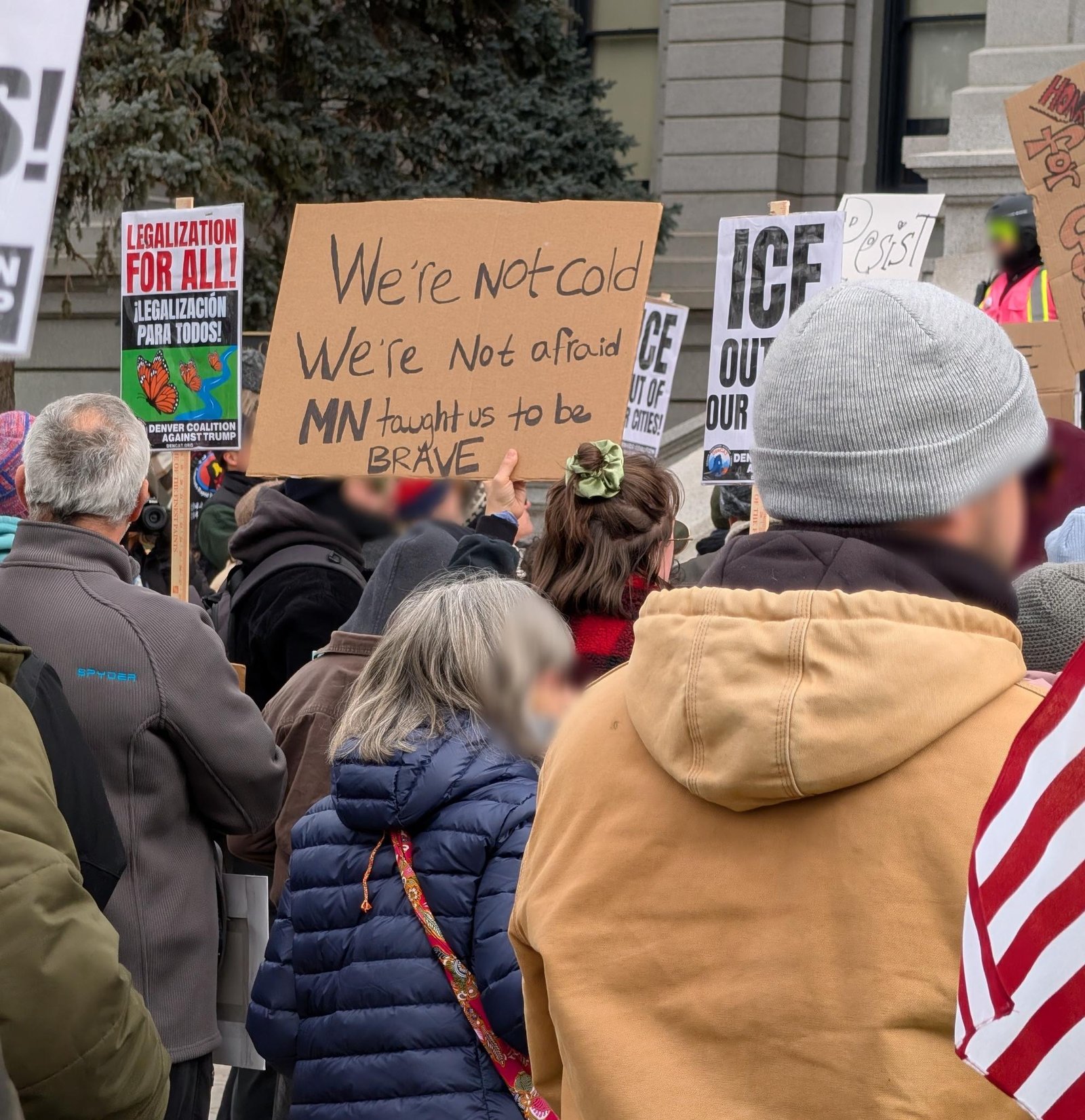
A picture is emerging that feels uncomfortably familiar, echoing moments in history we once promised ourselves we would not repeat. It’s something we don’t want to believe could happen again, but it becomes more real everyday.
In Minneapolis, fear has crept into ordinary life—not as spectacle, but as silence. Storefronts are closed. Streets are quieter. People are staying home not out of apathy, but out of caution. This is not economic failure; it is a community responding to danger.
The question many people are asking is not whether to care, but how to live into activism without sacrificing livelihood, safety, or well-being. The cause is important, but no life is worth less than another. Resistance should not require martyrdom to be meaningful. It merely asks us to make conscience and caring decisions daily that impact lives other than our own. It grows like vines through every decision made by every human in this country.
A realistic place to start is economic solidarity. Seek out immigrant-owned ma and pa shops when they are able to open, or support them online when physical presence feels unsafe. When favorite stores are closed, respond with understanding rather than frustration. Many owners are weighing impossible choices between income and personal safety. Choosing patience is an act of respect. The entire community lived into that for an entire day where no businesses opened at all for Ice out of Minneapolis where people marching for the cause seemed like endless seas.
Fear and propaganda thrive when communities turn inward. We must resist both! Immigrants are not outsiders to this country; on the contrary, they are among its builders past, present, and future. Keeping that truth visible matters, and it takes everyone in protest to do it.
For encounters with ICE, preparation and clarity reduce harm. Carry documents if you have them. If there is an issue with documentation, it is safest to remain calm, say as little as possible, and comply with instructions. While some recent fatal encounters have been framed as “non-cooperation,” no perceived failure to comply is ever worth a human life. Confusion and misinformation is the soil that unnecessary escalation takes root, spreading quietly and destructively like the unruly vines of a creeping ivy on an abandoned house.
Small, collective actions can dramatically reduce risk. Carpooling or grocery-pooling for undocumented neighbors limits exposure and decreases the number of public interactions required for daily survival. For those at higher risk of detention or deportation, staying home while relying on delivery services or trusted neighbors can be an act of protection, not isolation or shame.
Equally important is emotional vigilance. Check in on friends, family members, and neighbors who may be carrying more fear than they let on. Stress compounds in silence. Community care is not secondary to activism—It is activism.
Calling local officials may feel tedious or symbolic, but it remains one of the most accessible pressure points. When voices are repeated, documented, and sustained, even the largest institutions are forced to notice. Persistence has a way of carrying sound farther than shouting.
Advocacy does not need to be graceful or perfectly coordinated to matter. History reminds us that even the clumsiest elephant can eventually hear the smallest voices, if they keep speaking together, somewhere in the clover.
Resistance does not have to be loud to be powerful. It does not have to be dangerous to be meaningful.
In Minneapolis, resistance often looks like information shared carefully, privacy protected fiercely, and neighbors choosing connection over fear.
Staying alive, staying informed, and staying human are not signs of weakness. They are how communities endure—and how change remains possible. We look to the political council to make real change happen.
Photo courtesy of social media
