

“The brave man carves out his fortune, and every man is the son of his own works.”
That line from Miguel de Cervantes feels like the right threshold through which to enter Don Quixote, which opened at San Francisco Ballet on Thursday, March 19, with choreography after Marius Petipa and Alexander Gorsky, staged by Helgi Tomasson and Yuri Possokhov, designed by Martin Pakledinaz, and danced to Ludwig Minkus’s score.
Now that the season is officially past its halfway mark, and after a run of programs that have, for the most part, asked us to look harder at choreography, at line, at bodies in space, at the dancer as instrument rather than ornament, there was something deeply satisfying about circling back to a production that is determined to give. Give scenery. Give color. Give comedy. Give crowds. Give costumes with tiers and sparkle and architecture. Give us a whole world, and then keep overfilling the cup. In that sense, Don Quixote resembles The Nutcracker since both ballets are structurally built for abundance. They are made to burst at the seams.
And if Tamara Rojo has been pacing this season strategically, which she clearly has, then this was an especially clever moment to unleash something so overflowing and grandiose. We had just come off programs shaped by names as towering as George Balanchine and William Forsythe, and even the James Blake collaboration in The Blake Works asked the audience to sit with a cleaner, more contemporary visual language. So to arrive now at a production that is all courtyard, tavern, dreamscape, wedding, jewel-tone flourish, and densely embroidered character work felt almost indulgent in the best way. It was like being reminded that ballet does not only know how to be sparse and modern and severe. Ballet also knows how to seduce. Ballet knows how to entertain. Ballet knows how to throw a feast.
What makes this particular production so rich is not merely the scale, though the scale matters. It is the sheer density of labor visible onstage. Don Quixote asks a company to show its full hand. Principals, soloists, corps, character artists, students, everyone is needed, and everyone contributes to the illusion. The production depends on that density the way lace depends on every stitch being intact. Remove one thread and the pattern no longer reads with the same intricacy. That is what felt so thrilling here. Every role mattered. Every body onstage contributed to the embroidery of the whole.
As a horse girl, and I say that with my full chest, it also delighted me to no end that the evening made room for actual equine performers, a horse and a miniature horse, which felt like a little extra blessing laid on top of an already generous production. San Francisco’s War Memorial Opera House is no stranger to animal grandeur, but for me this was still a particular treat, one of those theatrical details that hits the inner child directly and without apology.
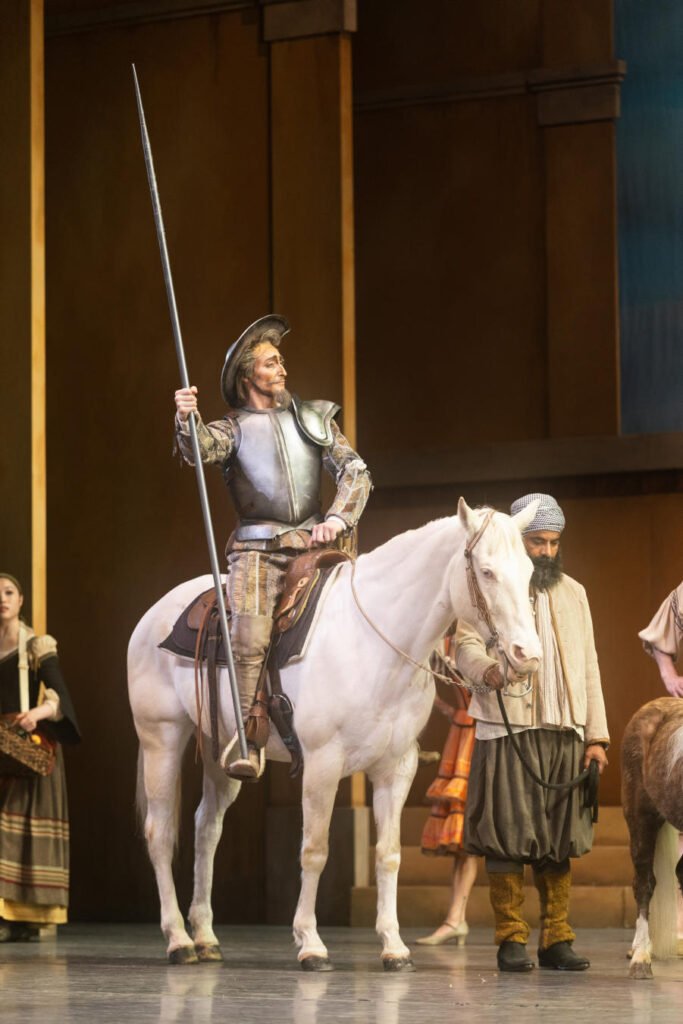
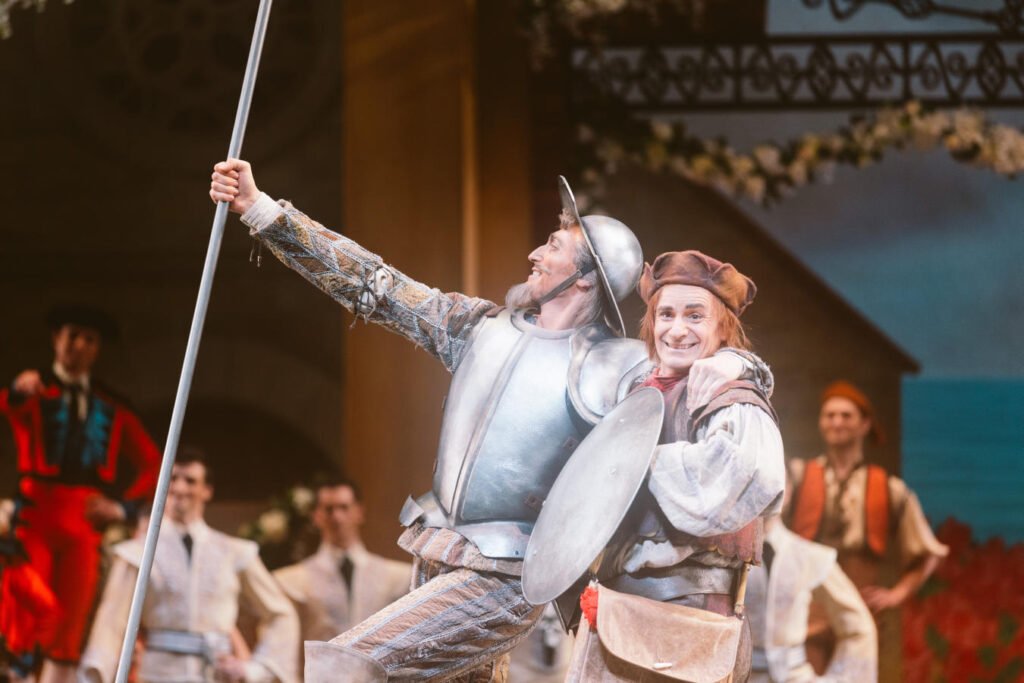
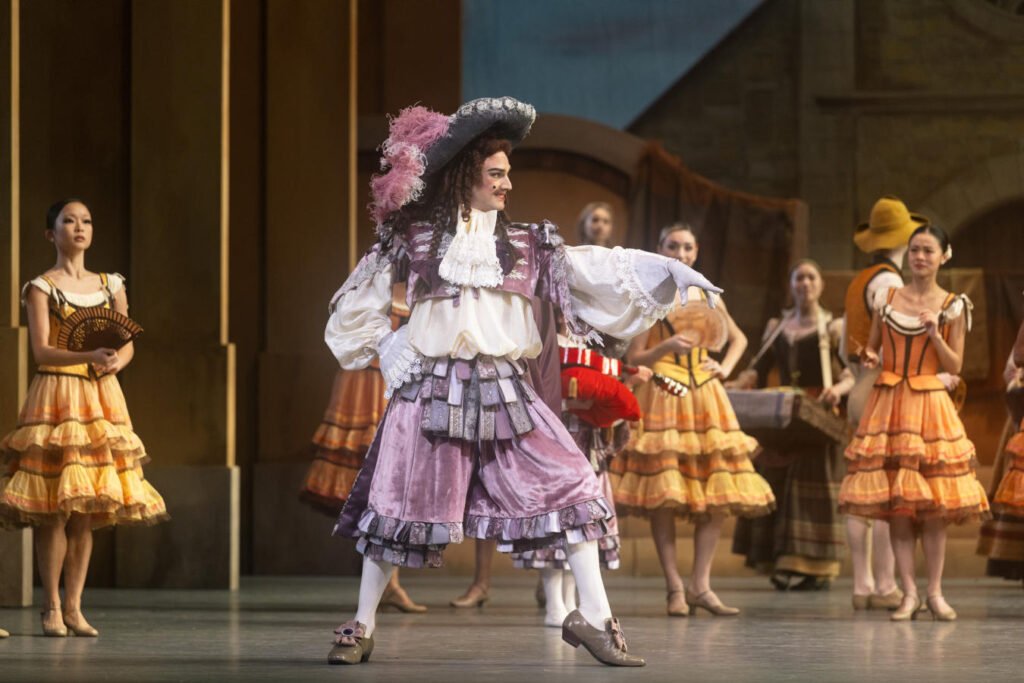
Narratively, Don Quixote remains one of ballet’s most charming bargains. In San Francisco Ballet’s own guide to the work, Kitri and Basilio are the central lovers, Lorenzo is the father standing in their way, Gamache the ludicrous aristocratic rival, Mercedes and Espada the glamorous side couple, and Don Quixote and Sancho Panza the wandering pair whose quest keeps colliding with the lovers’ story. In the dream scene, Don Quixote sees Kitri as Dulcinea, the idealized woman of his imagination.
That is part of what makes the ballet more interesting than its reputation sometimes allows. Don Quixote is ridiculous, yes, but he is not villainous. He is a man so intoxicated by ideals of chivalry that he projects them onto the world in ways that are absurd, moving, and occasionally inconvenient to everyone around him. Beside him is Sancho Panza, more pragmatic, more grounded, more suspicious of fantasy, and the tension between the two is what gives the story its comic wisdom. Optimism needs its skeptic. Skepticism needs its dreamer. Don Quixote mistakes Kitri for Dulcinea, sees what he wants to see, and charges into other people’s lives with all the conviction of a man who believes that virtue itself requires his intervention. Yet even that error carries a strange tenderness. The world could use more chivalry, he seems to think. Is that really the worst delusion a man could have?
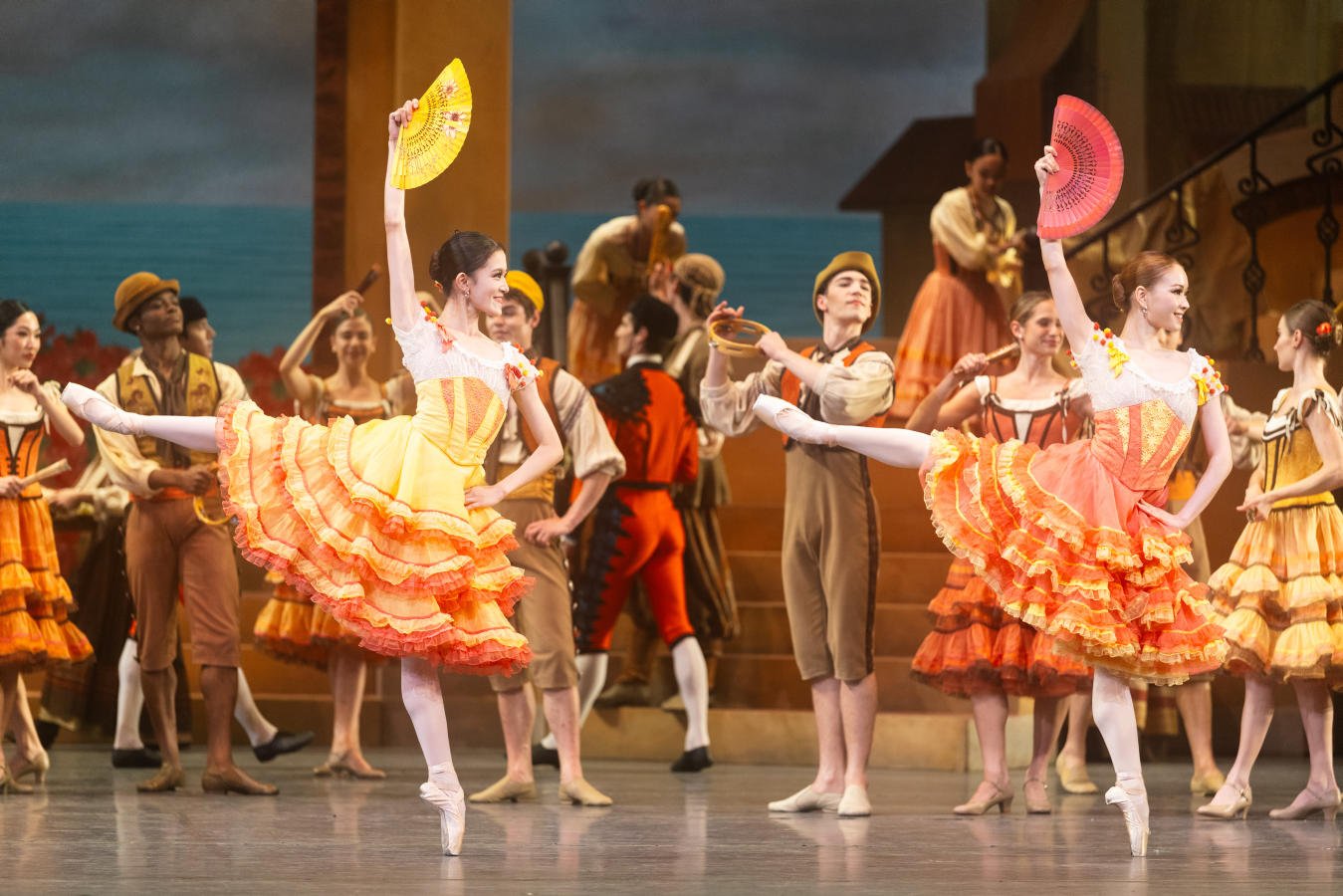
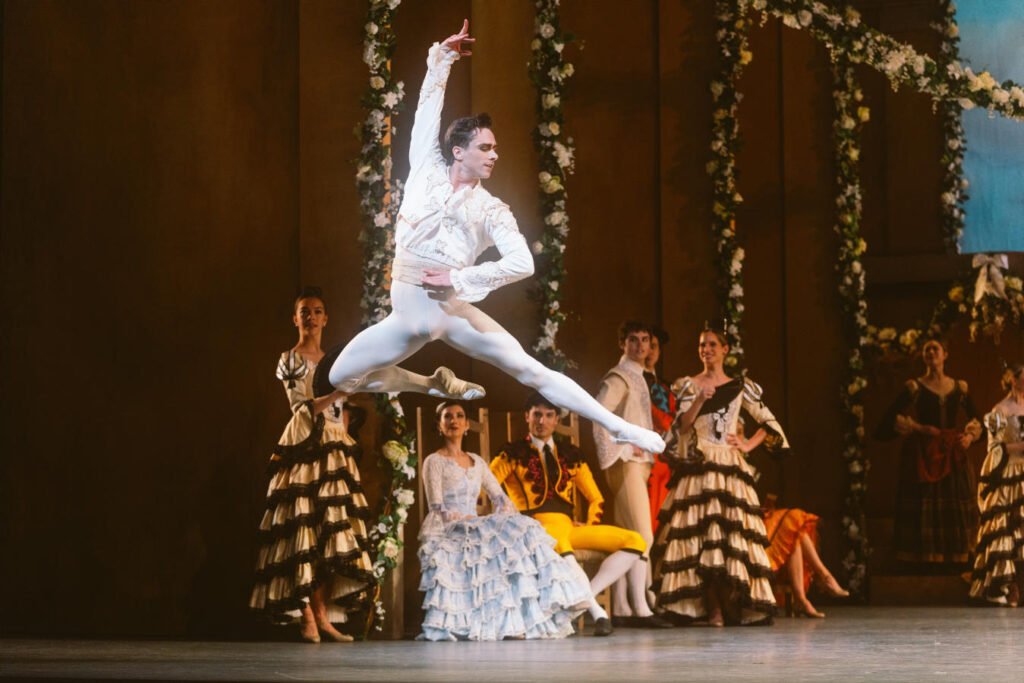
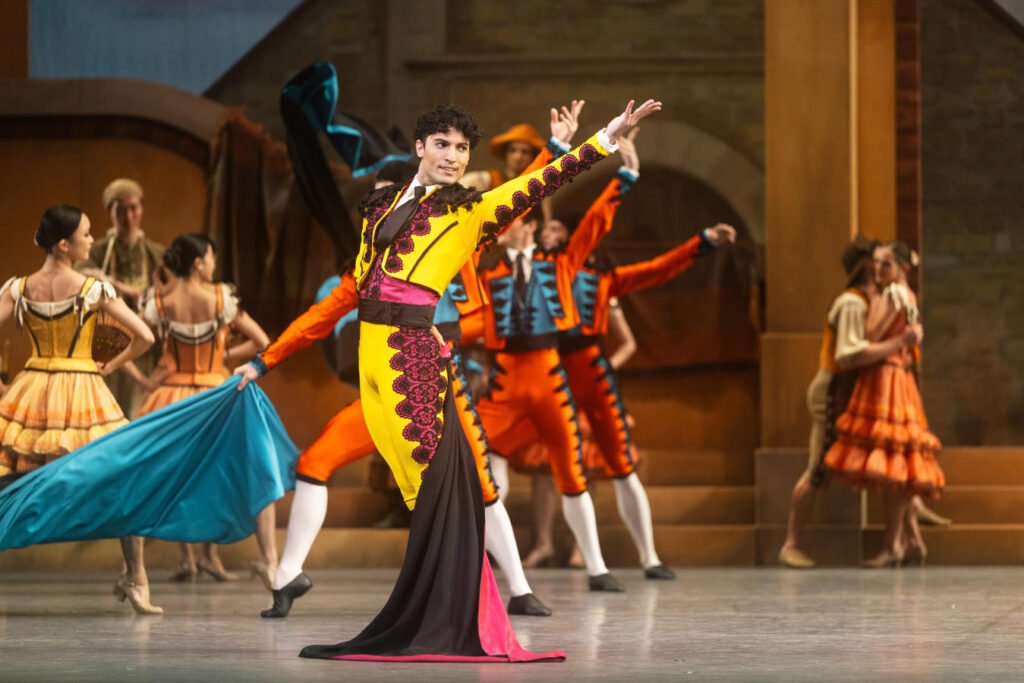
Act I, set in the town square in Barcelona, was a feast all by itself. The Spanish-inflected costumes, the fan work, the bustle of the square, the sharpness of the ensemble dancing, all of it reminded me how satisfying period detail can be when performed at this level. And I have to pause on the fan work because it is exactly the kind of thing that can look easy from far away and is anything but. To watch a stage full of dancers snap fans open and shut in perfect unison, while remaining fully inside the choreography, is one of those little professional miracles that rewards the ballet obsessive. It is technical. It is theatrical. It is delicious.
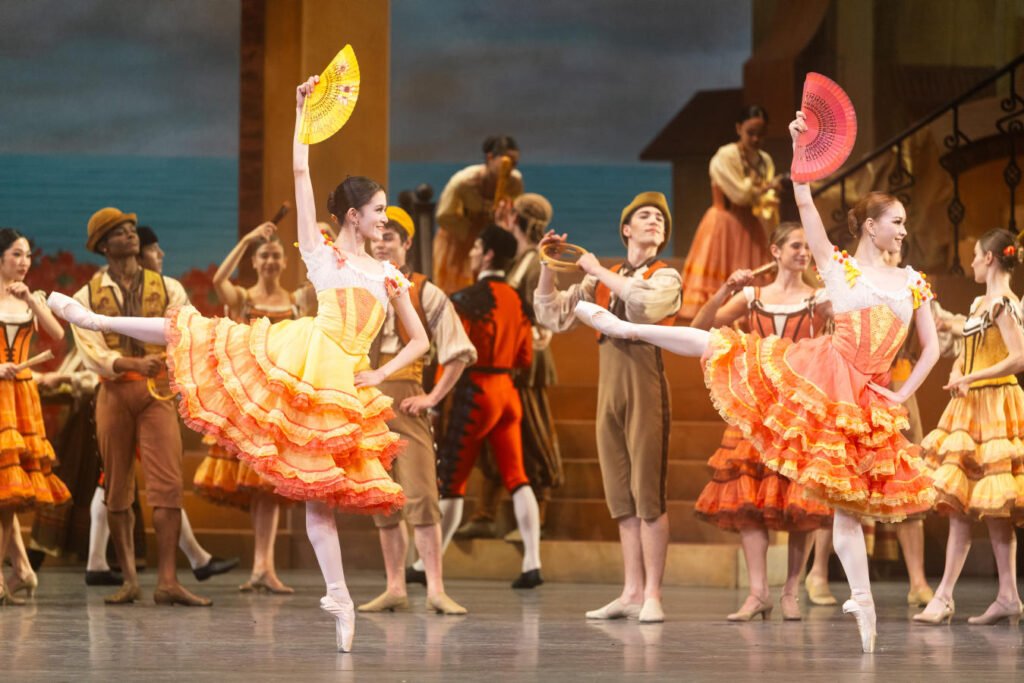
Among the first-act standouts were Jihyun Choi and Seojeong Yun as Kitri’s friends. Choi has already been having a remarkable season, and there is a buoyancy to her dancing that makes her seem to pass through repertory like light through water. Seojeong Yun, though, was one of my great pleasures of the evening. More compact and almost gymnastically powerful in build, she brought an alertness and comic bite to the role that I had not fully appreciated before. Her facial acting was crisp, specific, and genuinely funny, but what impressed me most was how little it cost her technically. Nothing slipped. Nothing blurred. Every step was nailed, every beat fully punctuated, and the combination of speed, precision, and character felt like a small breakthrough. She reminds me of Olympic figure skater Sasha Cohen, all wry smiles floating over technical precision performed with both quiet confidence and perfect ease. She absolutely has not yet received enough credit, this role certainly made the case for more.
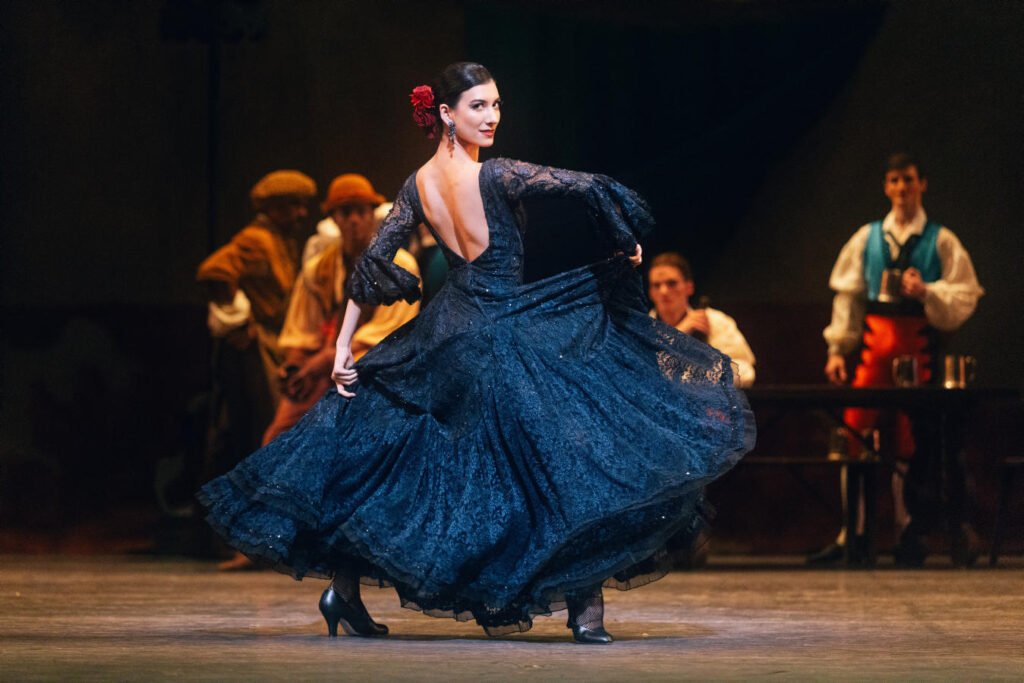
Then there was Jasmine Jimison as Mercedes, who came in like a string of firecrackers, all heat and sparkle and authority. She is one of those dancers who seems to understand that character is not an accessory but a current running beneath the steps. I have loved watching her in dramatic and character-driven assignments before, and here that instinct was on full display. Opposite Fernando Carratalá Coloma’s Espada, she gave the first half one of its spiciest pleasures. Their flirtation had shape, timing, and enough snap in it to wake the whole room up again.
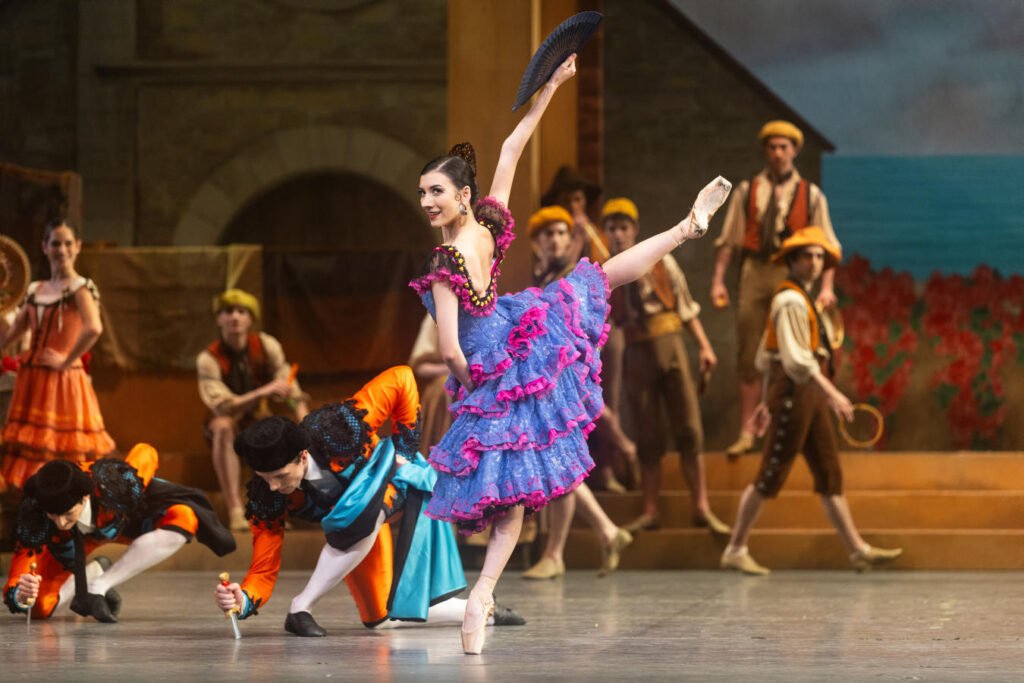
And then, of course, there was Sasha De Sola.
What do you even say at this point except that every time I watch her dance, I feel lucky? She played Kitri on opening night with such generosity toward the audience, such luminous attack, such delicacy inside all the bravura, that one had the distinct feeling of watching an artist in one of the strongest stretches of her career. She yearns toward the audience, and the audience yearns right back. That has always been part of her gift. Whether she is dancing a fairy, a tragic heroine, or a flirtatious village beauty, she brings a sense of dignity to the role, a kind of inner nobility that never hardens into stiffness. Kitri can often become all wink and virtuosity; De Sola kept the virtuosity, certainly, but she also made Kitri endearing, devoted, and unmistakably human.
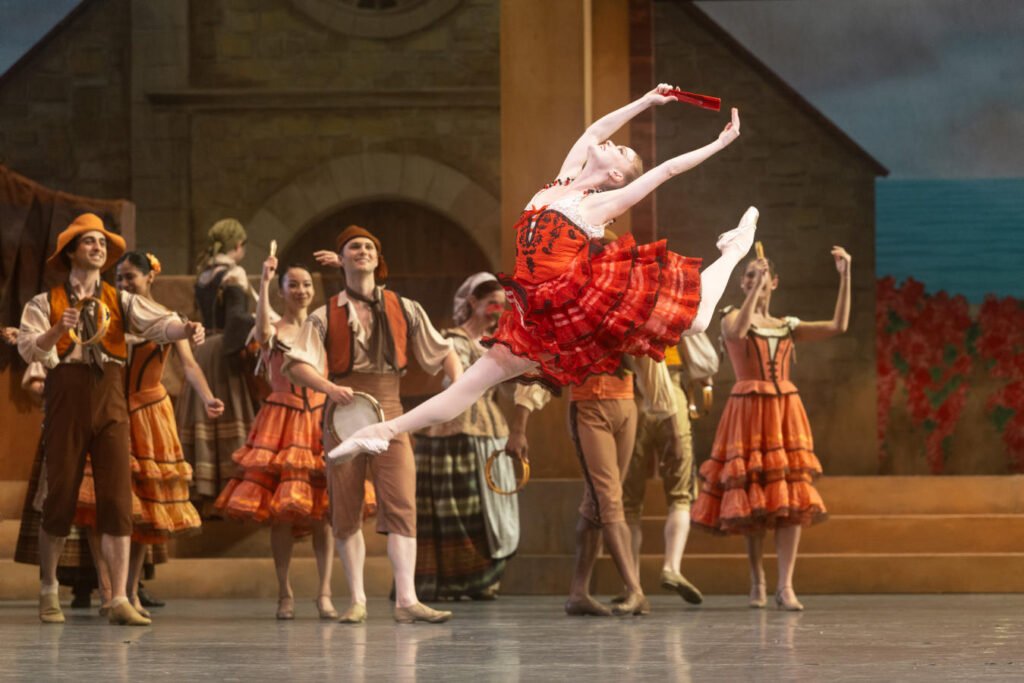
Francesco Gabriele Frola, opposite her, was a striking opening-night Basilio. Tall, long-limbed, and almost painterly in profile, he has the kind of frame that seems pulled from another era. There was something of a pairs skater about him in the way he organized space, all elegance and control wrapped around considerable strength. And in Don Quixote, that strength is not theoretical. Basilio’s job description includes one of ballet’s most infamous feats, the so-called Kitri lift, in which the ballerina is pressed aloft one-handed above the cavalier’s head. Watching him execute those lifts with De Sola over and over again was one of the night’s cleanest shocks, the sort of bravura that reminds you why audiences still gasp out loud at classical ballet.
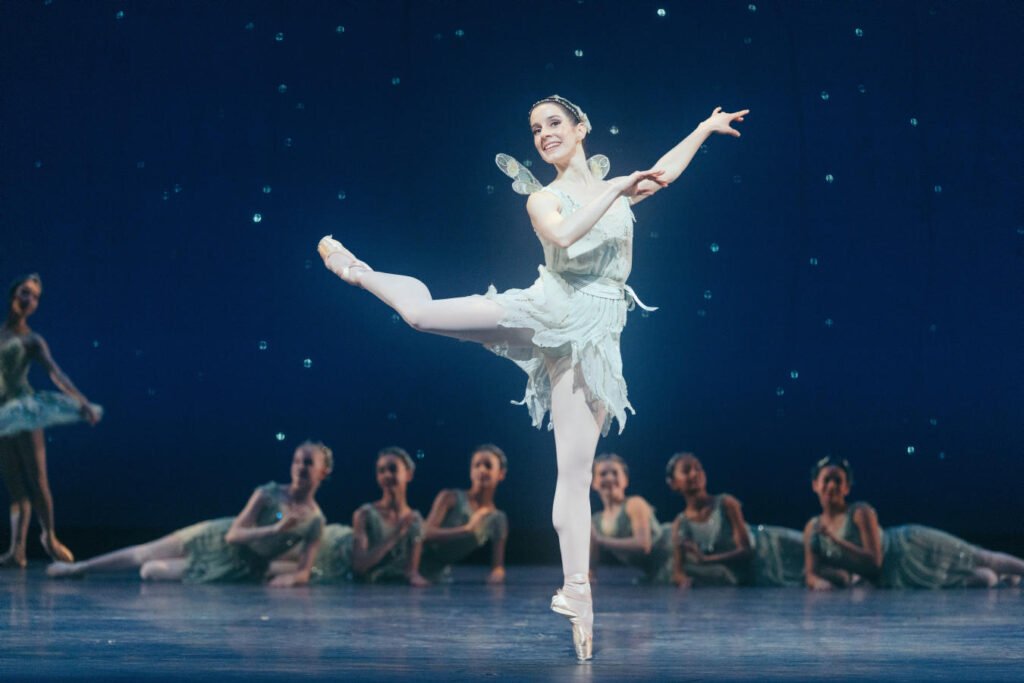
After the first intermission came Don Quixote’s dream, which is the part of the ballet where the entire thing tilts from festive comedy into fever dream splendor. Here the production gave exactly what a ballet lover wants when they secretly hope to be overwhelmed: sparkling blue tutus, glittering tiaras, Dryads, Cupid, and that exquisite otherworldly hush that comes when ballet decides to become enchanted. Frances Chung, as Queen of the Dryads, brought exactly the kind of sovereign calm and unflappable classicism one hopes for in such a role. There is no one quite like her for that quality of poised authority.
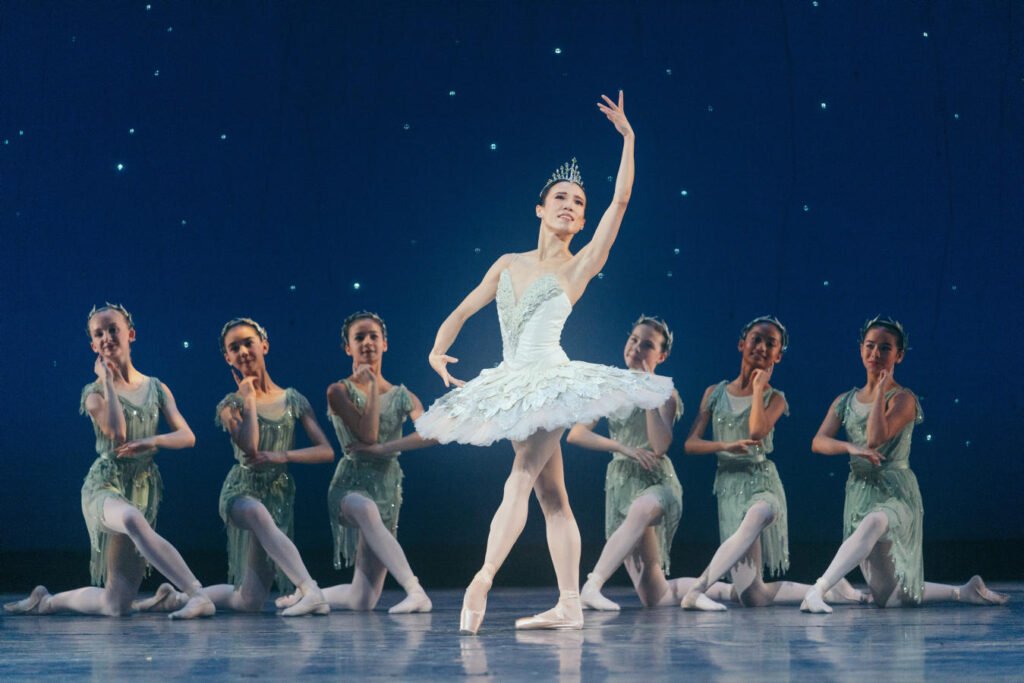
Julia Rowe as Cupid was one of the evening’s pure enchantments. At one point, accompanied by a flute line that seemed to suspend time, she turned the whole dream scene into something that felt almost unbearably lovely, like being reduced to one’s most childlike self in the dark of the theater, chin in hands, completely and happily defenseless. It was the kind of moment that makes you remember why people fall in love with ballet long before they have the vocabulary to explain it.
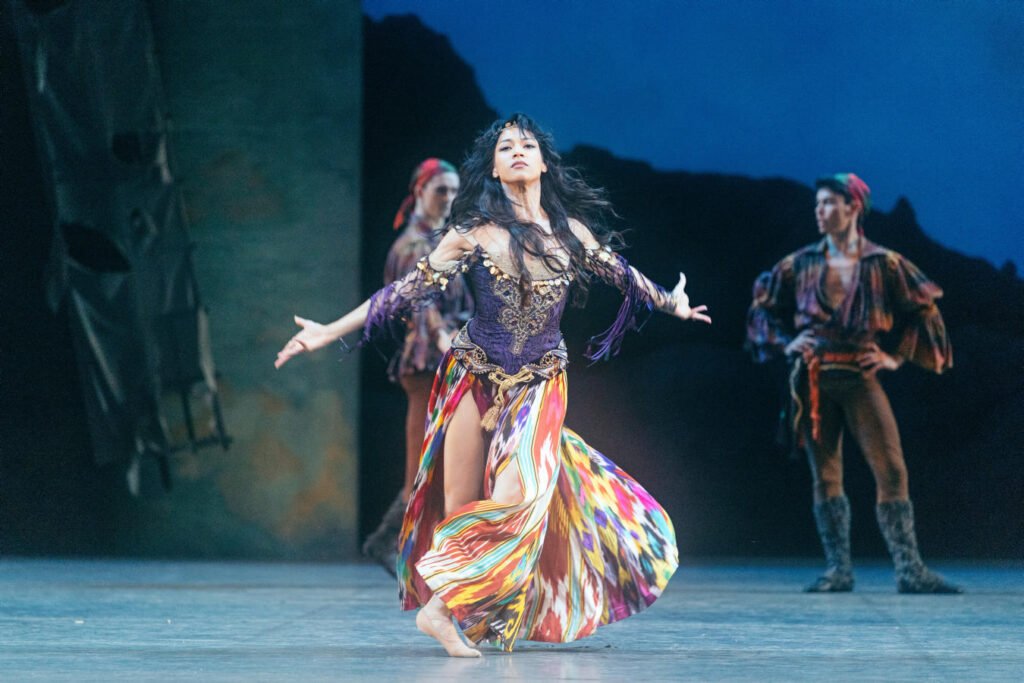
And then Isabella DeVivo came in as Reina Gitana and changed the pressure in the room. Her entrance had force. Hair down, which is rare enough in ballet to already feel like a statement, and dancing with a ferocity that edged toward the heroic, she made the whole opera house sit up straighter. The choreography had high kicks, attack, a faint whiff of martial arts-like daring, and DeVivo rode all of it with the conviction of someone whose only competition is herself. If I were telling someone which performance elements were truly worth catching in this run, I would absolutely tell them to make sure they see her in this role.
This is what Don Quixote does when it is cast well. It lets a company reveal its depth through contrast. One dazzling woman after another, each in a different register, each drawing on a different facet of what ballet can ask for: comedy, purity, attack, seduction, dream, warmth, command.
And then, just as the evening seemed determined to keep rewarding excess with more excess, the final act brought the grand wedding, that beloved classical engine of ending big. Here again the analogy to The Nutcracker felt apt, because Don Quixote knows how to end by sending everybody back onstage and letting celebration become architecture. The whole company was there, the wedding alive with movement and color, and for a moment it seemed the evening would conclude exactly as it had promised to, with abundance layered upon abundance.
Then came the shock.
Near the end of the performance, during the final minutes of the ballet, Frola appeared to suffer an injury and had to leave the stage suddenly. What followed, though, was almost as impressive as anything the evening had offered before it: The company closed ranks and kept going. De Sola, visibly concerned but completely professional, continued on. No one in the orchestra stopped. No one onstage broke the world. The machine held. The audience rose to its feet anyway, and rightly so. It was a standing ovation not only for the performance but for the professionalism required to carry it over the finish line under pressure.
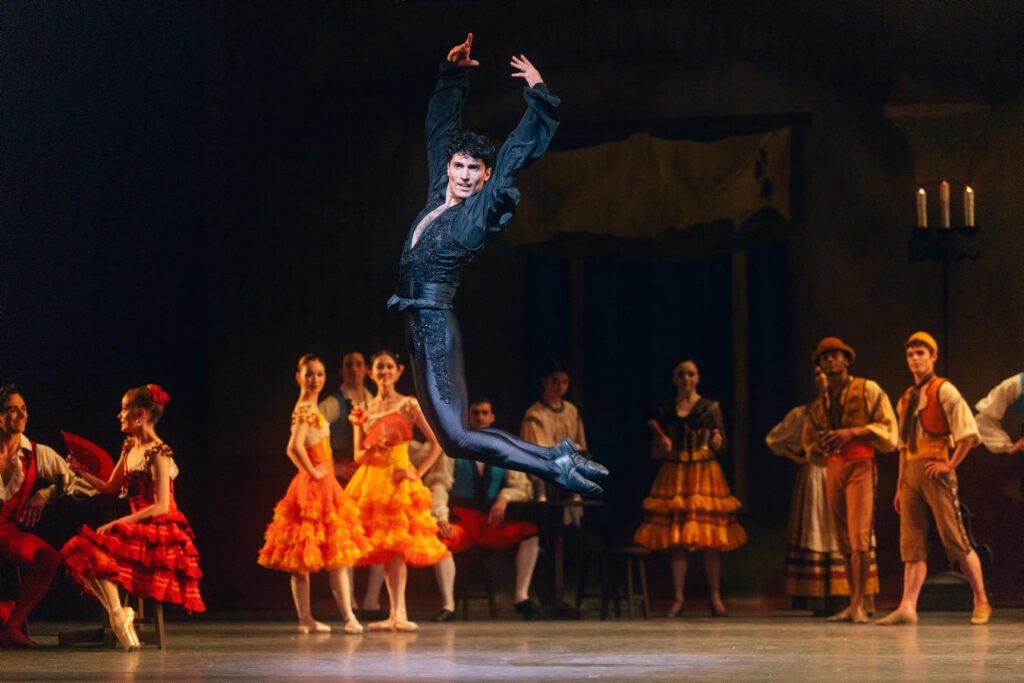
There was something moving in that ending, especially after a season that has already shown San Francisco Ballet’s range so emphatically. After the cool modernity of The Blake Works, after the more austere and dancer-centered programs earlier in the season, here was a reminder that ballet can still be maximalist, generous, overfull, and utterly sincere without apology. That more can still be more. That excess, when shaped by real craft, can feel nourishing instead of gratuitous.
And perhaps what lingers most is that Don Quixote, for all its comedy and spectacle, is not really driven by villainy at all. It is driven by yearning. By a man who dares to dream foolishly and hugely. By his crabby but loyal friend who keeps him tethered to earth. By horses, donkeys, lovers, weddings, mistakes, projections, reconciliations. By process, path, and the hope that if you keep moving, the world might reveal something beautiful to you along the way.
Cervantes wrote, “You are king by your own fireside, as much as any monarch on his throne.” That feels like a credo worth stealing.
What San Francisco Ballet’s Don Quixote proved, once again, is that ballet can take one of the oldest stories still in circulation and make it feel bright, fresh, funny, beautiful, and newly worth telling. I honestly cannot think of many other art forms that can do that so completely, or with such extravagant grace.
San Francisco Ballet’s Don Quixote runs through March 29 at the War Memorial Opera House in San Francisco.
Tickets are available through the San Francisco Ballet website. Performances feature rotating casts, so checking individual dates for specific dancers is highly recommended.
Featured image credit: Lindsay Rallo/SF Ballet
