

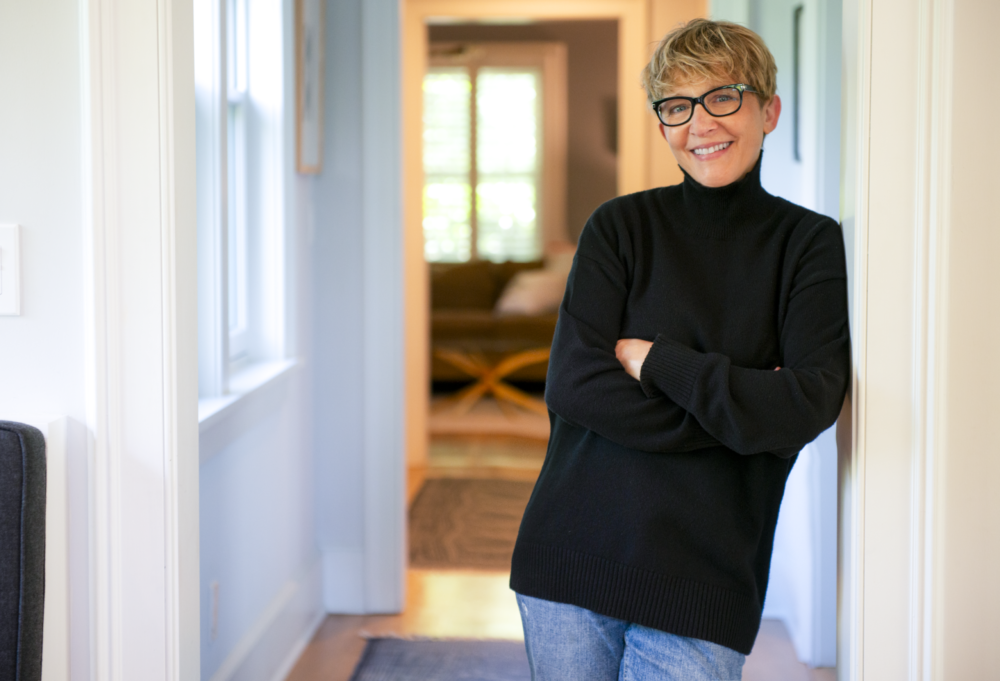
Nikki Mammano, the former “Meth Queen of Waikiki” turned lesbian New Jersey PTA mom, just published a memoir about her “lifetime and a half” of experiences. Breaking Good is available now on her website.
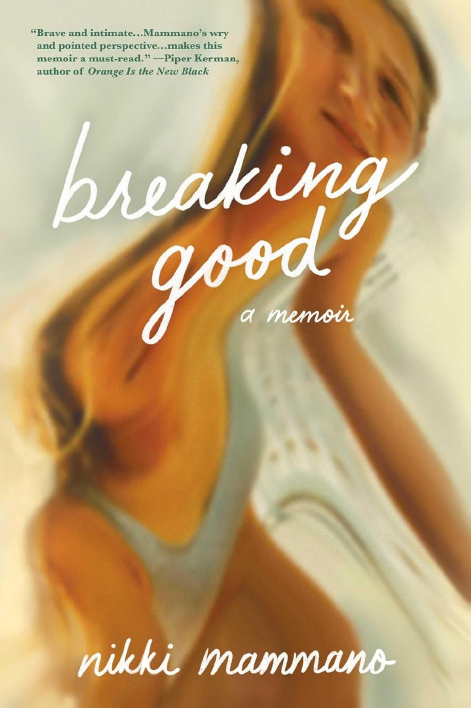
So, you’re coming out with a new book, Breaking Good. You recall several tumultuous years you went through in the 90s in Honolulu. As a young college student turned big-time drug dealer, your rise to the top was meteoric. In fact, the press release I got introduced you as the “Meth Queen of Waikiki.”
At the time, do you recall being surprised by how quickly things started moving for you on the island?
I was really surprised. I was an addict; I was always running from something. I ran from my own trauma and pain, right into addiction. Went out to Hawaii for a fresh start. I thought I’d go to the University of Hawaii. I was fresh out of rehab. I had done everything else, but I hadn’t done meth. Suddenly, I’m doing meth, and I moved in with my dealer.
“Why don’t you move in with me?” I thought, great, I need somewhere to stay. I started running for him, small time. Then his dealer noticed I was running a lot of stuff. She invited me over.
“Here you go. You can do this.” I absolutely did not expect it to go the way it did.
That was your friend, Kailani.
Kailani, the dealer that I had as I got bigger. Um … I’m sorry, I changed names. I had to remember what name I used.
Vic was my friend and dealer. He was small-time. I moved in with him, and I realized that I was moving stuff in the in the clubs for him. He introduced me to Kailani, the one that became my main dealer, and a close friend at the end. We were two young girls in a world that was way too big for us.
And your roommate Vic was blowing glass. It was his art.
Yeah. A lot of people back then did that. People that are addicted to meth do that. It’s a tweak. You know, people do it to make a way to use the drugs. But it became something that he really loved to do. It was wild because he did it in our living room. He had a blowtorch.
That’s a lot.
And I was like, “Hey …” Walking through the living room to my room. It was a really small apartment.
It’s already probably warm; it’s Hawaii. So, the blowtorch doesn’t help.
Yeah, totally warm. The blowtorch does not help, for sure. And we’re all high, you know? Everyone’s sweating, you know, tweaking, doing stuff.
That sounds like an oven.
Later on in your book, you delve into childhood trauma, emotional pain that drugs can only take you away from for so long. When things really started to hit the fan in Hawaii, did old feelings start to rear their ugly heads then? Or was it not until after the dust started to settle on things? When did you realize you need to work on yourself?
I didn’t realize I needed to work on stuff well until adulthood. I was running from it. Running from it, getting high, I was able to dissociate. Not think about them. I think that’s why I was doing drugs. I did all those dangerous and scary things.
Then I got pregnant and moved back to the East Coast, where I am now, to raise my kids. And it took me a little while to really do the work. After I had children, I knew more. I understood more, and I was sobered for a while. Everything kind of came to a head, and I just needed to face it. I needed to to stare down those demons, or I wasn’t going to have the life that I truly wanted to have.
All these years later, when you sat down to write the book, did you recall it as “a lifetime and a half of experiences?” Were you surprised by emotions that came up? I thought I already was over this, but as I put it to paper, it’s now upsetting again?
Yeah. I mean, I guess I was shut off to emotion. I think we normalize the things we’ve been through. I was through addiction; I was through prostitution, prison, homelessness, and all that stuff. To other people, they’re like, “I can’t believe what you’ve been through.” And to me, it was just my life. I never thought it was a big deal. Now I’m getting reactions, “Oh my god.” When you tell a story, and you’re like, “Haha.” And people are like, “What the fuck?”
I also do that. I’ll be like, “Yeah, I was hooking on the corner.” I’ll tell like something that I think is funny and everyone else is like—
“Wait a minute, what? That wasn’t a funny story.” This was never a big deal to me, this was just my life. Because of the trauma, my whole life has just been a big thing. It was just life. A lot of things happened when I wrote the book. Yes. Coming to terms, starting to see things, starting to put things in order, and on paper, it did bring up feelings.
Also, the work I was doing on myself. The book’s been done for a few years. I finished it a few years ago, and I’ve done even more work since then. So now I’m kind of blown away at what I’ve been through, what I’ve faced and been up against. How I survived. I’m pretty proud of myself. For a long time, it didn’t occur to even feel anything about it.
Yeah, I feel that way, too. It’s like, you’re desensitized to it. For me it’s like some of the stuff that would break other people completely, it was like Tuesday morning for me.
Yeah, exactly. I mean, and there’s a line in the book where I’m with these PTA moms; they’re talking about how crazy they were on spring break. I’m just like, amateurs, you know.
Sometimes, when things are chaotic for a long time, it’s hard to get used to when it starts settling down. Do you ever irrationally find yourself itching for the old familiar chaos that life used to offer?
I always kind of lived on the edge, and I talk about that in a scene where I’m driving from Florida to New York. I’m driving with my best friend, and he was a partier too, but he still had a good head on his shoulders.
So there I was, high on the highway, in the South, you know, gunning it. And he’s like, “Nick, you know, just chill out.” But I was always pushing the edge; part of that was from the pain that I had been through. I was always seeking something. I felt that way for a very long time … until I didn’t.
I’m going to be 53 in a couple of months. I have two kids. I mean, my oldest is much older now. I’ve been a mom for a long time. And I think with age, and with exhaustion, um … I like to be in bed early and live that weird life.
I would have been hitting the clubs all night long. Because of the experience, and doing some healing, because of the years I’ve lived … I definitely don’t look for that same thrill.
Yeah.
Um, but there’s a little piece, you know, that’s probably always in me. And you know, I know how to rock ‘n’ roll.
So would you say that despite it all being such a hard-fought journey to get where you’re at now, do you feel spiritually grateful to have seen such difficulty through the other side?
Yeah. You know, someone very wise said to me, sometimes it’s better to go through those things and heal than to never have gone through them at all. I think that just sums it up. I’m very grateful, in a million ways. It’s given me empathy. It’s given me wisdom, understanding, kindness. I love every part of that. So, yeah, I wouldn’t change a thing.
And a thicker skin.
Oh, yeah.
I think that’s what I’ve gotten too. Maybe before, I wouldn’t stand up for myself. Now I know when I can be spicy if I need to. I have a thicker skin. And inside I’m a delicate little flower.
Totally. I am too. Yeah, we get we definitely get a thicker skin. We learn. We continue. That’s what I love. It’s a healing journey. And I say at the end, I’m not done. Not by a long shot. I don’t know if I’ll ever be. I’m on the journey, and it’s going to take time. I’m here for it.
What sort of wisdom do you feel has been the most important to instill in your children as they grow up?
My god, there’s so many things.
There’s so many things I wish I knew when they were younger that I just learned through time. That’s what happens. We just gain through experience. My kids are wonderful and great, and I’m so proud of them. I feel like they’re smarter than I ever was, cooler than I ever was. It’s kindness and compassion with boundaries.
I want them to be kind, cool people, which they are. Also, love themselves and take care of themselves. They know more instinctively than I ever did.
Just being a really good person and having a good life. Being good to themselves.
They get to be well-adjusted because you had an adjustment.
Yeah. I made plenty of mistakes, and they’ve given me so much grace. They’re tough because they were around when I was struggling at times. They’ve just shown me so much grace and love.
After everything, do you find that now you have more of a zest for life? What brings you the most joy in this world?
What brings me the most joy are my kids, my friends, and connection, and kindness. I love hanging out and talking with my people. I love connecting, and it’s so important. That’s one of the reasons that I wrote the book.
I really, really, really want to go talk to people. I want to go to rehabs, and I want to go to prisons, and I want to connect and chat. I want people to feel seen. I want to feel seen. I mean, don’t we all? That’s it right there.
I found your book really easy to connect with. I felt like you are my people. This person understands me. What happened to you was 30 years ago, but there are certain parallels. Certain things, you look at each other, you’re like, yeah we know about this.
If you know, you know. It’s a look. It’s a nod. You’re just like, “All right, I got you.”
What is it you hope people will find as they read the pages of your book?
I tried to talk so openly and honestly about pain, about healing, about the journey. I want people to feel seen and understood. I wanted to put words to things that I felt it took a long time for me to put words to. My hope is that people find themselves in in those pages.
Or find that they know someone in those pages, and either they find their way out, or have more compassion and empathy for those that are still going through the struggle.
It’s a resource.
Yeah. Thanks. I hope so.
Especially those for those not accustomed to the dark underbelly of society.
Yuppies reading your book and thinking, “Oh my gosh, this is so humanizing.” I think of people talking about substance abuse, “Oh, are you clean or are you still using?” I feel like clean is very stigmatizing language. It shames people in active addiction. How on Earth is anyone supposed to help themselves get out of that situation? Who wants to be there really?
Some people don’t understand that. They think that drugs are a fun, whimsical, quirky thing to do. It’s a personality trait.
It’s really not. It’s a severe problem that takes compassion, teamwork, and hard work, emotionally, to get through it. Breaking Good illuminated that. How could anyone ever deny it after reading it?
Yeah. The best feedback I’ve gotten is when people that have never met an addict, or had an addict in their life but never had addiction, have said, “I now have more compassion and empathy and understand. I want to do better. I want to be better.” That is the best feedback I’ve gotten.
I’m really into meeting people where they are, as I wanted to be met where I was. I remember being on the streets and being addicted. I wasn’t ready to get clean. I didn’t want to, even when it was painful. Yes, you do have a good time at times, but a lot of the times it’s painful and fucked up, and hard, right? I just wanted a meal, a hug, someone to look me in my eyes and not overlook me when I’m laying down on the streets or I’m panhandling.
I work with a nonprofit now, RYSE Hawaii. They work with homeless kids. They have outreach, trying to get them off the streets. To me, the most important thing is meeting everyone where they are. I want to eventually open up a place. If you don’t want to get clean, that’s fine. If you need clean needles, great. I’m your person. If you need condoms, great. I’m your person. If you need a warm shower and a hot meal, and you’re going to go back on the streets tonight, come. Let’s do this. I agree with you wholeheartedly on that.
Yeah, it’s the intersection between harm reduction and low barrier services. How is someone supposed to work on their substance abuse issues if they don’t have a roof over their head? People in that situation need to know that they’re safe staying where they are, they have support to help them get out of the situation. Being left to your own devices is not great.
There’s a fine line between enabling and letting people suffer more. People think addicts should suffer. Why? You know, we’re addicts because we’re suffering. Why do we need to suffer more? Then we’re suffering, and then people say you shouldn’t have a home, or shouldn’t have a place to sleep.
OK, you can’t come into my place and use. You have to try to get better, but you don’t deserve to sleep on the streets because you’re an addict. That doesn’t make sense. We have to embrace and love people back from the brink.
What advice would you give to someone out there, reading your book, who is struggling with substance abuse?
We as addicts run from our pain. The bravest thing I ever did was stop running. We have to turn around and stare those demons down. That’s the most painful thing to do, but it’s the only way. We can do this. You can do this. I can do this. I did it.
Just don’t be afraid to heal. The healing is beautiful. It brings us to the to the other side. It’s the bravest thing we can do. The pain is why we got there, and the only way we’re getting out is to face it. This is why I wrote the book, with support, so that people will have more empathy and understanding.
Look for the people that want to help. There’s lots of resources. I’m on TikTok. I just started, but I’m going to be there. I’m going to be talking about resources. I’m going to be opening up conversations. There’s all these things I want to do. And there’s a lot of people ready to hold out their hand.
Photos courtesy of Tina Leu
