

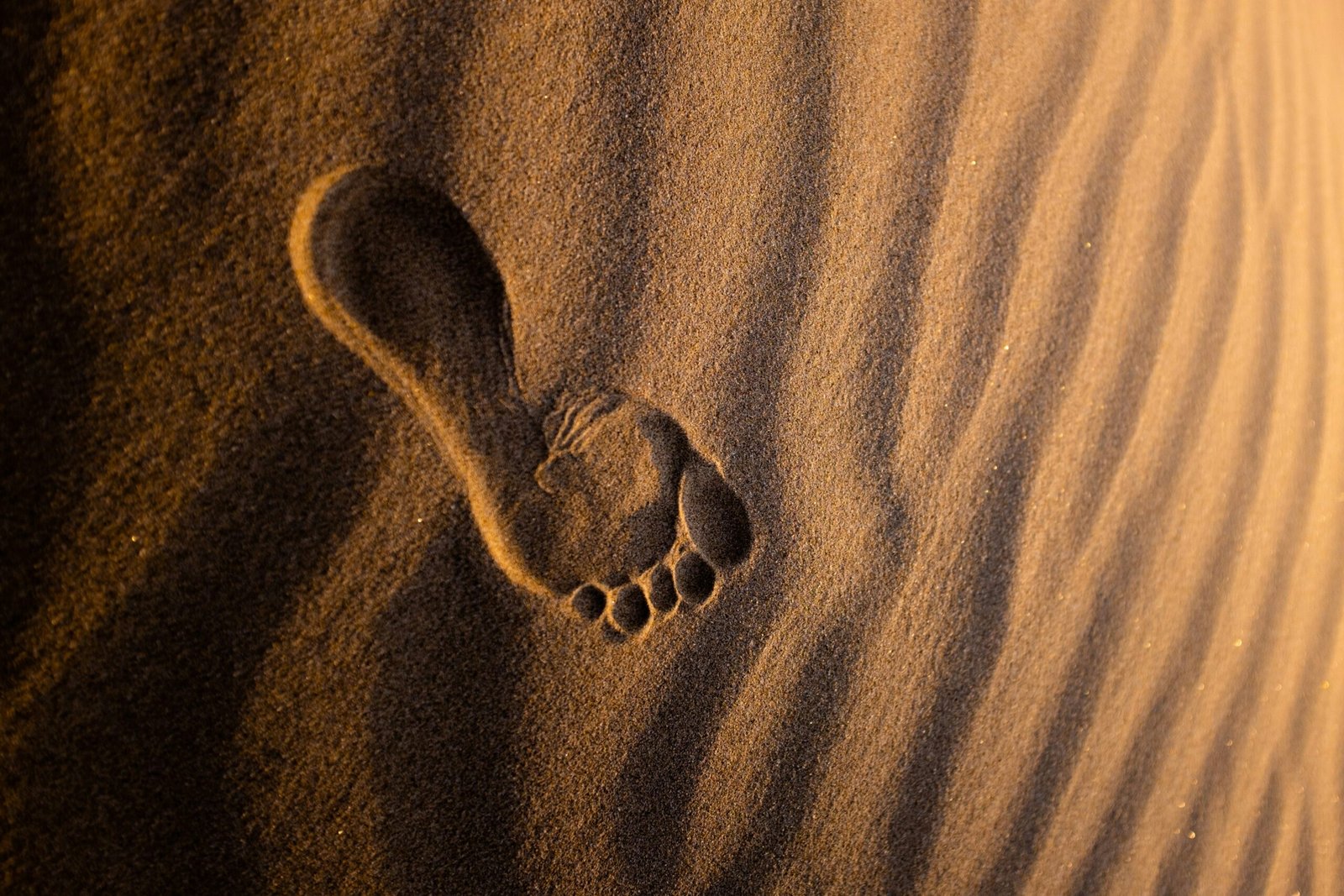
If you only see one set of footprints in the sand, it’s when Jesus was carrying you.
For you to understand where my rock bottom was, you have to understand what I grew up around.
I was adopted by my grandparents as an infant because my mom was struggling with addiction and an abusive relationship. For a time, my grandparents provided stability, but it came with conditions.
My grandpa and I were especially close—We did everything together, and those early years meant a lot to me. In many ways, they shaped the kind of father I am today. He had retired from being a pastor and later worked in HVAC, an important detail in the backdrop of my upbringing, as standards for pastor’s kids even ex-pastor’s kids are higher.
But as I got older, things became more complicated. Signs of being different started to show early on, and they were often misunderstood. I was misdiagnosed with bipolar disorder at around age eight, when in reality I was later identified as having autism and ADHD. I was a lonely child, and constantly moving between homes made it hard to build lasting friendships. I never knew when I would become “too much” for the people caring for me, and when I did, the response was often to send me back to my already struggling mother.
At the time, my mom had stabilized her addiction but was dealing with severe mental health challenges while caring for my younger brothers and me on and off. My grandmother often judged her harshly, holding her to impossible standards that nothing could meet. Within my family, I was labeled a “tomboy,” and later they claimed they “always knew” I was a lesbian. But none of those labels ever fully fit who I was. I was also teased in school for being different and for having close friendships with girls. All of this happened before I had the language or understanding to make sense of myself.
It wasn’t until my mid-teens, after more life experience, that I began to understand I had never been a girl at all. As I grew into my identity, the pressure to conform intensified. There were constant comments about how I should act, how I should dress, and attempts to force femininity onto me. It wasn’t just emotionally exhausting—It was physically uncomfortable and deeply invalidating.
That level of being unseen created a loneliness so deep that I became suicidal at 14. My mom ultimately protected me from returning to my grandparents during part of my teens, but that safety came with its own instability. She was fighting her own battles, and over time, her depression and addiction resurfaced, turning moments of opportunity into cycles of survival again. Her acceptance for me was what I needed, but her problems were greater than I could understand at the time.
Eventually, the tension within my family became unavoidable. After CPS placed me back with my grandparents and required them to care for me until I turned 18, everything finally came to a head.
One day, they sat me down for a conversation. It started with their political and religious beliefs, which they said made it impossible for them to ever see or affirm me as I am. The invalidation I had felt my whole life was suddenly spoken out loud.
Their stance had always been that it was “OK” to be queer—as long as no one had to see it. The hypocrisy of that was impossible to ignore, and even more impossible to become my true self under that expectation.
That was the moment I understood I could not continue in a relationship where I was not seen as an equal human being.
From that point on, I began emotionally detaching in preparation for leaving. Part of me tried to make it hurt less by damaging the relationship enough that severing it would feel easier—but that didn’t bring the closure I thought it would.
What it did require was healing.
It required me to let go of the version of myself that kept hoping for acceptance from people who were never going to offer it. It required me to separate who I truly was from who I had been told to be. I’ve since learned the concept of a “second naivete”—a stage of life where things you learn that you might already know hold a deeper meaning to them. That’s what it felt like. I had to learn who I was before I could even begin to rebuild.
I needed time alone to know myself again. I needed a love, internal and external, that didn’t disappear when I struggled or sabotaged connection. I needed an awakening that reminded me my worth was not defined by the limitations or beliefs of others. I needed a higher power to give me a higher purpose for my life so I could live it in a productive way.
I had to unlearn the idea that my achievements were only valid if others validated them. Living guided by feeling rather than expectation is not easy, but it is deeply fulfilling when you learn to trust it. It takes more discipline than I thought I could muster, but here I am shaking through the anxious thoughts and coming out the other side with gained perspective, not loss, of self—quite the stark contrast from life as a teenager.
Sometimes becoming yourself requires choosing yourself first. And that process can be the loneliest thing in the world. I am still building my community. I think its an ongoing lifelong process, but I would rather have a small circle of people who know me as I am than a large circle who only accept a version of me that isn’t real.
