

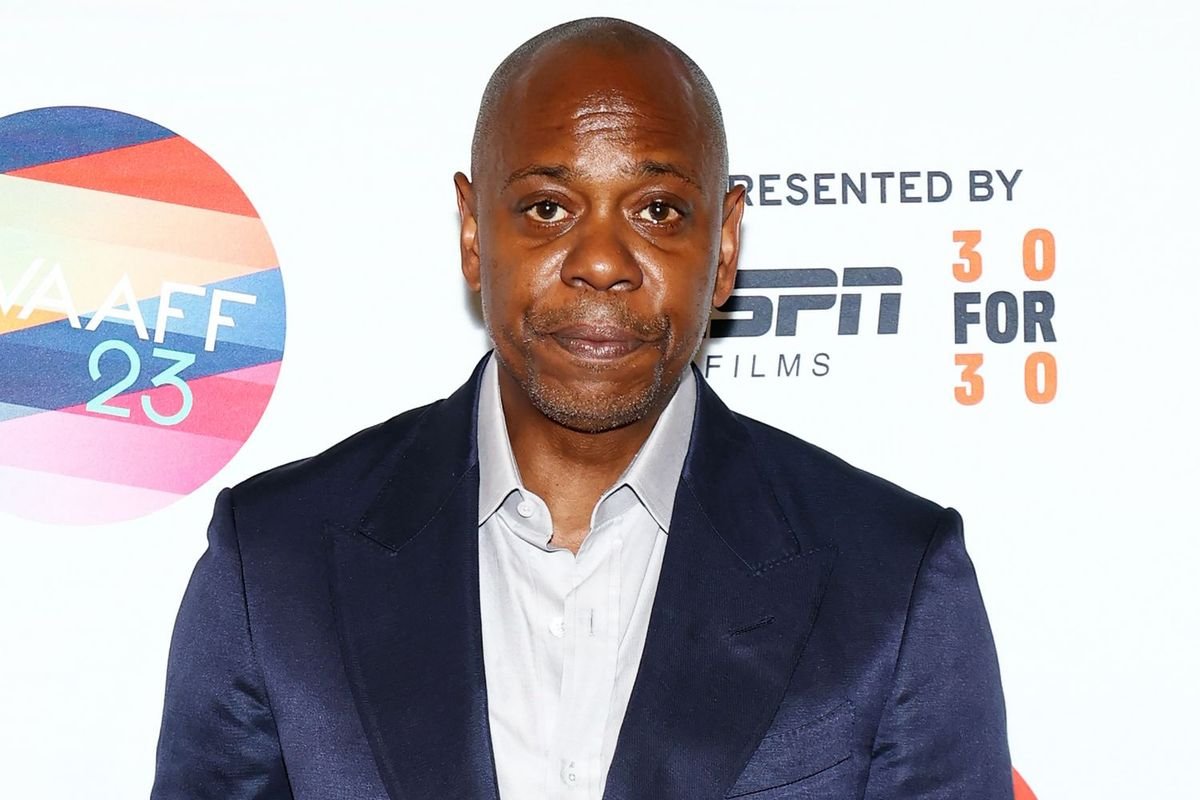
In a recent interview, Dave Chappelle addressed the long-standing controversy surrounding his jokes about the transgender community. Speaking with NPR’s Michel Martin for a Newsmakers video podcast in his hometown of Yellow Springs, Ohio, the comedian sought to distance his creative intent from the political movements that have embraced his material. Chappelle expressed a deep-seated frustration with how his routines have been utilized in the broader American political landscape, specifically targeting the GOP for their use of his rhetoric.
“I did resent that the Republican Party ran on transgender jokes,” Chappelle states during the interview. “I felt like they were doing a weaponized version of what I was doing. That’s not what I was doing.” For Chappelle, there is a distinct line between a stand-up routine and a legislative agenda. Despite the intense backlash he has faced since 2016 across multiple Netflix specials, the comedian still claims that his work lacks any underlying malice toward the individuals he parodies. “I don’t feel like anything I do is malicious or even harmful,” he says. “I think if I did hurt somebody with my work, boy, they would have been laid that at my feet. I’m just not doing that.”
To illustrate his point regarding the “weaponization” of his image, Chappelle recounted an encounter on Capitol Hill with Representative Lauren Boebert. He explained that after taking numerous photos with various people, Boebert approached him for a picture. Chappelle, admitting he didn’t know how to “respectfully decline” at the time, agreed to the photo. “And then she posted the picture before I could even get from there to the show and says something to the effect of, ‘Just two people that know that it’s just two genders.’ Just instantly, like, weaponized or politicized,” Chappelle says. He noted that he later addressed the incident during his performance, saying he “lit her ass up for doing that” and asserting that “She should never do that to a person like me.”
Chappelle claims that modern comedy lacks nuance in favor of being “woke.” “Art is a nuanced endeavor,” he says. “Everything seems absolute, and any opinion I respect is way more nuanced than these binary choices they keep putting in front of us. I don’t see the world in red or blue.” He also doubles down on the free-speech in comedy defense, saying, “What I take issue with is the idea that because they don’t like it, I’m not allowed to say it.”
Despite his attempts to clarify his position, critics and trans advocates continue to argue that his “tastemaker” status provides a roadmap for the very exploitation he claims to resent. Chappelle could at least be using his platform to apologize, claim he was wrong, or even say he didn’t know what he was doing at the time. Instead, he continues to fence-sit and not firmly ally with trans folks when given the chance.
Photo courtesy of social media
