

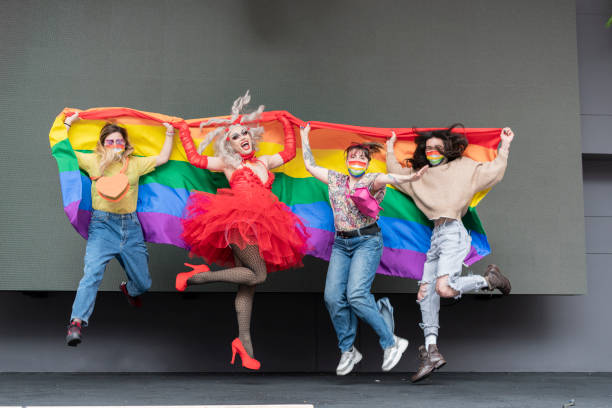
Wednesday will determine the outcome of two cases in the 5th U.S. Circuit Court of Appeals concerning whether drag shows will be allowed in public Texan university venues.
In 2023, West Texas A&M University President Walter Wendler stopped a student drag show, organized by Spectrum WT, not by the school. Consequently, two students and Spectrum sued the school, arguing that the cancellation infringed upon their First Amendment rights.
In 2025, the court ruled that the planned show was “protected expression.” The three-judge appeals panel blocked Wendler’s ban. However, in January of the following year, District Judge Matthew J. Kacsmaryk overruled this temporary decision and in a final ruling upheld the ban. He argued that Spectrum did not demonstrate that the planned performance was an act of self-expression. He maintained that the university held greater authority to ban events they saw fit to. He agreed with Wendler’s statement that drag shows are comparable to blackface performances.
Separately, the Queer Empowerment Council challenged a different Texas A&M policy in 2025. The University System regents upheld a policy that bans drag shows at special event venues. The Queer Empowerment Council sued in tandem with the Foundation for Individual Rights and Expression, known as FIRE. The Queer Empowerment Council organizes the annual Draggieland pageant and wanted to allow the pageant to proceed.
In March 2025, this policy was temporarily blocked by U.S. District Judge Lee H. Rosenthal. She claimed that the students had a strong likelihood of succeeding in their First Amendment claim and allowed Draggieland to continue.
Spectrum, two students and the Queer Empowerment Council petitioned for their cases to be heard together. In June 2025, the court agreed to hear only oral arguments in both cases. The judges claimed they would deliberate on the argument of free expression and come to a conclusion Wednesday. The decision will establish how much power universities have over venues and could set a precedent on the restrictions they can make towards discrimination based on subjective views.
These cases’ importance move beyond Texas A&M. Many Texas universities within the University of Texas System are attempting to prohibit drag shows from appearing in any campus facilities. Additionally, the University of North Texas retracted its previous approval of a student group’s annual show.
The ACLU of Texas and Equality Texas, which supports the Queer Empowerment Council, spoke to the appeals court and implored the courts to consider broader implications of banning drag and what message it sends. The ACLU, with FIRE, urged the University of Texas System to retract its policy. Chloe Kempf, an ACLU of Texas staff attorney, said that the policy is “an affront to its students’ First Amendment rights.”
