
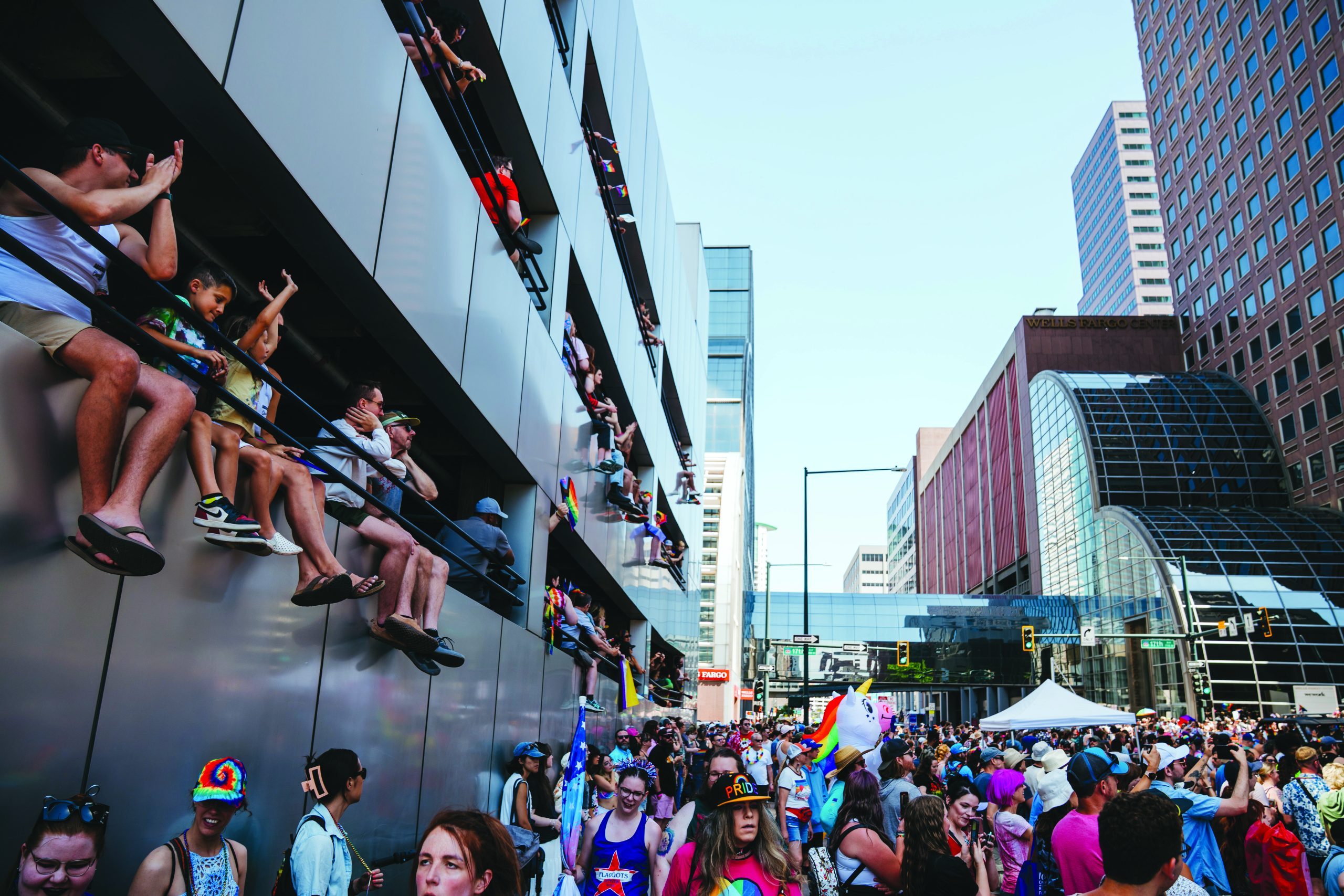
Kim Salvaggio is not a woman who shies away from a challenge. As the CEO of The Center on Colfax, she stepped into the role during a period of significant transition—not just for the organization, but for the very landscape of LGBTQ+ advocacy in America. Now in her second year, she finds herself at a unique crossroads. Between the physical reconstruction of Civic Center Park and a national climate thick with political tension, Salvaggio is overseeing a reimagining of Denver Pride that is as much about survival as it is about celebration.
In a candid conversation with OFM, Salvaggio peeled back the curtain on the logistical hurdles, the ethical debates over corporate sponsorship, and the personal motivations that drive her to keep the 52-year-old institution moving forward. The result is a 2026 Denver Pride that looks vastly different from years past—a “thoughtfully designed Pride Month experience” that trades some of the monolithic scale of years past for a more distributed, community-centered approach.
The necessity of change was catalyzed by the environment—literally. With Civic Center Park undergoing massive reconstruction, the traditional home of the two-day festival simply couldn’t accommodate the usual crowds. Salvaggio reflects on the weight of that reality:
“We got the news this year that they plan to completely reconstruct Civic Center Park. And there are parts of the park that are open, but there is nothing open that was going to hold the half a million people that come for Denver Pride. You kind of take all those things, and you think, ‘All right, here’s our choice. We can find a place to hold a one-day free festival. We can do a race and a parade and have it as a rebuilding year.'”
But for Salvaggio, “rebuilding” didn’t mean scaling back. It meant evolving. “I think, at a time when we are still seeing over 500 active pieces of legislation in our country aimed at the LGBTQ community and some specific in Colorado that have reached signatures to be on the ballots … It was the right decision. It’s a risky one. I don’t think any CEO wants to face within their first full calendar year of their contract like, ‘Hey, the biggest thing that you all do that drives about 70% of your revenue has to completely change.’ I would not have put that on my wish list … but it gave me an opportunity, and I decided to take it.”
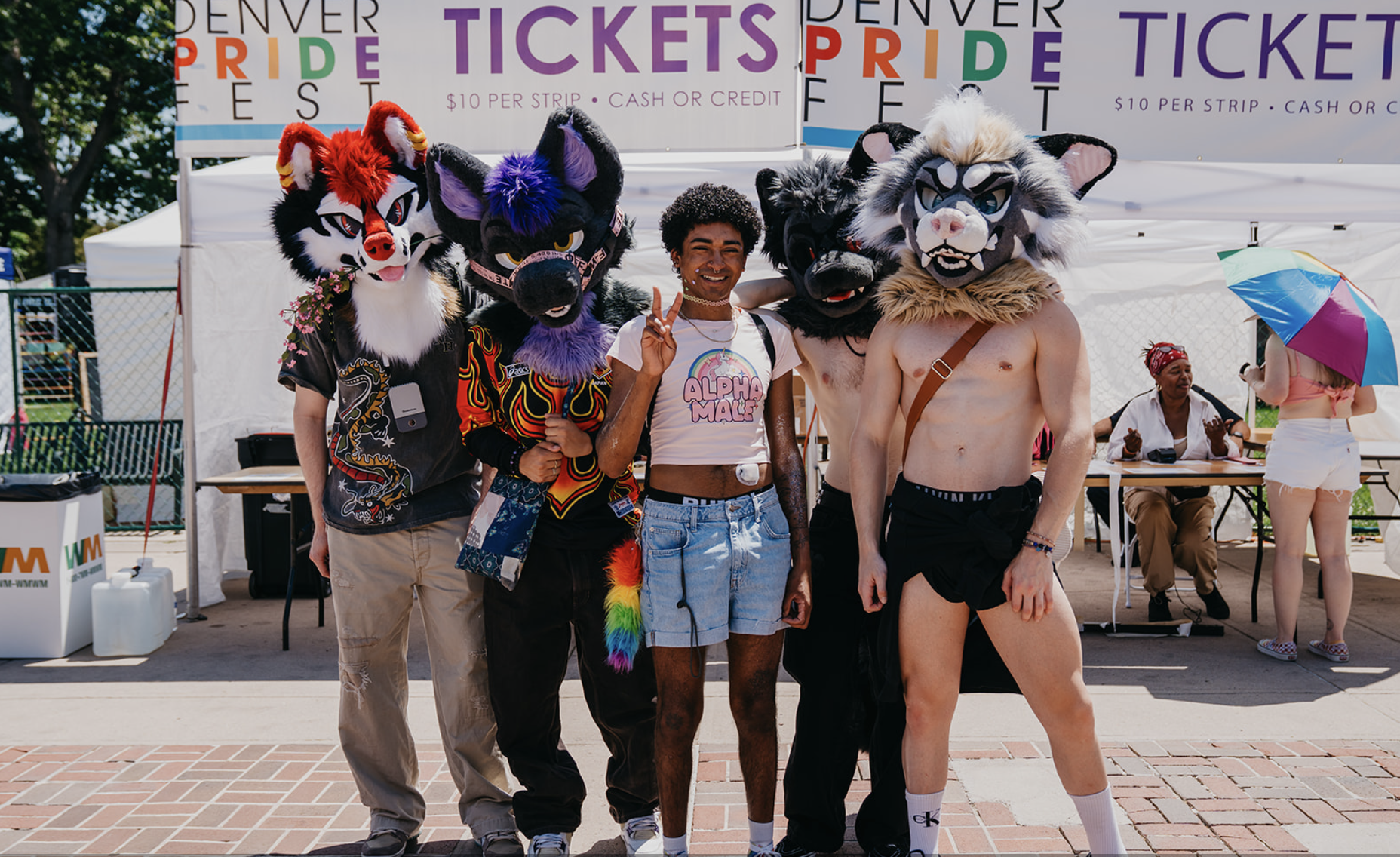
This year’s Pride features a one-day free festival, the 5K race, and the parade, but it is bolstered by a month-long calendar of partner events across the city. For Salvaggio, the shift is more than just a workaround. “You really don’t get a lot of opportunities in your career to be a part of something like this, where you get to take a 52-year-old institution in Colorado and say, ‘We’re going to completely mix it up and rethink and retool how to do this.’ Those opportunities in your career—and I’m saying this, being 50 years old—you don’t get those opportunities a lot to do that.”
One of the most persistent points of contention for any major Pride organization is the presence of corporate sponsors. To address community concerns about “pinkwashing” and ethical alignment, Salvaggio implemented a transparent rubric system for evaluating sponsors. This committee-led approach moves the decision-making power away from a single executive and into the hands of a diverse group of community volunteers.
“I did make it a strategic priority my first year in the job to create some level of transparency with the community of who we take money from, why we take money from them, where does that money go, and who gets to make that decision,” Salvaggio explains. “We have a committee that is made up of a number of different volunteers, and across those volunteers a lot of different ideological beliefs as well as identity and different backgrounds … They have a rubric and a scoring system that they use. If an organization falls below a certain amount on that rubric, it automatically gets sent to our board.”
The rubric focuses on three main “deal-breakers” identified through community feedback: climate justice, war profiteering, and domestic threats like ICE. “If you’re a weapons manufacturer, you’re probably not going to pass that rubric,” Salvaggio notes. “Climate justice was something that came back really strongly … anyone that is profiting off of war, war weaponry … and third is anybody who is intent on terrorizing our neighbors at home.”
This transparency is a direct response to the community’s demand for accountability, even when the financial stakes are high. Salvaggio is firm in her belief that the source of funding matters. “I’ll be as transparent as I can. What you can print me saying is I am not somebody that believes a dollar is just a dollar. I understand why some organizations feel that way, and this is no shade meant to them at all. I don’t want to run The Center that way … I do want to have community involvement in who we say yes and no to. I need it to be transparent.”
However, she is also a pragmatist. The revenue from Pride doesn’t just fund a party; it funds the life-saving services The Center provides year-round. This year, with some events carrying ticket prices (like the new Pride Brunch), she has had to manage expectations regarding costs.
“What our community does have to remember is that what is always free are the services at The Center. There is no paywall to get any of the support connections, the mental health access, the fitness classes, the art classes … and that money does have to come from somewhere,” she says. “Your ticket is your impact. Your ticket is the way that we’re able to keep services free, and a lot of times, those services are for our most vulnerable parts of our community.”
She also points out the changing habits of the community, specifically regarding alcohol. “Some of the things that I noticed when you got into the data and the numbers was understanding how our community’s relationship with alcohol has changed. We’re at an all-time low of alcohol consumption in our country’s history. So it’s listening to our community and then also understanding the way that our communities are changing.” This shift influenced the curation of this year’s events, including high-end mocktails and curated coffee drinks at the brunch.
Beyond the balance sheets and the logistics, Salvaggio has spent her first full year as CEO engaging in deep, often difficult dialogues with those who have historically felt alienated by The Center. Specifically, she has worked to bridge the gap with protesters who have targeted Denver Pride in recent years.
“I’ve spent the entire year meeting with them,” she shares. “This was a year of really intentional work, listening to our protesters and understanding what their asks were. What I learned is that this wasn’t just about money and who we were taking money from and how that was or was not transparent. It’s also about programming and visibility for our queer, Palestinian, and Muslim community.”
The work is complex, especially when the needs of one marginalized group appear to conflict with those of another. Salvaggio is honest about the limitations of her role. “Where the work gets tricky is some of the things that have been asked for, in particular with our Palestinian and Muslim community, I am asked to do the exact opposite, particularly from our Jewish community, and I cannot solve that. I can continue to say that The Center is always going to aim to be a place for all LGBTQ people and all ideologies and beliefs. I can’t solve that conflict. What one community wants that feels like visibility, another community feels like it is not.”
We spoke to Z IY Williams, a local activist who protested Pride annually in years past. “I can’t speak for every trans person, every Palestinian, or every queer person in our struggle. I think we have some major victories. It’s not enough. We are going to have to struggle together to get there.
“I remember Les Feinberg talking about how the first Pride flag was the North Vietnamese flag—They do it in this talk where they show folks where the room to nurse a baby or to be supported as a parent is. Pride isn’t a parade. It isn’t booths or markets. It is a protest. It is acts of deep care.
“Pride is revolutionary.
Pride is anti-imperialist.
Pride is uncompromising.”
Despite these deep-seated ideological divides, Salvaggio remains committed to the table. “I’m still here to listen to see how much progress we can make year over year. I think we made great progress with our group that’s protesting us. I am not expecting them to protest the center or Denver Pride … and I’m actually really grateful for the opportunities that I’ve had with them.”
She views these internal community debates not as a sign of weakness, but as a byproduct of a diverse movement. However, she warns that the community must not lose sight of the external threats that endanger everyone under the rainbow umbrella.
“We have to remember that the very people that are trying to destroy us are doing a very good job of it in certain places in our country,” she says. “The more we can focus on that fight of the empowerment of all LGBTQ people—that they have a way to get to Colorado to live freely with freedoms and their liberties intact—that is the real fight. We have to be united in that fight, because it’s very real. We have new folks that show up every single day at the center that have escaped somewhere in this country … having their very basic ability to live threatened. That is a fight we all have to come together for.”
As Pride Month approaches, Salvaggio is leaning into the joy that the season brings, despite the “nuts” schedule and the high-stakes decisions. For her, the “why” behind her work is deeply personal—It’s a conversation with her younger self.

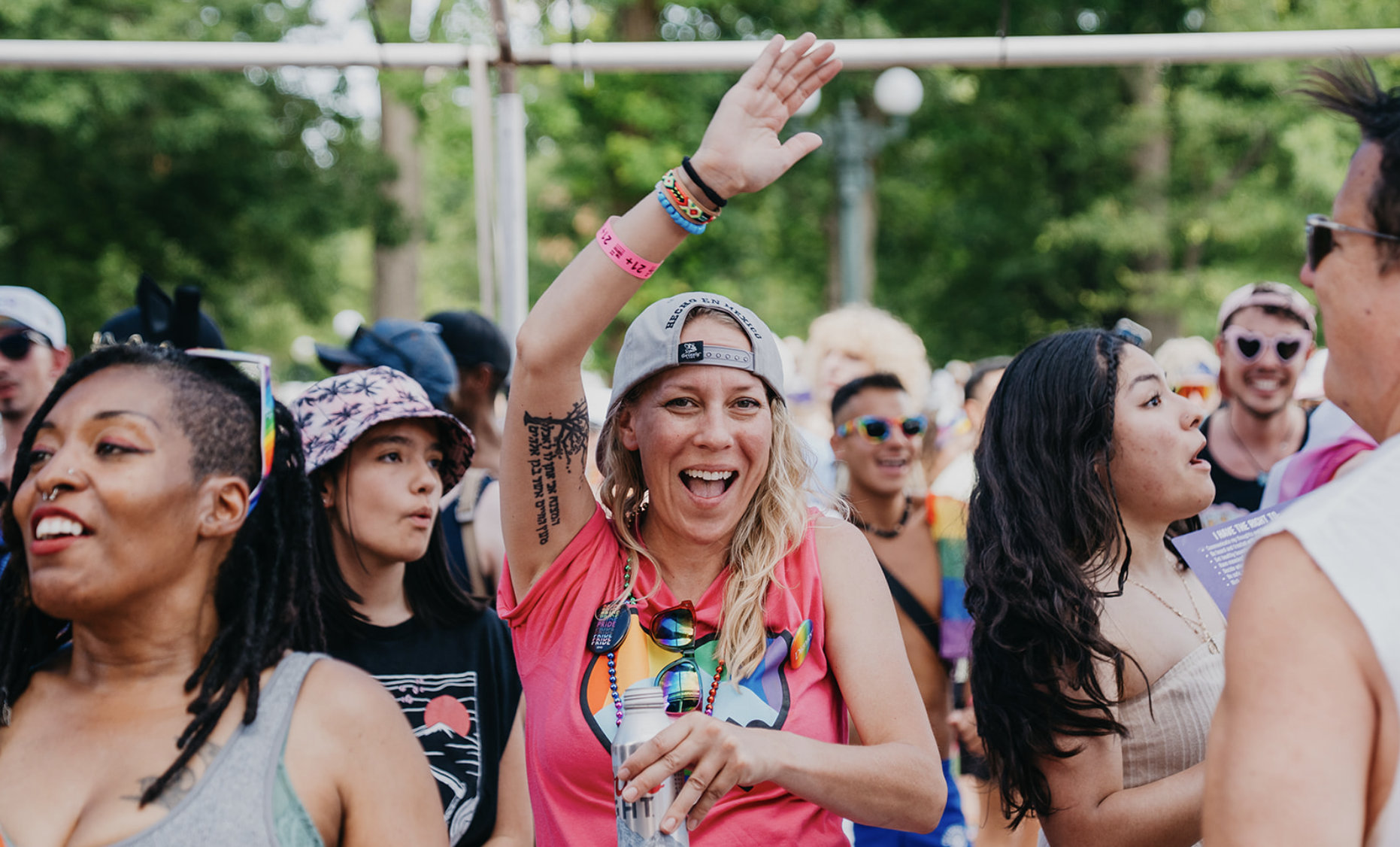
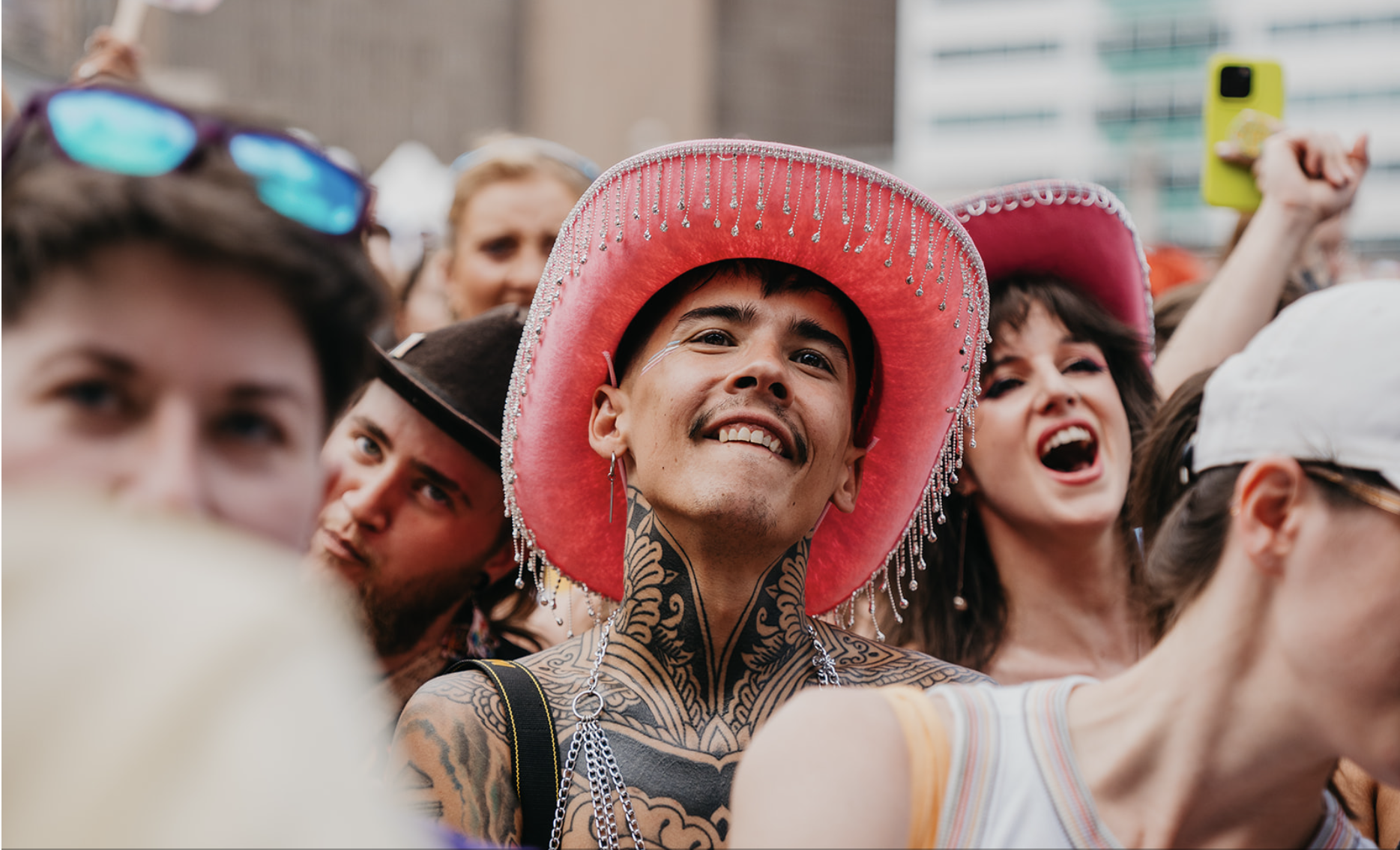
“I’m going to go super personal,” she says when asked what brings her joy about Pride this year. “What I am so excited about is still being reminded of when I was a little kid and living in a really, really rural place in a time where there was not a ton of visibility for LGBTQ people. It is that feeling of when you are with hundreds of thousands of other people that are there being affirmed and being seen in the truth of who they are. It is so healing, I think, to the small child that still lives within me… What would Little Kim have thought if she could have seen this when she was a child?”
She continues, “Then it just makes me think of all the kids that are seeing it now, right? And what that means to them when they see that hundreds of thousands of people cheering on a parade … We are so powerful as a community when we come together. So that is always my favorite thing, talking to my own inner child like, ‘You’re OK, and you made it, and this was always here, even if you couldn’t see it.'”
This year, that power will be on display not just in a park, but throughout the city. From the new “Eat Out with Pride” campaign—a partnership with queer-affirming local restaurants—to a wide array of satellite events, Denver Pride 2026 is designed to be accessible to everyone, regardless of their budget or their preferred way to celebrate.
“There is a Pride event for everybody,” Salvaggio says. “I just want (the community) to be reminded of that moment, of how incredibly powerful we are. We’ve been together as a community fighting for our freedoms and our liberties a long time. Do I wish we had to still do it? No. But it’s called Pride for a reason, and it is powerful.”
As Salvaggio looks toward July 1st—the day after the festivities conclude—she isn’t just looking for a break. She is looking at a legacy of a community that refused to let construction, political attacks, or internal disagreements stop the celebration. Under her leadership, The Center on Colfax is proving that while the location and the funding might change, the core mission remains unshakable: a space where every LGBTQ+ person in the Rocky Mountain region can see themselves reflected, supported, and free.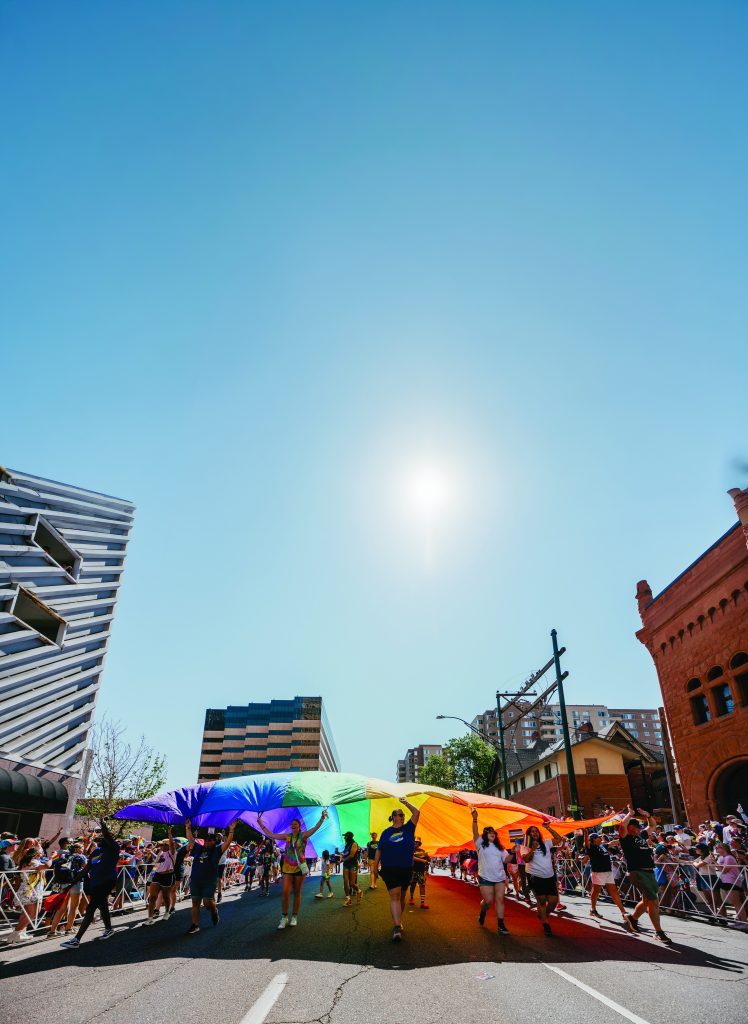
Photos courtesy of Becky DuffyHill
