
Call Blackline assists individuals who may feel the need to avoid emergency services due to racism, anti-LGBTQ+ bias, or immigration concerns.
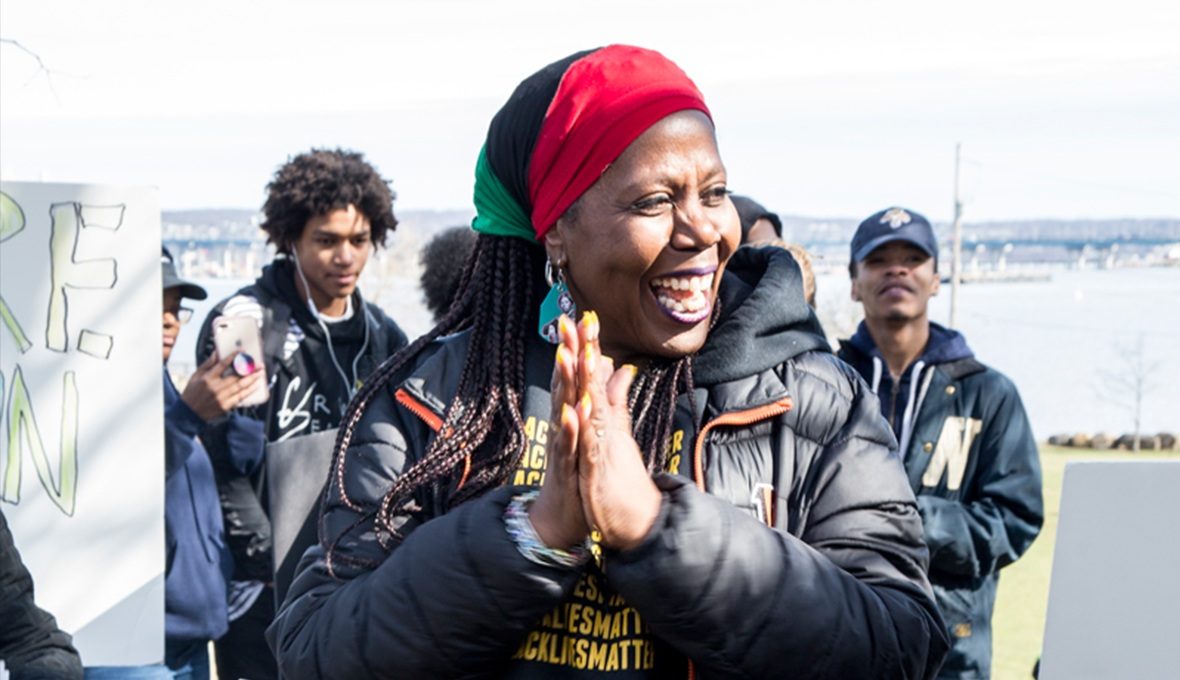
When hotline co-creator Vanessa Green answers calls to Call Blackline, her responses vary widely. Some people need referrals to trusted nonprofits for emergency resources. Others just need to vent to someone who understands their experience, and Green is happy to fill that role.
“We don’t give an opinion,” Green tells The Advocate in an interview. “We’re there to affirm their experiences navigating racism and white supremacy and anti-immigration in this country.”
Call Blackline is a nonprofit crisis line that seeks to fill gaps in emergency services for people who may have had adverse experiences with police and government crisis programs, including immigrants, queer people, and people of color, especially Black people. Green says police violence against these communities makes it harder for them to seek help when crisis occurs, particularly during mental health or personal safety emergencies.
“Police are not the vehicle to be used when somebody’s having a mental health crisis. They just are not equipped,” Green says. When making referrals, Call Blackline promises not to direct callers to government-run hotlines, aiming to reduce fears of police involvement.
“Any other numbers we give out, we actually get to make sure that they are not going to call the police on folks who are traumatized,” she says.
The crisis line was founded in 2014 and gained nonprofit status in 2017, Green says. Since then, the nonprofit has answered numerous calls from people in distress, using an “unapologetic Black, LGBTQ, and Black Femme lens,” according to its mission statement.
Between 2021 and 2022, Call Blackline fielded more than 5,700 calls and made nearly 1,700 referrals to support services, according to survey results posted to the nonprofit’s website.
The survey also found that many callers are people of color or members of the LGBTQ+ community. Nearly 2,500 callers identified as Black or African American, and roughly 1,000 identified as Latin American. About 800 identified as queer, while about 400 identified as trans.
Beyond discussing mental health concerns and making referrals, Call Blackline offers its own counseling and support services.
Through one program, Safe Passage, members of the nonprofit offer specific identity-informed guidance to Black women and sex workers who “are in danger and/or being followed,” according to the nonprofit’s website.
Through its Stop-and-Frisk Crisis Counseling Program, young people who have experienced “police stops, searches, harassment, or violence” from law enforcement officers, including ICE or Border Patrol agents, can receive trauma-informed mental health counseling, the website states.
“There’s a lot of rage, so what we want to do is intervene in that rage. Because what happens is, unfortunately, for Black people, we can’t be angry or pissed off around police because they’ll kill us,” Green says. “We try to talk to them, just acknowledging that experience and giving the historical context of policing so they understand.”
Green says a growing number of Native American and Indigenous people are also using the counseling program after adverse experiences with U.S. Customs and Border Protection agents, even including callers who are U.S. citizens.
Green hopes that one day the hotline’s services will no longer be necessary and people of all colors, races, and orientations can rely on government services that meet their needs without perpetuating racist, sexist, anti-immigrant, or anti-LGBTQ+ harm.
In the meantime, Green says she sees the crisis line as “a step” toward getting people in need the care that they deserve.
“I just want a world where we don’t need a Call Blackline,” she says. “But, right now, these communities are in crisis.”
Photo courtesy of social media
