
A new report examining six years of LGBTQ+ policy changes across the United States found that states have increasingly moved in opposite directions on LGBTQ+ rights, with transgender policies accounting for much of the growing divide.
The Movement Advancement Project (MAP) released Uneven Ground: Six Years of Diverging LGBTQ Policy and What’s at Stake in 2026, examining changes in state LGBTQ laws and policies between January 2020 and July 2026. According to MAP, the report is the first comprehensive analysis of how the state-level LGBTQ policy landscape has shifted during that period.
MAP examined states using three measures: Sexual Orientation Policy Scores, Gender Identity Policy Scores, and Overall LGBTQ Policy Scores.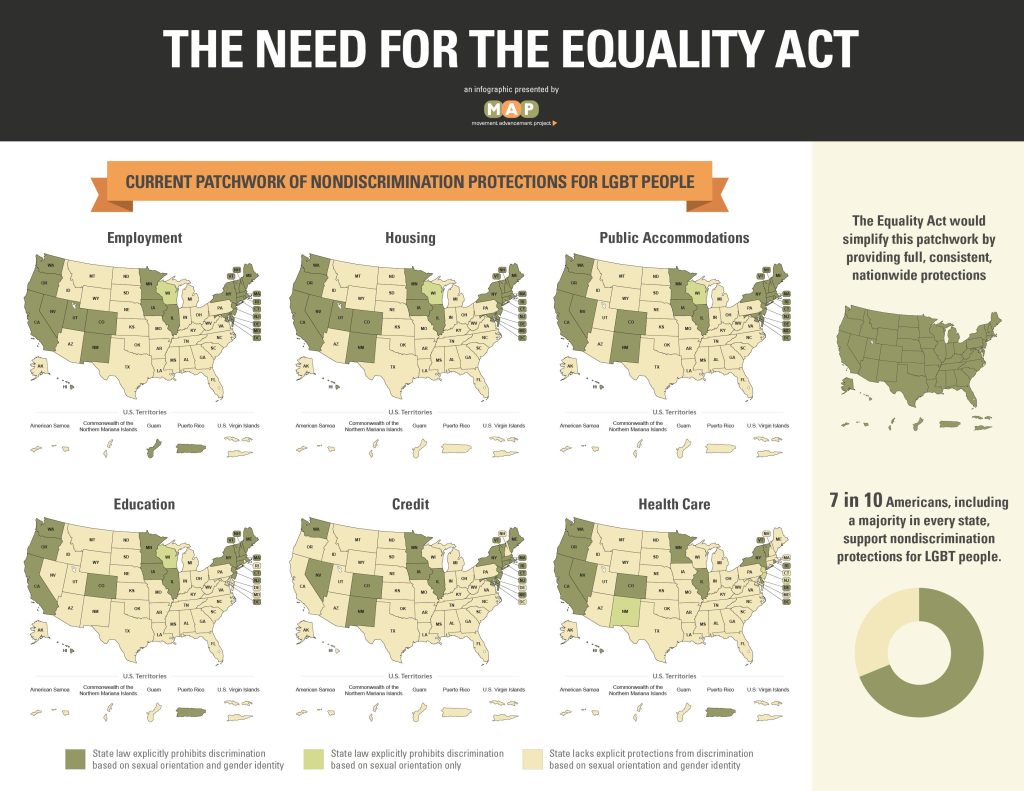
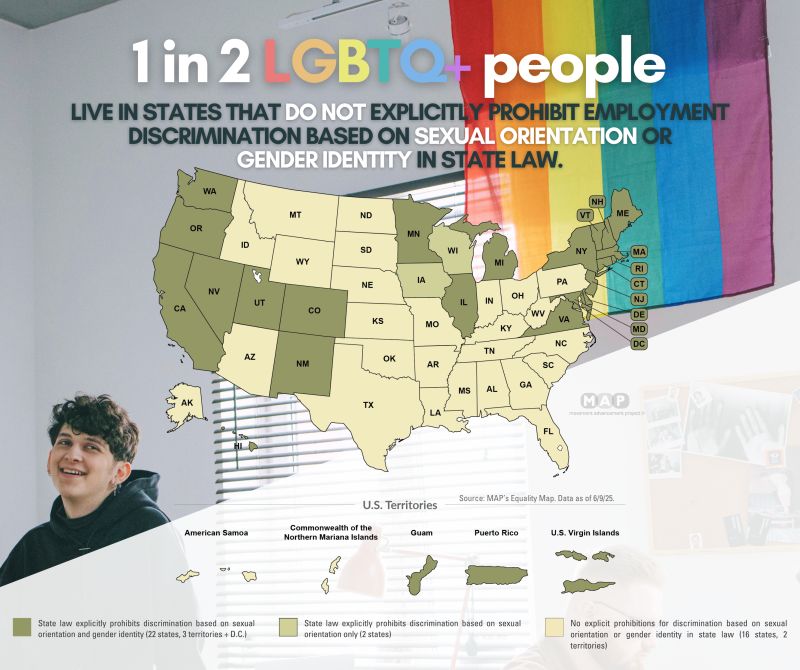
The organization found that while policies affecting sexual orientation generally improved across the country, policies affecting transgender people became increasingly polarized. By mid-2026, 16 states and Washington, D.C., ranked in MAP’s “High” category for gender identity policies, while 26 states ranked in its “Negative” category.
The report describes the trend as “asymmetric polarization,” meaning states are not simply moving apart politically but are doing so at different speeds and to different degrees.
Although more states saw their overall LGBTQ+ policy scores increase than decrease between 2020 and 2026, MAP found that states experiencing declines often saw substantially larger changes, particularly in policies affecting transgender people.
“Political attacks on LGBTQ people have escalated so quickly since 2020 that it can be easy to lose sight of just how much has changed, even in such a relatively short time,” Logan Casey, MAP’s director of policy research, says in announcing the report.
Casey says the findings also document progress in states that have adopted additional LGBTQ+ protections during the same period.
Iowa and Virginia provide one of the report’s clearest examples of the widening differences between states.
In 2020, MAP classified Iowa in its middle “Fair” category across its three LGBTQ policy measurements. Six years later, Iowa had experienced the largest decline of any state included in the report, falling 19.5 points in its overall score and moving into MAP’s “Negative” category.
Among the changes highlighted by MAP was Iowa’s 2025 removal of gender identity from the state’s civil rights law, which had previously prohibited discrimination against transgender people in areas including employment, housing and public accommodations. MAP describes Iowa as the first state to remove an existing protected category from its nondiscrimination law.
Virginia moved in the opposite direction.
According to the report, Virginia gained 23.75 points between 2020 and 2026, the largest increase recorded by MAP. The state moved from the “Negative” category to “Medium.” MAP cited policies including LGBTQ+-inclusive nondiscrimination protections adopted in 2020, a prohibition on conversion therapy for minors and expanded recognition for LGBTQ+ parents.
MAP argues that transgender-related policies have been the primary driver of state-level LGBTQ policy changes since 2020, particularly among states whose scores declined. The organization also warned that some states are beginning to weaken policies affecting sexual orientation in addition to gender identity.
The divide is set to move beyond state legislatures during the 2026 midterm elections.
Voters in Arizona, Colorado, Missouri, Nebraska, and Washington will consider ballot measures in November involving transgender policies, including restrictions related to youth sports participation and health care. MAP describes the measures as the first time anti-transgender policies have appeared on statewide ballots in this way.
The report ultimately presents an increasingly fragmented national landscape in which the legal protections available to LGBTQ people can differ significantly depending on the state in which they live.
While MAP documented advances in LGBTQ protections in several states, its six-year analysis found that the gap between states has continued to grow—with policies affecting transgender people at the center of much of that divergence.
Featured image courtesy of the Movement Advancement Project via social media
